Industry News
Curation by industry experts
Hot Articles
Popular Tags
Yangshan Port Launches Dedicated Photo Props Clearance Channel
Starting May 1, 2026, Shanghai Customs has piloted a dedicated clearance channel for wedding photography light industrial props at Yangshan Port — a development with direct implications for export-oriented photo service providers, cross-border e-commerce logistics operators, and light manufacturing exporters serving Southeast Asian and Middle Eastern ‘7-day flash destination photoshoot’ markets.
Event Overview
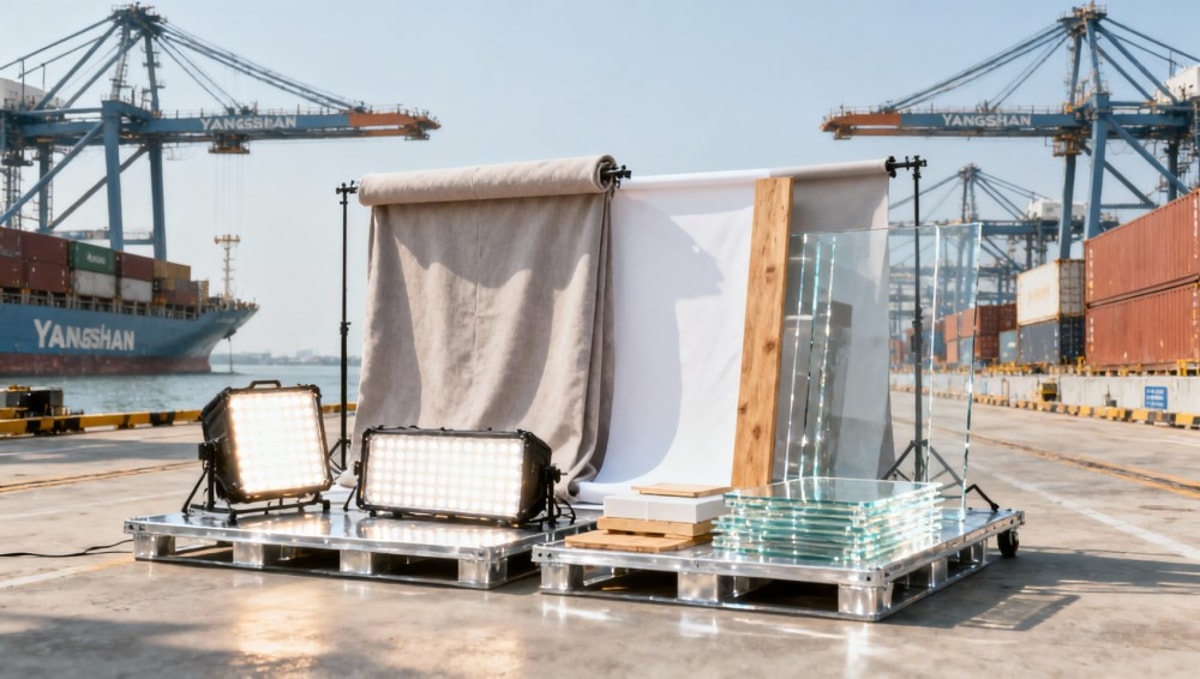
Effective May 1, 2026, Shanghai Customs launched the ‘Yangshan Port Wedding Photography Light Industrial Props Fast Clearance Channel’. The initiative covers 12 high-frequency export items including backdrop fabrics, LED softbox lights, and acrylic set panels, classified under HS codes 9006.69, 5903.90, and 8539.50. Leveraging AI-powered pre-declaration verification and credit-based non-intrusive inspection (i.e., no container opening required), average customs clearance time has been reduced from 5.8 days to 2.1 days. The mechanism is integrated into both the RCEP and China–EU Comprehensive Agreement on Investment (CAI) data mutual recognition platforms.
Industries Affected by This Measure
Direct Export Trading Enterprises
Enterprises exporting photography props directly from Shanghai — especially SMEs fulfilling B2B orders for overseas studios or rental platforms — are affected because clearance speed now directly impacts their ability to meet tight seasonal delivery windows. The reduction in dwell time improves on-time shipment rates, particularly for time-sensitive consignments destined for fast-growing ‘flash travel photography’ hubs in Vietnam, Thailand, UAE, and Saudi Arabia.
Light Manufacturing & Assembly Firms
Firms producing or assembling LED lighting units, fabric backdrops, or modular acrylic sets under the specified HS codes face revised compliance expectations. While physical inspection frequency drops, documentation accuracy — especially HS code classification and product description alignment — becomes more critical due to AI-driven pre-clearance validation. Misclassification may trigger manual review, negating time savings.
Supply Chain & Cross-Border Logistics Providers
Third-party logistics providers handling last-mile consolidation, labeling, and customs coordination for photography gear exporters must adapt to new digital submission protocols tied to the channel. Integration with RCEP/CAI data platforms implies potential future requirements for standardized electronic certificates of origin or sustainability declarations — though not yet mandated, early system compatibility testing is advisable.
Overseas Procurement & Retail Platforms
International buyers sourcing photography kits via Alibaba, Amazon Global Selling, or regional B2B marketplaces (e.g., Souq, Shopee Mall) benefit indirectly: shorter port clearance translates into more predictable inland transit planning and reduced buffer inventory needs. However, this advantage applies only to shipments routed through Yangshan Port and declared under the designated HS codes and channel eligibility criteria.
What Relevant Enterprises or Practitioners Should Focus On Now
Monitor official eligibility updates and scope expansion
Currently limited to 12 item types and three HS codes, the channel’s scope may broaden based on pilot outcomes. Enterprises should track Shanghai Customs’ public notices for additions — especially if their products fall under adjacent codes (e.g., HS 9405 for general lighting fixtures or 3926 for other plastic display elements).
Verify HS code alignment and documentation readiness
AI pre-verification relies on precise tariff classification and consistent product naming across commercial invoices, packing lists, and customs declarations. Firms should audit current export documentation against the published list of covered items and confirm internal classification practices match Shanghai Customs’ reference definitions.
Distinguish between policy signal and operational readiness
The channel is operational as of May 1, 2026, but full integration with RCEP/CAI platforms remains a work-in-progress. Data exchange capabilities — such as auto-populated origin statements or harmonized safety certifications — are not yet live. Treat current platform linkage as a foundational step, not an immediate functional upgrade.
Adjust lead time planning for key markets
For exporters targeting Southeast Asia and the Middle East, the 2.1-day average clearance window supports tighter order-to-delivery scheduling — especially for peak-season campaigns (e.g., Q3 wedding season in Thailand or Ramadan-related promotions in GCC countries). Consider revising internal shipping cut-offs and coordinating earlier with freight forwarders to align with the new timeline.
Editorial Perspective / Industry Observation
Observably, this initiative is less about broad regulatory reform and more about targeted process optimization for a narrow, high-turnover export segment. It reflects a growing trend among Chinese port authorities to apply AI-assisted risk differentiation not just to high-value or sensitive goods, but also to low-risk, volume-driven categories where speed-to-market is a competitive differentiator. Analysis shows the measure functions primarily as an operational signal — confirming that customs modernization efforts are extending beyond electronics or automotive parts into lifestyle-oriented light industrial exports. From an industry perspective, it signals increasing granularity in trade facilitation: rather than one-size-fits-all reforms, expect more HS-code- or sector-specific channels emerging at major ports. Continued monitoring is warranted not for immediate transformation, but for patterns indicating how scalability and interoperability evolve across China’s port ecosystem.
In summary, the Yangshan Port wedding photography props clearance channel represents a concrete, localized improvement in export efficiency — not a systemic shift, but a meaningful adjustment for specific actors in the global visual content production supply chain. It is best understood as an early indicator of how trade infrastructure is adapting to the responsiveness demands of digitally native, experience-driven export markets — rather than as a standalone policy milestone.
Source: Official announcement by Shanghai Customs (effective May 1, 2026); HS code coverage and processing time data confirmed in the notice; RCEP and CAI platform integration status cited from same source. Scope expansion, additional HS code inclusion, and full data interoperability features remain subject to ongoing observation and are not yet confirmed.
Recommended News
 Commercial LEDSaudi SABER Adds Mandatory Registration for LED Ring LightsLED ring lights for photography now require mandatory Saudi SABER registration—essential for婚纱摄影 exporters, OEMs & e-commerce sellers targeting KSA. Act now to avoid port delays.Commercial Tech EditorMay 03, 2026
 Export UpdatesYangshan Port Launches Dedicated Photo Props Clearance ChannelYangshan Port's new wedding photography props clearance channel slashes customs time to 2.1 days—boosting speed & reliability for global photo service exporters.May 03, 2026
 Printing EquipmentECHA Adds NMP to SVHC Candidate List: Impact on UV Ink ExportersUV ink exporters: ECHA added NMP to SVHC list—impacting wedding photography inks (HS 3215.11). Act now to reformulate, comply & avoid 2027 EU market bans.Packaging Supply ExpertMay 03, 2026
 Fabrics & YarnsRCEP 2026 Origin Rules Update: Recycled Polyester Backdrops Gain Zero-Tariff AccessRecycled polyester backdrops now qualify for RCEP zero-tariff access under the 2026 Origin Rules — boosting margins and simplifying export for wedding photography studios and suppliers.Textile Industry AnalystMay 03, 2026