Industry News
Curation by industry experts
Hot Articles
- Industry NewsUS CPSC Updates Safety Guidelines for Wedding Prop Fabrics: Glitter Coatings Must Pass EN71-3 Migration Test
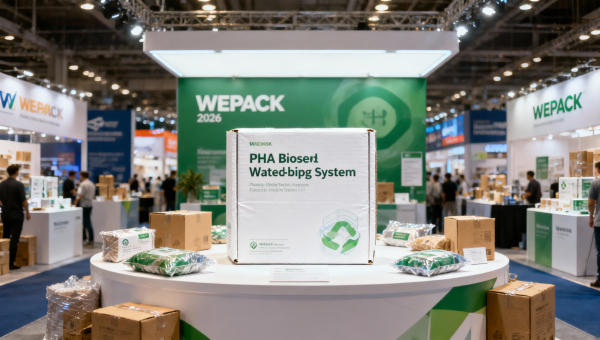
- Industry NewsWEPACK 2026 Shenzhen Show Highlights PHA-Based Barrier System for Global Markets
- Industry NewsRed Sea Crisis Escalates: Dubai Port Imposes High-Risk Surcharge on Packaging Goods
Popular Tags
What Affects Outdoor Lighting LED Pricing in 2026
Outdoor lighting LED pricing in 2026 is shaped by more than chip costs alone. Buyers comparing outdoor lighting solar powered, outdoor lighting motion sensor, and outdoor lighting waterproof solutions must also weigh materials, smart controls, certification, and supplier capabilities. For sourcing teams, distributors, and evaluators, understanding these price drivers helps identify competitive products, reduce risk, and make better procurement decisions in a rapidly evolving global lighting market.
In the lighting and illumination sector, unit price is only one layer of the sourcing equation. Procurement teams also need to compare lumen output, IP rating, driver quality, battery life, housing durability, and the total landed cost across 12 to 36 months of operation. A low upfront quote may become expensive if failure rates rise after one rainy season or if replacement parts are difficult to source.
For distributors, brand owners, and commercial buyers, 2026 pricing will be influenced by a combination of product engineering and supply chain discipline. Material inflation, regional compliance, smart control integration, and order volume planning all affect the final quotation. The most effective buyers are not only comparing prices; they are comparing risk, consistency, and long-term value.
Core Cost Drivers Behind Outdoor Lighting LED Pricing
The first major driver is LED package and optical performance. Outdoor fixtures designed for pathways, facades, parking areas, or perimeter lighting often require output ranges from 800 lumens to more than 20,000 lumens depending on application. As efficacy moves from around 100 lm/W to 140 lm/W or above, component cost usually rises, especially when buyers require stable color temperature, tighter binning, and lower lumen depreciation over 25,000 to 50,000 hours.
The second driver is housing and thermal management. Outdoor lighting waterproof products need corrosion resistance, heat dissipation, and structural stability in temperatures that can range from -20°C to 50°C. Die-cast aluminum, powder coating quality, lens material, gasketing, and stainless fasteners all affect price. In coastal or industrial projects, a stronger anti-corrosion finish can increase cost, but it also reduces warranty claims and field maintenance.
The third driver is the electrical platform. Driver brand, surge protection level, power factor, and dimming compatibility can create a meaningful price gap between two fixtures that look similar. A model with 6 kV surge protection, 0-10V dimming, and better driver efficiency will generally cost more than a basic on-off unit, yet it is often the better option for municipal, infrastructure, and commercial installations.
Certification also matters. Products targeting North America, Europe, the Middle East, or Southeast Asia may need different test reports, labeling requirements, and environmental checks. Compliance costs are spread across production volume. This means a supplier with mature export experience can often offer more stable pricing on certified products than a factory that treats testing as a one-off expense.
Finally, factory capability influences the quote. Automated assembly, aging test procedures, and incoming quality control reduce hidden risk. A supplier that performs 100% electrical testing, 2-hour to 8-hour aging tests, and batch waterproof validation may quote higher than a low-cost workshop, but the price difference often reflects a more reliable production system.
Typical Price Impact by Component Area
The table below shows how common engineering choices can shift pricing in outdoor LED lighting projects. These ranges are indicative and useful for commercial comparison rather than fixed market rates.
A practical takeaway is that price movement usually comes from cumulative specifications rather than one single part. When a fixture combines high efficacy, IP66 protection, premium driver electronics, and anti-corrosion coating, the final price can be 20% to 40% above an entry-level version, but the lifecycle value may be stronger in demanding outdoor environments.
What buyers should verify early
- Requested lumen package versus actual power draw, such as 30W, 50W, 100W, or 150W models.
- IP rating and whether the supplier can explain the sealing structure, not only the label.
- Driver origin, surge level, and whether dimming is required for the project.
- Housing finish for inland, coastal, or chemical-exposure installations.
- Warranty terms, replacement process, and spare part availability over 2 to 5 years.
How Product Type Changes the 2026 Price Structure
Not all outdoor products follow the same pricing logic. Outdoor lighting solar powered systems have a cost structure that includes photovoltaic panels, lithium batteries, controllers, and autonomy requirements. Outdoor lighting motion sensor fixtures add sensor range, detection reliability, standby power programming, and sometimes wireless connectivity. Outdoor lighting waterproof products place more emphasis on enclosure integrity, cable entry protection, and long-term sealing performance.
Solar models can show the widest pricing spread because battery chemistry and backup time vary significantly. A basic solar wall light for residential use may support 1 to 2 nights of autonomy, while a commercial solar street light may target 2 to 3 nights with battery capacity sized for cloudy conditions. In many sourcing discussions, the battery and panel account for 30% to 50% of the total product cost, which means small specification changes can substantially affect the final quote.
Motion sensor products are more affordable than full solar systems in many cases, but pricing rises when buyers need better detection logic, wider sensing angles, and fewer false triggers. For example, a motion sensor range of 6 to 8 meters for residential use is not the same as a 10 to 15 meter requirement in commercial areas. Better sensors usually improve user satisfaction, but they also increase unit cost and testing needs.
Waterproof products cover a wide spectrum, from decorative garden luminaires to heavy-duty flood lights. The price difference between IP65 and IP67 is not just a label issue. It often involves stronger gasketing, improved pressure equalization, more careful cable management, and stricter assembly control. Buyers sourcing for monsoon regions, ports, or infrastructure sites should expect waterproof reliability to carry a premium.
Because these three product types serve different use cases, the right comparison method is not a simple price-per-piece ranking. The better approach is price per application value: illumination duration, detection performance, maintenance interval, and failure risk in the actual installation environment.
Comparing Major Outdoor LED Categories
This comparison helps procurement teams and distributors understand where cost concentration typically occurs across product types.
The table shows why one quotation cannot be judged without product architecture. A solar product may look expensive next to a conventional LED wall light, but the comparison becomes more balanced once trenching, cabling, and grid access costs are included. Likewise, a motion sensor light with better detection logic may reduce energy use and improve site security, offsetting a higher initial price.
A useful buying framework
- Define the application first: decorative, security, roadway, or functional area lighting.
- Specify the minimum performance threshold: lumen output, operating hours, IP grade, and sensor range.
- Check installation constraints such as wiring access, mounting height, and local weather exposure.
- Compare total ownership cost over 24 to 36 months, not just ex-factory price.
Supply Chain, Compliance, and Order Planning Factors
In 2026, pricing will also be affected by how well suppliers manage upstream sourcing and production scheduling. Outdoor LED products depend on semiconductors, aluminum, plastics, batteries, drivers, sensors, and packaging materials. If a factory purchases in stable volumes and maintains approved component alternatives, it is usually better positioned to protect buyers from sudden volatility. Suppliers with weak planning may revise pricing frequently or extend lead times from 3 weeks to 8 weeks.
MOQ and customization create another pricing layer. Standard models often carry the best economics because tooling, labels, packaging, and firmware are already established. Once the buyer requests custom color temperature, logo packaging, specific beam angles, sensor adjustments, or non-standard brackets, the quote may increase due to setup time, slower production flow, and lower batch efficiency. In some categories, the gap between a standard order and a custom order can be 10% to 25%.
Compliance costs should not be underestimated. For export-oriented outdoor lighting, buyers may need regional test reports, material declarations, and product labeling aligned with destination market requirements. The cost is not always visible in the BOM, but it influences engineering time, laboratory testing, packaging adaptation, and documentation control. A lower quote with incomplete compliance support may expose the buyer to customs delays, channel rejection, or rework expense.
Freight and packaging also influence pricing, especially for bulky fixtures, solar assemblies, and pole-mounted systems. Carton design, drop resistance, moisture protection, and pallet efficiency can change the logistics cost per unit. When comparing suppliers, serious importers should ask for packaging dimensions, gross weight, loading quantity, and whether accessories are packed separately or together.
For procurement teams using Global Supply Review as a sourcing intelligence reference, the key is to align commercial terms with operational reality. The most dependable supplier is not always the one with the lowest opening price, but the one that can keep quality, lead time, and documentation stable across repeat orders and multiple SKUs.
Common sourcing variables that change the quote
- Lead time urgency: rush production inside 7 to 10 days usually costs more than standard 20 to 35 day scheduling.
- Order quantity: pricing at 200 units may differ significantly from pricing at 2,000 units.
- Private label packaging: custom cartons, manuals, and barcode systems add setup cost.
- Accessory scope: anchors, mounting arms, remote controls, and connectors may or may not be included.
- After-sales policy: spare parts, replacement ratio, and warranty process affect total supply value.
Checklist for commercial evaluation
Before approving a supplier, buyers should review at least 6 points: specification consistency, export compliance support, packaging details, lead time reliability, warranty response, and communication speed. A quotation that appears 8% lower may not remain favorable if one shipment delay disrupts a distributor’s seasonal sales window or if field returns exceed acceptable thresholds.
How to Evaluate Price Against Performance and Risk
The most effective way to judge outdoor lighting LED pricing is to compare performance per use case rather than comparing nominal wattage alone. A 50W flood light from one supplier may outperform a 70W unit from another if optics are better and driver efficiency is higher. For procurement managers, this means quotation review should include lux requirement, mounting height, beam angle, and installation environment, not just the SKU headline.
Field failure risk deserves a direct cost calculation. If a distributor imports 1,000 units and the failure rate in the first 12 months rises from 1% to 5%, the effect goes beyond replacement units. There are also freight claims, technician visits, customer dissatisfaction, and channel damage. In many outdoor projects, a slightly higher product price is justified if it cuts replacement frequency and warranty friction.
Buyers should also measure serviceability. Can the supplier provide replacement drivers, batteries, sensors, or mounting hardware within 2 to 4 weeks? Are product revisions documented, or do internal components change without notice? Consistency matters especially for distributors building recurring sales and for project buyers managing long maintenance cycles.
Another practical method is to divide the evaluation into technical value, commercial value, and supply value. Technical value includes efficacy, durability, and control functions. Commercial value includes price breakpoints, MOQ, and packaging fit. Supply value includes lead time, documentation, and claim handling. This three-part method reduces the risk of selecting a product that is cheap on paper but expensive in operations.
Sample scorecard for procurement teams
A structured scorecard helps buyers compare competing outdoor LED offers using consistent criteria instead of relying on price impression alone.
This kind of scorecard is especially useful for distributors and commercial evaluators who must balance margin targets with claim control. A supplier that ranks slightly lower on price but higher on reliability may produce better profit retention over a 12-month selling cycle.
Frequent buying mistakes
- Comparing wattage without checking lumen efficiency and beam performance.
- Assuming all IP65 or IP66 claims offer the same assembly quality.
- Choosing solar products without confirming battery autonomy under low-sun conditions.
- Ignoring surge protection in regions with unstable grid conditions.
- Approving samples but not locking the production specification for mass orders.
2026 Buying Strategies for Importers, Distributors, and Project Teams
For 2026, the smartest buying strategy is not chasing the cheapest outdoor LED product. It is building a sourcing method that matches channel needs. Importers serving retail may prioritize packaging efficiency, stable appearance, and quick replenishment. Distributors serving contractors may focus on ruggedness, compatibility, and low return rates. Project teams may prioritize compliance files, optical consistency, and reliable delivery windows tied to construction schedules.
Where possible, buyers should standardize a 2-tier or 3-tier product ladder. For example, an entry range can cover price-sensitive residential demand, a mid-range line can serve general commercial use, and a premium line can target high-exposure or infrastructure applications. This product architecture helps buyers negotiate better volumes, simplify spare parts planning, and reduce decision friction across multiple markets.
It is also wise to request quotation formats that separate core product price from optional items. Ask suppliers to list driver upgrades, dimming options, sensor modules, battery capacity, mounting kits, and packaging customization as separate lines. This gives sourcing teams more control over budget engineering and prevents confusion when two offers seem similar but include different accessories or test support.
For new supplier onboarding, pilot orders remain valuable. A first order of 100 to 300 units can reveal packaging accuracy, communication quality, and production consistency before the buyer commits to a larger 1,000-unit or container-level purchase. This is especially important for outdoor lighting solar powered and motion sensor categories, where field performance depends on multiple integrated components.
The most resilient procurement teams combine technical review with commercial discipline. They define mandatory specs, approve samples against a checklist, document any custom changes, and review post-shipment performance. In a market where 2026 pricing may shift with materials and compliance costs, this disciplined process is often the best protection against hidden expense.
Practical action steps before placing an order
- Shortlist 2 to 4 suppliers and compare them using the same specification sheet.
- Confirm key thresholds such as lumens, IP rating, surge level, battery autonomy, and warranty term.
- Request packaging data, lead time, and spare parts policy before price approval.
- Run a pilot order or sample validation under realistic outdoor conditions where possible.
- Lock the approved BOM and labeling details for repeat orders.
FAQ: questions buyers often ask
How long is the normal lead time for outdoor LED lighting?
For standard models, many suppliers work within 20 to 35 days after deposit and artwork confirmation. Customized products, solar systems, or complex packaging may take 30 to 45 days depending on component readiness and testing requirements.
What is the most overlooked factor in outdoor lighting waterproof sourcing?
Assembly quality is often overlooked. Buyers may focus on the stated IP grade, but sealing consistency, cable gland quality, and housing tolerance are equally important. These factors directly affect outdoor reliability during rain, dust exposure, and thermal cycling.
When does solar become cost-effective?
Solar is often more attractive where trenching, wiring, or grid access is expensive or slow. In remote or landscape applications, a higher product price may be offset by lower installation complexity and reduced electrical infrastructure cost.
Should distributors always choose the lowest MOQ supplier?
Not necessarily. A low MOQ is helpful for testing the market, but distributors should also review repeat-order consistency, packaging quality, and claim handling. A supplier with slightly higher MOQ but better reliability may support healthier margins over time.
Outdoor lighting LED pricing in 2026 will be shaped by engineering depth, product category, compliance scope, and supplier execution. Buyers evaluating outdoor lighting solar powered, outdoor lighting motion sensor, and outdoor lighting waterproof solutions need to compare more than the quote sheet. They need to assess application fit, lifecycle cost, and supply stability.
For sourcing teams, business evaluators, and distribution partners, a disciplined comparison model can reduce procurement risk and improve long-term value. If you want clearer guidance on supplier screening, product positioning, or category-specific sourcing strategy in lighting and displays, connect with Global Supply Review to get tailored insights, compare options more effectively, and explore more solutions for your next outdoor lighting project.
Recommended News
 Industry NewsUS CPSC Updates Safety Guidelines for Wedding Prop Fabrics: Glitter Coatings Must Pass EN71-3 Migration TestUS CPSC now requires EN71-3 migration testing for glitter coatings on wedding props & cosmetic packaging. Exporters must comply to avoid customs delays. Learn key action steps for 2026 regulations.Apr 21, 2026
 Industry NewsWEPACK 2026 Shenzhen Show Highlights PHA-Based Barrier System for Global MarketsDiscover BoCarbon's PHA-based barrier system at WEPACK 2026 Shenzhen, a game-changing sustainable packaging solution with FDA/EFSA certification. Learn how global brands like KHS and Indofood are adopting this plastic alternative for paper-based packaging.Apr 21, 2026
 Industry NewsRed Sea Crisis Escalates: Dubai Port Imposes High-Risk Surcharge on Packaging GoodsDubai's new High-Risk Surcharge on packaging goods via Red Sea routes ($850-$1,420/container) plus 18% Suez toll hike forces businesses to rethink logistics strategies. Learn cost impacts & mitigation tactics.Apr 21, 2026
 Industry NewsEU REACH Annex XVII Adds Glitter Coating Restrictions, Requiring SVHC Declarations for Chinese Exporters from July 2026EU REACH Annex XVII now restricts glitter coatings in packaging, requiring SVHC declarations from Chinese exporters by July 2026. Learn how this impacts packaging, cosmetics & luxury goods sectors and key compliance steps to avoid trade disruptions.Apr 21, 2026