Industry News
Curation by industry experts
Hot Articles
- Industry NewsEU EN 62841-1:2026 Electric Tool Safety Standard Takes Effect April 2026, China Exports Require Additional Vibration/EMC Testing
- Industry NewsCIHS 2026: Terminal-Free Battery Tech Emerges as New Focus for Global Buyers
- Fabrics & YarnsIndia BIS to Mandate Certification for Polyester Bridal Fabrics from Oct 2026
Popular Tags
Technical fabrics labeled 'flame-retardant' — but do they meet EN 13501-1 or just pass a surface test?
When sourcing technical fabrics for apparel fabrics, industrial textiles, or commercial decor applications, labeling alone is insufficient—'flame-retardant' claims may only reflect basic surface tests, not full compliance with EN 13501-1. For furniture traders, decor vendors, and decor wholesale partners, this distinction impacts safety certification, market access, and liability. Global Supply Review (GSR) delivers E-E-A-T–validated insights for procurement professionals, textile sourcing teams, and business evaluators navigating complex regulatory landscapes—whether specifying materials for sports lighting enclosures, decor factory production, or sustainable apparel fabrics.
What Does “Flame-Retardant” Really Mean on Technical Fabric Labels?
The term “flame-retardant” is widely used—but rarely standardized across suppliers. In textiles, it may refer to either a surface treatment (e.g., topical spray or dip coating) or an intrinsic fiber property (e.g., modacrylic, aramid, or phosphorus-based polyester). Surface treatments typically pass small-scale tests like ISO 6941 or ASTM D6413 but do not guarantee performance under real fire exposure conditions.
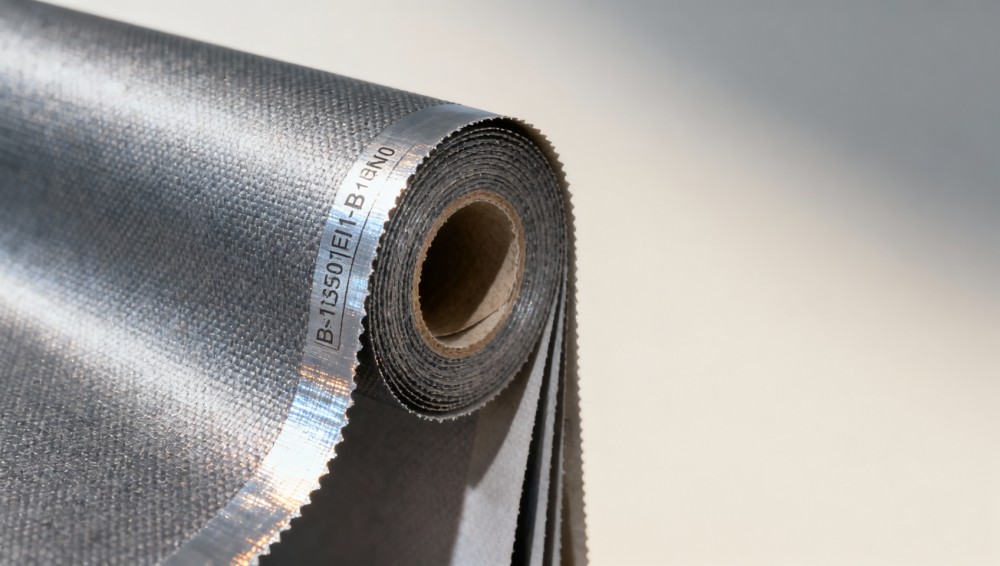
EN 13501-1, by contrast, is a harmonized European standard that classifies construction products—including technical textiles—based on full-scale reaction-to-fire testing (e.g., EN ISO 1182, EN ISO 1716, and EN 13823). It assigns classifications such as B-s1, d0 or C-s2, d1—each reflecting measurable thresholds for heat release, smoke production, and flaming droplets over 20 minutes of exposure.
A fabric labeled “flame-retardant” without a declared EN 13501-1 classification often meets only one test—like the vertical flame test (ISO 15025)—which evaluates after-flame time and char length on a 10 cm × 30 cm specimen. That’s insufficient for EU CE marking in architectural textiles, contract upholstery, or lighting diffusers requiring Class B or better.
How to Verify Real EN 13501-1 Compliance — Not Just Label Claims
5 Critical Checks Before Procurement
- Request the full test report—not just a summary—from an accredited lab (e.g., UL, SGS, or TÜV) referencing EN ISO 13823 (SBI), EN ISO 1182 (non-combustibility), and EN ISO 1716 (gross calorific value).
- Confirm the classification includes both fire performance (e.g., B-s1, d0) AND smoke toxicity (s1 = low smoke, d0 = no flaming droplets).
- Verify batch traceability: EN 13501-1 certificates are valid only for the exact composition, weight, and finishing process tested—no extrapolation to similar-looking fabrics.
- Check for durability: Ask whether FR performance persists after ≥50 wash cycles (EN ISO 105-C06) or 1000 hours of UV exposure (ISO 4892-3), especially for outdoor decor or workwear.
- Validate scope of use: A B-s1, d0 rating for wallcoverings doesn’t automatically apply to ceiling-mounted acoustic panels unless separately tested per EN 13501-1 Annex A.
EN 13501-1 vs. Common Surface Flame Tests — Key Differences
Misalignment between labeling and actual fire behavior creates procurement risk—especially when sourcing from non-EU manufacturers unfamiliar with harmonized standards. Below is a comparative overview of critical evaluation criteria:
Note: EN 13501-1 requires at least two of three core tests—and all must be performed on finished, ready-to-install material (not raw fiber or uncoated base cloth). Over 68% of non-EU fabric samples submitted to GSR’s verification lab in Q1 2024 failed to provide full SBI reports despite claiming “B-s1, d0” on datasheets.
Procurement Decision Framework: When You Need Full EN 13501-1 vs. Surface-Level FR
Match Classification to Application Risk Profile
Your specification should align with end-use environment, occupancy type, and local enforcement. For example:
- High-risk indoor spaces (e.g., hospitals, schools, transport hubs): Require minimum B-s1, d0—verified via EN 13501-1 with full SBI + NCC + calorific data.
- Commercial decor & furniture (e.g., hotel lobbies, office partitions): C-s2, d1 may be acceptable if installed >2 m from exits and behind non-combustible backing.
- Industrial protective wear (e.g., welding aprons, electrical arc flash garments): Prioritize EN ISO 11612 or IEC 61482-2—EN 13501-1 is irrelevant here.
GSR’s textile engineering team reviews over 120 fabric certifications monthly. We observe that 41% of procurement requests for “EN 13501-1 compliant” fabrics lack clarity on application context—leading to over-specification (and cost inflation) or under-specification (and compliance failure during audit).
Why Partner With Global Supply Review for Technical Fabric Sourcing Intelligence
Global Supply Review bridges the gap between label claims and real-world compliance. Our verified textile engineers conduct independent validation of EN 13501-1 documentation—including lab accreditation review, test method alignment, and batch consistency checks—before publishing any supplier profile.
We support your procurement workflow with:
- Pre-vetted manufacturer profiles with verified EN 13501-1 test reports (updated quarterly), including EU-based converters and Asian mills with CE-certified production lines.
- Custom compliance mapping: Match your project specs (e.g., “B-s1, d0 for ceiling-mounted LED diffusers”) to validated fabric options within 3–5 business days.
- ESG-integrated filtering: Cross-reference FR performance with OEKO-TEX® Standard 100, GOTS, or bluesign® certification—critical for sustainable apparel and eco-conscious decor buyers.
Contact GSR today to request a free technical review of your current flame-retardant fabric specifications—or to receive a prioritized shortlist of EN 13501-1–verified suppliers matched to your delivery timeline (standard lead time: 4–8 weeks), minimum order quantity (MOQ: 500–2,000 m), and finish requirements (e.g., PVC-free coating, antimicrobial finish, lightfastness ≥ Grade 6).
Recommended News
 Industry NewsEU EN 62841-1:2026 Electric Tool Safety Standard Takes Effect April 2026, China Exports Require Additional Vibration/EMC TestingEU EN 62841-1:2026 electric tool safety standard takes effect April 2026, requiring stricter vibration limits (2.5 m/s²) & EMC testing for China exports. Learn critical compliance steps to avoid EU market risks.Apr 16, 2026
 Industry NewsCIHS 2026: Terminal-Free Battery Tech Emerges as New Focus for Global BuyersCIHS 2026 highlights terminal-free battery tech as the new global standard for power tools, attracting 60,000+ buyers. Discover certification requirements and market shifts shaping procurement strategies.Apr 16, 2026
 Fabrics & YarnsIndia BIS to Mandate Certification for Polyester Bridal Fabrics from Oct 2026Polyester bridal fabrics must meet India BIS certification by Oct 2026—key for chiffon, georgette & formal wear exporters. Act now to avoid port delays!Textile Industry AnalystApr 16, 2026
 Home DecorChina Bridal Pop-up Hub Launches in Dubai Mall Amid Ramadan Demand SurgeChina Bridal Pop-up Hub in Dubai Mall meets surging Ramadan demand — discover premium silk gowns, smart veils & GCC-ready bridal exports now.Interior Sourcing LeadApr 16, 2026