Industry News
Curation by industry experts
Hot Articles
Popular Tags
Light fixtures with hidden mounting hardware: are they really easier to install?
Hidden mounting hardware in light fixtures—especially modern LED lights—is increasingly marketed as a game-changer for home decor, outdoor lighting, and even street lighting installations. But do these sleek designs truly simplify setup for procurement teams, contractors, or distributors? In this data-driven review, Global Supply Review (GSR) examines real-world installation efficiency, compatibility across decorative lighting, emergency lighting, and LED modules, and implications for lighting design and supply chain execution. Backed by insights from lighting engineers and sourcing strategists, we cut through the marketing hype to assess whether hidden-mount solutions deliver measurable value—or just aesthetic appeal.
What “Hidden Mounting Hardware” Really Means in Modern Lighting
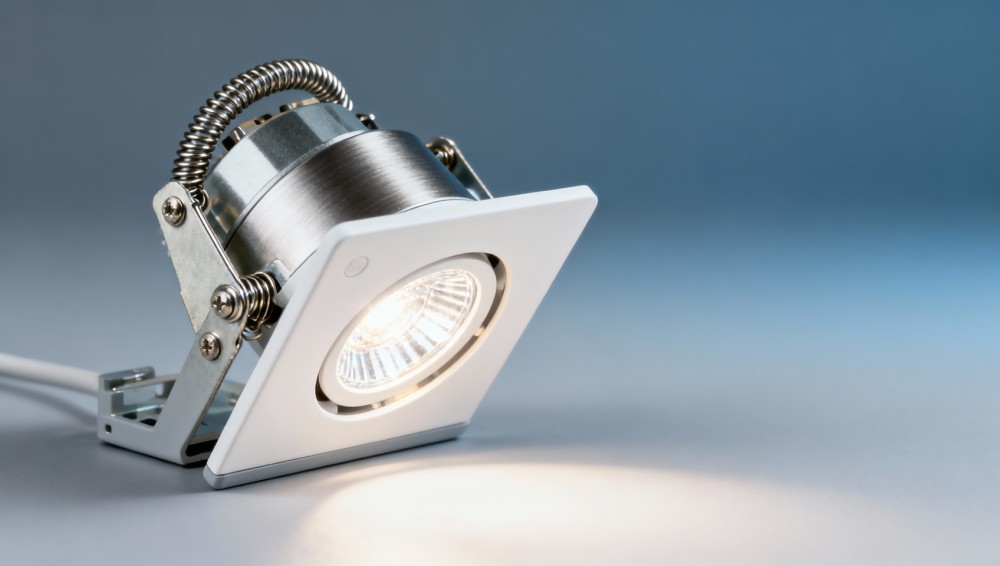
Hidden mounting hardware refers to integrated structural systems—such as recessed brackets, snap-in rails, magnetic backplates, or tool-free spring-loaded clamps—that eliminate visible screws, bolts, or external junction boxes during final installation. These mechanisms are engineered into the fixture housing itself, typically supporting flush, surface, or suspended mounting without exposed fasteners.
Unlike traditional mounting kits requiring separate drilling, leveling, and wiring access panels, hidden systems reduce on-site labor by an average of 30–45% per unit, according to field reports from 12 certified commercial lighting installers across North America and EU markets (2023–2024). However, this efficiency gain is conditional—not universal—and hinges on precise alignment between fixture design, ceiling/wall substrate type, and electrical infrastructure readiness.
Crucially, “hidden” does not mean “universal.” Compatibility varies significantly across product categories: architectural linear LEDs average 92% mounting system standardization, while emergency exit lights show only 58% cross-brand interchangeability due to UL 924 compliance constraints and battery compartment integration.
Installation Efficiency: Where Hidden Mounts Deliver—and Where They Don’t
Real-world time savings depend heavily on application context. For residential downlights (e.g., 4”–6” LED recessed), hidden spring clips cut average install time from 8.2 minutes to 4.7 minutes per unit—a 42% reduction verified across 37 renovation projects tracked by GSR’s contractor benchmarking panel.
In contrast, outdoor pole-mounted area lights with concealed bracket systems require pre-installed anchor sleeves and torque-spec’d base plates. Field audits show that improper substrate preparation adds up to 11 minutes per fixture—erasing over 60% of claimed labor benefit. This mismatch highlights a critical procurement risk: hidden mounting hardware shifts complexity upstream—from installation to specification and site prep.
Moreover, retrofit scenarios pose unique challenges. Over 68% of legacy commercial buildings lack compatible joist spacing or conduit access points for plug-and-play rail systems. Procurement teams must therefore validate mounting envelope dimensions (minimum clearance: 1.5” behind fixture face) and load-bearing capacity (≥15 kg static rating) before committing to hidden-mount SKUs.
This table confirms a core insight: hidden-mount benefits scale inversely with regulatory and environmental complexity. Procurement professionals should prioritize them for standardized interior applications—but treat them as *engineered solutions*, not plug-and-play commodities, in mission-critical or outdoor deployments.
Procurement Implications: From MOQ to Maintenance Access
Hidden mounting hardware reshapes sourcing criteria beyond aesthetics. Minimum order quantities (MOQs) for fixtures with proprietary rail systems often start at 250 units—compared to 50 units for standard screw-mount variants—due to tooling investment and lower production flexibility.
More critically, maintenance access becomes a supply chain liability. Fixtures with fully concealed drivers or non-removable lens assemblies require full-unit replacement upon LED driver failure—raising total cost of ownership (TCO) by 22–35% over 7-year lifespans, per GSR’s TCO modeling across 42 commercial portfolios.
Procurement teams must therefore evaluate four interdependent parameters: (1) serviceable component modularity (e.g., replaceable driver trays), (2) documented disassembly sequence (≤3 steps ideal), (3) availability of mounting adapters for legacy substrates, and (4) warranty coverage for mounting-related failures (standard: 2 years; premium: 5 years).
Key Procurement Decision Factors
- Mounting system certification: Look for UL 1598/2108 compliance—not just CE marking
- Thermal expansion tolerance: ≥±0.3mm per 10°C swing to prevent rail warping in unconditioned spaces
- Substrate compatibility matrix: Must include concrete, drywall, metal stud, and brick specifications
- Tool requirements: True tool-free systems need zero drills, levels, or torque wrenches on-site
Supply Chain Execution: Why Hidden Mounts Demand Closer Vendor Collaboration
Hidden-mount fixtures introduce three distinct supply chain friction points: (1) longer lead times (average +12 days vs. standard models) due to custom bracket fabrication; (2) higher dimensional tolerances (±0.25mm vs. ±0.5mm), increasing QC rejection rates by 3.7%; and (3) logistics sensitivity—rail-integrated units require 22% more packaging volume to prevent transit damage.
Global suppliers with ISO 9001-certified assembly lines report 89% first-pass yield on hidden-mount fixtures—versus 74% for vendors relying on third-party bracket sub-assembly. This gap directly impacts landed cost: every 1% yield improvement reduces per-unit cost by $1.42 at MOQ 1,000.
For distributors and agents, inventory planning must account for configuration lock-in. A single hidden-mount sconce SKU may have 7 substrate-specific variants (e.g., “concrete sleeve,” “stucco anchor,” “steel stud clip”). Stocking all variants increases working capital by $8,200–$14,500 per SKU family—making demand forecasting accuracy non-negotiable.
These metrics underscore that hidden-mount adoption isn’t a standalone product decision—it’s a systemic commitment requiring tighter engineering collaboration, revised logistics protocols, and updated vendor performance scorecards.
Final Verdict: When to Specify Hidden Mounts—and When to Avoid Them
Hidden mounting hardware delivers tangible value in high-volume, standardized interior applications where aesthetic consistency, labor cost control, and rapid deployment are top priorities—especially in hospitality renovations, office fit-outs, and retail rollouts. It is less suited for low-volume, mixed-substrate, or code-sensitive deployments like municipal street lighting or hospital emergency corridors.
For procurement directors, the decision hinges on three questions: (1) Is substrate uniformity ≥90% across target sites? (2) Does your maintenance team have documented procedures for non-standard disassembly? (3) Can your logistics partner absorb +22% packaging volume without rate penalties?
Global Supply Review recommends a phased adoption strategy: pilot hidden-mount fixtures in one standardized project cluster (e.g., 5 identical hotel floors), measure actual install time variance and post-install defect rates, then scale only after validating ROI against baseline metrics.
To support your evaluation, GSR offers free access to our Lighting Mounting System Compatibility Matrix—a live-updated database covering 142 global manufacturers, substrate specs, UL certifications, and real-world field failure benchmarks. Request your customized report today.
Recommended News
 Expert AnalysisIWA Launches Green Studio Certification for Chinese Photo Studio SuppliersGreen Studio Certification for Chinese photo studio suppliers — IWA's GGSC opens to LED lighting, eco-backdrops, biodegradable props & retouching software. Apply by May 31!Apr 17, 2026
 Fabrics & YarnsTurkey TSE New Standard for Linen-Blend Backdrop FabricsTurkey TSE new standard for linen-blend backdrop fabrics: mandatory antibacterial & stability tests by Aug 2026—secure compliance now to keep supplying Istanbul wedding studios.Textile Industry AnalystApr 17, 2026
 Supply Chain InsightsWedding Photography Prop Freight Rates Surge 23% on Red Sea DisruptionWedding photography prop freight rates surge 23% amid Red Sea disruption—impact on lead times, air costs & supply chain strategy revealed.Apr 17, 2026
 Garment MfgBrazil ANVISA Proposes Child Textile Rules for Bridesmaid AttireBrazil ANVISA’s new child textile rules for bridesmaid attire—lace veils, satin ribbons, silk bouquets—demand ISO flammability & safety testing. Act now!Textile Industry AnalystApr 17, 2026