Industry News
Curation by industry experts
Hot Articles
Popular Tags
How to judge transparent LED screen price without overpaying
Understanding transparent LED screen price requires more than comparing quotes. For procurement teams, distributors, and business evaluators in lighting and displays, the real value depends on brightness, transparency, control systems, installation complexity, and long-term maintenance. This guide explains how to assess costs without overpaying while comparing options alongside smart lighting technology, commercial LED lighting solutions, and lcd video walls for advertising.
Why transparent LED screen price varies so much in real procurement
Many buyers first search transparent LED screen price and expect a simple per-square-meter answer. In practice, price moves across at least 5 core dimensions: pixel pitch, brightness, transparency rate, cabinet structure, and control architecture. A low quote may exclude steel structure, signal transmission, spare modules, or on-site commissioning. That is why two seemingly similar offers can differ sharply even when the display size is the same.
In lighting and display projects, the product is rarely purchased as a standalone panel. It is usually part of a wider commercial LED lighting solution, retail façade upgrade, showroom display system, or integrated smart lighting technology environment. Once procurement teams include mounting conditions, power distribution, content management, and maintenance access, the budget picture becomes clearer and more realistic.
For information researchers and sourcing managers, the key is not finding the lowest price in 24 hours, but building a valid comparison model over a 2–4 week evaluation window. That model should separate hardware cost, system cost, installation cost, and operating cost. Without that breakdown, buyers often overpay for unnecessary specs or underbuy and face higher replacement costs later.
Global Supply Review supports this process by helping buyers compare supplier claims in a more decision-oriented way. Instead of treating every quote as equal, procurement teams can map configuration, delivery scope, lead time, and service commitments into a structured sourcing framework. This is especially useful for cross-border projects where distributor margins, freight terms, and local compliance checks affect the final landed cost.
What usually sits behind the price difference
- Display specification: finer pixel pitch, higher brightness such as 3000–5500 nits, and stronger transparency control usually increase cost.
- Mechanical design: lightweight aluminum cabinets, curved adaptation, and front or rear maintenance structures change both manufacturing and installation expense.
- Control and content systems: synchronous or asynchronous control, processor selection, and remote management functions can add a meaningful share to the project budget.
- Project execution: packaging, export protection, sea or air freight, customs handling, and on-site calibration often create hidden costs if not listed early.
Which technical parameters matter most before you accept a quote
Transparent LED screens are often selected for glass curtain walls, retail windows, exhibition halls, airports, and commercial atriums. In these settings, price should be judged against application fit. For example, an indoor screen with 1000–2500 nits may be suitable for malls or showrooms, while a window-facing installation exposed to strong daylight may need 3000 nits or more. Buying excess brightness can waste budget, but under-specifying it reduces advertising visibility.
Transparency rate is another cost-sensitive parameter. Typical project discussions may involve transparency bands from 55% to 85%. Higher transparency usually protects daylight access and architectural appearance, but it can also limit image density. Buyers should ask whether the screen is intended mainly for branding, promotional video, or high-detail text content. A beautiful transparent façade may still perform poorly if message legibility is not tested at the correct viewing distance.
Procurement teams should also verify power consumption in realistic operating terms rather than peak-only figures. A screen that looks attractive on paper may demand more electrical support, ventilation consideration, or operating discipline than expected. In building-integrated display projects, this becomes important when comparing transparent LED systems with lcd video walls for advertising, which differ in brightness behavior, heat profile, and visual continuity.
Maintenance strategy is often overlooked during early negotiation. Front access, rear access, module replacement method, and spare part availability can shift total cost over a 3–5 year ownership cycle. For distributors and agents, this is not only a technical issue but a service profitability issue. Products with difficult access may produce lower purchase prices but higher field service costs and more customer complaints.
Parameter checkpoints procurement teams should request
Before comparing transparent LED screen price offers, ask each supplier to provide the same parameter format. That reduces ambiguity and exposes missing items. The table below summarizes common evaluation points for lighting and display buyers.
A supplier that cannot provide a clean parameter sheet usually creates risk later in the process. For business evaluators, the best quote is not the shortest one. It is the quote with enough technical detail to support approval, installation planning, and after-sales forecasting.
Three practical fit questions
- Will the content be viewed from 3–10 meters, or from across a street or atrium? Viewing distance changes pitch value and spending logic.
- Is the display meant for premium branding, promotions updated every week, or tenant advertising sold to third parties? Revenue intent affects acceptable budget.
- Can technicians access the screen safely within normal maintenance windows such as monthly inspection or quarterly servicing? If not, lower purchase cost may become a long-term liability.
How to compare transparent LED screens with lcd video walls and other display options
Not every project should use a transparent LED screen. Buyers often compare it with lcd video walls for advertising, conventional LED cabinets, projection systems, or integrated digital signage within smart lighting technology environments. Transparent LED has a strong advantage when the project must preserve visibility through glass, maintain architectural openness, or turn a façade into media space without fully blocking daylight.
By contrast, lcd video walls generally suit indoor environments where image detail, close viewing, and standard rectangular display surfaces matter more than transparency. They can perform well in meeting areas, control rooms, and certain retail interiors. However, bezels, sunlight sensitivity, and less flexible façade integration may limit them in storefront or curtain wall applications.
For distributors and channel partners, understanding this comparison helps reduce wrong-fit proposals. Selling a cheaper system into the wrong application may win the order initially, but it increases warranty pressure and damages client trust. In cross-market sourcing, the better strategy is to compare solution value, not only line-item hardware cost.
The following comparison table gives procurement teams a practical way to assess display choices by application logic, maintenance expectations, and commercial use case. It is especially useful when a project mixes lighting, digital media, and building design requirements.
This comparison shows why transparent LED screen price should never be judged in isolation. A higher unit price can still be the more economical decision if it avoids façade redesign, preserves storefront visibility, or supports premium media leasing revenue. Procurement value comes from application alignment, not from chasing the smallest initial number.
When transparent LED is worth the premium
- When the building owner wants advertising impact without losing daylight or glass aesthetics.
- When retail brands need a display system that supports both visual merchandising and digital content in one surface.
- When a distributor needs a differentiated product line beyond standard commercial LED lighting solutions and common digital signage offers.
How to avoid overpaying: a practical procurement guide for B2B buyers
The easiest way to overpay is to approve a quote before defining the use case. Buyers should first lock 4 decision items: installation environment, content type, viewing distance, and service access. Once these are fixed, suppliers can quote against the same target. This removes vague upselling and helps procurement teams compare like for like.
A second common mistake is ignoring project scope boundaries. Ask whether the price includes controller, software license if applicable, mounting accessories, spare parts, packaging, testing, and remote support. A quote that looks 10%–20% cheaper may become more expensive after add-ons. For multi-country sourcing, also confirm Incoterms, customs documentation, and any local electrical interface adjustments needed before installation.
Lead time should be verified with production and shipment assumptions. Typical project windows may include 7–15 days for standard production or 3–6 weeks when customization, export packing, or engineering review is involved. If the project is linked to a store opening or exhibition date, delivery certainty matters more than minor price reductions. Delayed commissioning can cost more than any negotiated discount.
GSR helps buyers read beyond brochure language by organizing supplier comparisons around sourcing risk, technical clarity, and commercial feasibility. This matters to procurement teams who need internal approval from finance, operations, and brand stakeholders. A technically acceptable solution is not enough if replacement support, documentation quality, and installation coordination remain unclear.
A 6-point checklist before approving transparent LED screen price
- Confirm brightness and transparency against the real site, not a generic showroom condition.
- Request full bill-of-scope details, including controllers, signal cables, spare modules, and mounting parts.
- Check maintenance access and ask how long a common module replacement takes under actual site conditions.
- Clarify delivery timeline, packaging method, and whether pre-shipment testing records will be supplied.
- Review operating cost drivers such as power demand, inspection schedule, and spare part planning for 12–24 months.
- Align contract terms with project risk, including acceptance criteria, support response path, and replacement responsibility.
Typical hidden cost areas
Hidden cost usually appears in five places: structure adaptation, control hardware upgrades, freight damage prevention, local installation labor, and post-installation calibration. When buyers compare suppliers, they should treat these as separate cost lines. Doing so helps explain why one transparent LED screen price looks low but produces more total spend after arrival.
For distributors and agents, one more hidden cost is technical support dependency. If every troubleshooting task must be escalated internationally, the product may strain local service resources. A slightly higher but better-documented system can protect channel margin over the long run.
Compliance, implementation, and common mistakes in lighting and display projects
Price evaluation should include compliance and implementation readiness. Depending on destination market and installation method, buyers may need to check electrical safety alignment, EMC-related expectations, fire performance considerations for surrounding materials, and local building approval requirements. Not every project needs the same documentation set, but every procurement team should confirm what must be prepared before shipment and before site installation.
Implementation normally follows 4 stages: requirement confirmation, technical drawing review, manufacturing and testing, then site installation and commissioning. If the supplier does not define this process clearly, timeline risk increases. In commercial display environments, even a 1–2 week delay can affect campaign launches, tenant coordination, or store opening schedules.
A frequent mistake is assuming transparent LED systems are maintenance-free because they appear lightweight and modular. In reality, every installation needs routine cleaning, connection inspection, and content performance review at planned intervals such as monthly visual checks and quarterly technical inspection. This is especially important in dusty retail corridors, transport hubs, or high-traffic public spaces.
Another mistake is evaluating the display without considering adjacent systems. A project may involve smart lighting technology, dimming controls, storefront lighting, or other commercial LED lighting solutions. If light reflection, power routing, or control room layout are not reviewed together, the display can underperform even if the hardware itself is good.
Risk reminders for evaluators and channel partners
- Do not approve based only on sample video. Ask for site-matched brightness and visibility discussion.
- Do not compare transparent LED screen price without separating hardware cost from installation and support cost.
- Do not ignore replacement logistics. Spare module availability within the first 12 months affects service continuity.
- Do not treat all transparent products as equivalent. Structure quality and service method vary widely between solutions.
FAQ for buyers comparing transparent LED solutions
How should I judge transparent LED screen price if suppliers use different specifications?
Standardize the comparison sheet first. Ask each supplier to quote the same display area, brightness target, transparency range, control scope, mounting method, and service terms. If one supplier quotes only panel cost and another includes controller and accessories, the comparison is invalid from the start.
Are transparent LED screens always better than lcd video walls for advertising?
No. Transparent LED is stronger for glass-based architecture, open storefronts, and projects where visibility through the screen matters. LCD video walls remain effective for indoor close-view content and spaces where transparency is unnecessary. The better choice depends on viewing distance, ambient light, façade design, and maintenance strategy.
What delivery timeline should procurement teams expect?
For standard configurations, manufacturing can fall within roughly 7–15 days, while customized projects often require 3–6 weeks depending on engineering review, structure adaptation, and export arrangements. Buyers should also add freight time, import clearance, and commissioning scheduling before committing to a launch date.
What is the most overlooked cost after purchase?
Maintenance access is often the most overlooked cost driver. A cheaper screen installed in a difficult location can increase service labor, downtime, and replacement risk over time. Power distribution upgrades and structural mounting adjustments are also common budget surprises in commercial projects.
Why work with GSR when evaluating suppliers and next-step options
For sourcing teams, the challenge is rarely finding suppliers. The challenge is filtering technical claims, comparing commercial terms, and matching a display solution to business goals. GSR supports buyers in lighting and displays with focused market intelligence, procurement-oriented content, and decision frameworks built for global trade environments. That is valuable when your team must balance price, lead time, compliance, and long-term service exposure.
If you are assessing transparent LED screen price, expanding a distributor portfolio, or comparing transparent LED with lcd video walls for advertising, GSR can help you structure the evaluation. This includes parameter confirmation, supplier comparison logic, cost-scope review, and scenario-based product selection that fits commercial LED lighting solutions and integrated display projects.
You can reach out for practical support on 6 high-value topics: display specification review, quotation scope analysis, delivery timeline planning, customization feasibility, documentation and compliance checkpoints, and sample or pilot discussion. These are the issues that most often decide whether a project stays on budget and launches on time.
For procurement personnel, business evaluators, distributors, and agents, a strong buying decision starts with the right questions. Contact GSR to discuss your application, compare supplier offers more efficiently, and build a transparent LED sourcing plan that protects both cost and commercial outcomes.
Recommended News
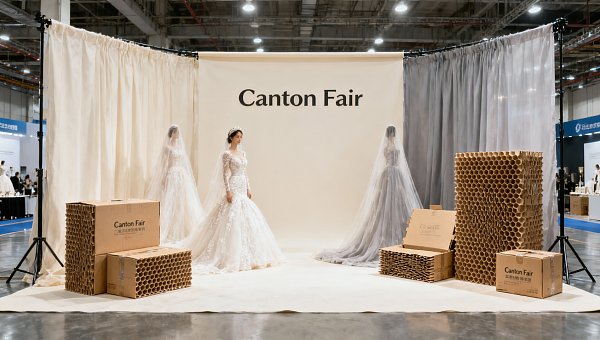
 Eco PackagingCanton Fair Wedding Photo Props Zone Sees 37% YoY GrowthWedding photo props at Canton Fair surge 37% YoY—biodegradable packaging & magnetic modular backdrops lead global demand. Discover key trends now!Packaging Supply ExpertApr 24, 2026
 Export UpdatesChina Customs Launches Beta 'Wedding Photo Props Export Compliance Self-Check Platform'Wedding photo props exporters: Use China Customs’ new beta Self-Check Platform for real-time export compliance guidance on HS codes like 9405.40, 4202.92 & 6307.90 — avoid delays in US, EU, ASEAN & Middle East markets.Apr 24, 2026
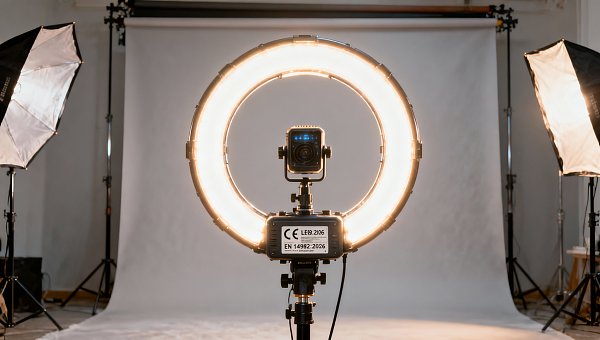
 Commercial LEDEN 14982:2026 Effective: LED Softlight Devices for Wedding Photography Must Pass Enhanced EMC Immunity TestsLED softlight devices for wedding photography must now pass enhanced EMC immunity tests per EN 14982:2026 — ensure CE compliance before EU market entry!Commercial Tech EditorApr 24, 2026
 Carton & PlasticsUS CPSC Recalls 7 Chinese Wedding Backdrop Makers for FormaldehydeUS CPSC recalls 7 Chinese wedding backdrop makers for formaldehyde—critical alert for婚纱摄影 exporters, MDF suppliers & US importers. Act now to avoid detention & liability.Packaging Supply ExpertApr 24, 2026