Industry News
Curation by industry experts
Hot Articles
Popular Tags
EU EcoDesign Rules for LED Photo Lights Take Effect Oct 2027
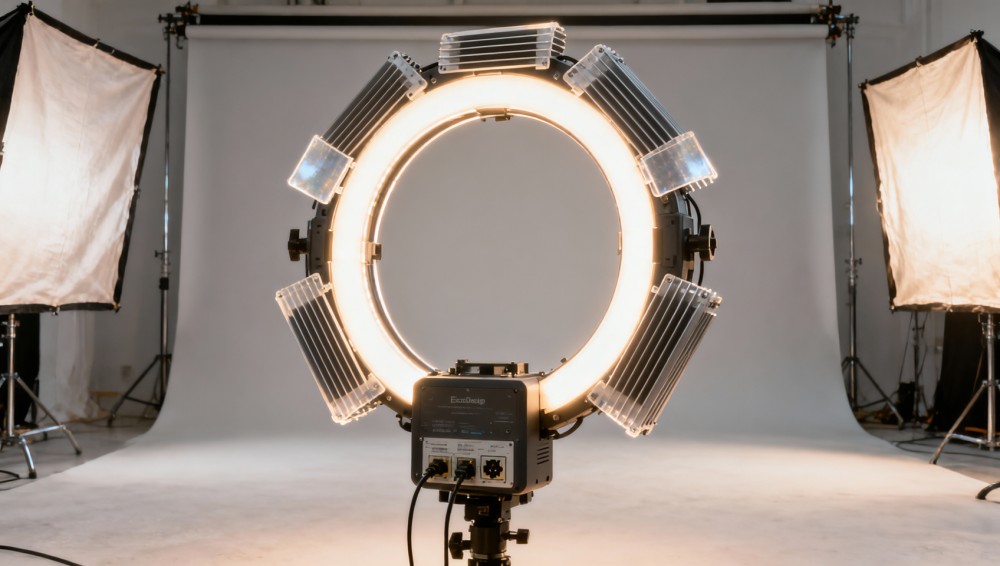
On 1 October 2027, new EU EcoDesign requirements will apply to professional LED softlight equipment used in wedding and portrait photography — including ring lights, panel softboxes, and portable fill-light systems. This regulatory shift directly affects manufacturers, exporters, and supply chain stakeholders in the photographic lighting sector, particularly those engaged with the EU market.
Event Overview
The European Commission published the draft revision of the EcoDesign for Lighting Equipment regulation on 18 April 2026. For the first time, professional photography LED lighting devices — specifically LED softlights, ring lights, and portable fill-light systems — are included under the EcoDesign framework. The regulation mandates compliance with minimum energy efficiency class IE3+ and mandatory modular design (including replaceable power supplies, lenses, and heat dissipation components), effective from 1 October 2027.
Which Subsectors Are Affected
LED Lighting Manufacturers (OEM/ODM)
Approximately 73% of such equipment is produced in China’s Pearl River Delta and Yangtze River Delta regions. These manufacturers must redesign product architectures to meet both energy efficiency thresholds and repairability requirements — impacting bill-of-materials, thermal management layout, and firmware logic for power control.
Export Trading Companies
Trading firms handling CE-marked photo lighting products face revised conformity assessment pathways. The inclusion of repairability criteria means CE documentation must now cover modularity validation, spare parts availability statements, and technical documentation for disassembly — adding complexity beyond traditional energy labeling and EMC testing.
Component Suppliers (Power Supplies, Optics, Thermal Modules)
Suppliers of critical subassemblies — especially AC-DC drivers, optical diffusers, and passive/active cooling modules — may see increased demand for standardized, interoperable, and certified components aligned with the IE3+ and modular design mandates. Custom or proprietary solutions may require requalification.
Distribution & Brand Operators
Brands selling under their own name in the EU must ensure post-2027 stock complies with both energy performance and repairability obligations. Non-compliant inventory may no longer be placed on the market after the deadline, affecting channel planning, warehouse rotation, and promotional timing.
What Enterprises and Practitioners Should Focus On Now
Monitor official adoption status and transitional provisions
The current text is a draft regulation. Final adoption by the European Parliament and Council is pending. Stakeholders should track official updates via the EU’s EUR-Lex portal and verify whether transitional arrangements — such as grace periods for existing stock or phased implementation for certain features — are confirmed before October 2027.
Prioritize product lines with high EU export exposure
Not all LED photo lighting categories are covered — only those explicitly defined as ‘professional photographic lighting equipment’ in Annex I of the draft. Companies should cross-check their SKUs against the regulation’s scope definition, focusing first on ring lights, continuous LED panels, and battery-powered softboxes commonly used in wedding studios.
Distinguish policy signal from immediate operational impact
Analysis来看, this draft signals a broader regulatory trajectory toward circularity in professional electronics — not just energy use. However, until formal adoption, it remains a preparatory signal rather than an enforceable requirement. Current business decisions should reflect risk mitigation, not full-scale re-engineering without confirmation.
Begin internal alignment on modular architecture and spare parts strategy
From industry angle, early engagement with engineering and procurement teams is advisable: assess feasibility of standardizing power interfaces, lens mounting mechanisms, and heatsink attachment methods. Documenting spare parts availability timelines and service manuals now supports future compliance reporting and avoids last-minute delays.
Editorial Perspective / Industry Observation
Observation来看, this draft represents a significant expansion of EcoDesign beyond household lighting into specialized B2B equipment — indicating growing regulatory attention on professional tools with high usage intensity and relatively long lifespans. It is better understood as a forward-looking policy signal than an immediate compliance trigger, given its draft status and 16-month lead time. The emphasis on repairability — alongside energy efficiency — suggests EU authorities are beginning to treat professional imaging gear as part of the broader electronics circular economy agenda. Continued monitoring is warranted, especially as similar frameworks may emerge in the UK, South Korea, or California in coming years.
Conclusion: This draft regulation marks a structural shift in how professional photographic lighting is regulated in the EU — moving from pure energy performance to integrated sustainability criteria. Its practical significance lies less in immediate enforcement and more in shaping mid-term R&D priorities, supply chain resilience planning, and technical documentation standards. For now, it is best interpreted as a strategic inflection point requiring coordinated technical, legal, and commercial review — not urgent product recall or line stoppage.
Source: European Commission, Draft Delegated Regulation amending Commission Regulation (EU) No 874/2012 on EcoDesign requirements for lighting equipment, published 18 April 2026. Status: Draft — subject to adoption by the European Parliament and Council. Ongoing developments to be tracked via EUR-Lex (Ref: C(2026) 2410 final).
Recommended News
 Expert AnalysisIWA Launches Green Studio Certification for Chinese Photo Studio SuppliersGreen Studio Certification for Chinese photo studio suppliers — IWA's GGSC opens to LED lighting, eco-backdrops, biodegradable props & retouching software. Apply by May 31!Apr 17, 2026
 Fabrics & YarnsTurkey TSE New Standard for Linen-Blend Backdrop FabricsTurkey TSE new standard for linen-blend backdrop fabrics: mandatory antibacterial & stability tests by Aug 2026—secure compliance now to keep supplying Istanbul wedding studios.Textile Industry AnalystApr 17, 2026
 Supply Chain InsightsWedding Photography Prop Freight Rates Surge 23% on Red Sea DisruptionWedding photography prop freight rates surge 23% amid Red Sea disruption—impact on lead times, air costs & supply chain strategy revealed.Apr 17, 2026
 Garment MfgBrazil ANVISA Proposes Child Textile Rules for Bridesmaid AttireBrazil ANVISA’s new child textile rules for bridesmaid attire—lace veils, satin ribbons, silk bouquets—demand ISO flammability & safety testing. Act now!Textile Industry AnalystApr 17, 2026