Industry News
Curation by industry experts
Hot Articles
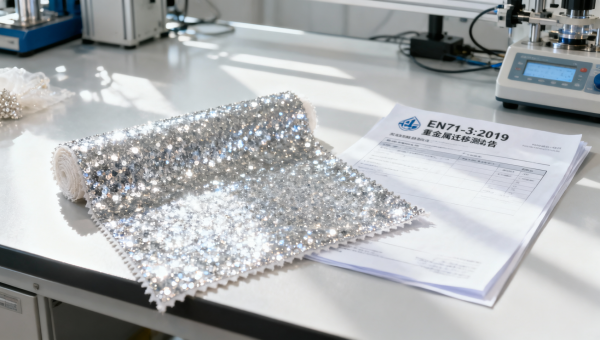
- Industry NewsUS CPSC Updates Safety Guidelines for Wedding Prop Fabrics: Glitter Coatings Must Pass EN71-3 Migration Test
- Industry NewsWEPACK 2026 Shenzhen Show Highlights PHA-Based Barrier System for Global Markets
- Industry NewsRed Sea Crisis Escalates: Dubai Port Imposes High-Risk Surcharge on Packaging Goods
Popular Tags
EU Ecodesign Database Live: LED Soft Lights Must Declare M3+ Repairability
The European Commission launched the updated EcoDesign Product Database (EPREL v3.2) on 22 April 2026 at 00:00 CET, mandating that all LED photography soft lights, ring lights, and portable fill lights placed on the EU market must now display a Repairability Index on product nameplates and accompanying documentation — with a minimum requirement of class M3. This development directly affects LED lighting exporters, compliance service providers, and supply chain actors engaged in EU-bound trade.
Event Overview
On 22 April 2026, the European Commission activated version 3.2 of the Ecodesign Regulated Products Database (EPREL). As of that date, LED soft lights—including studio-grade softboxes, ring lights, and battery-powered portable fill lights—must be labelled with a certified Repairability Index. The index must meet or exceed class M3, defined by three verified criteria: modular design, disassembly using dedicated tools only (no irreversible bonding), and field-upgradable firmware. Concurrently, affected products must carry updated ERP energy labels and an explicit M3 declaration. Chinese LED lighting exporters were instructed to complete dual compliance (ERP label + M3 statement) within 48 hours of go-live; non-compliant listings face mandatory platform removal.
Which Subsectors Are Affected
Direct Exporters (OEM/ODM Lighting Manufacturers)
These enterprises are subject to immediate regulatory enforcement. Non-compliance triggers automatic delisting from EU online marketplaces and potential customs rejection upon import. Impact manifests in production line adjustments (e.g., revised mechanical assembly for modularity), documentation rewrites (user manuals, technical files), and labelling updates across packaging, nameplates, and digital assets.
Supply Chain Compliance & Certification Service Providers
Firms offering CE marking support, repairability testing, or ERP labelling services face surging demand for M3 verification. Their role shifts from advisory to gatekeeping: they must now validate not only energy performance but also structural modularity and firmware upgradability per Annex VII of Regulation (EU) 2023/1715. Delays in third-party assessment may bottleneck time-to-market.
Distribution & E-commerce Platform Operators
EU-based distributors and marketplace hosts (e.g., Amazon DE, Manomano FR) are required to verify M3 declarations prior to product listing. Platform algorithms now cross-check EPREL v3.2 entries against submitted product identifiers. Absence of a valid M3 rating in EPREL results in automated deactivation — no manual override permitted under current system logic.
What Enterprises and Practitioners Should Focus On Now
Confirm EPREL v3.2 registration status for active SKUs
Verify whether existing product models appear in EPREL with valid M3 ratings. Registration requires submission of technical documentation (including exploded diagrams, tooling specifications, and firmware update protocols) — not just energy test reports. Unregistered items are treated as non-compliant even if physically compliant.
Review and revise internal labelling workflows — especially for multi-market SKUs
Many exporters use unified packaging for global distribution. The M3 declaration is EU-specific and must be legible, permanent, and positioned adjacent to the ERP energy label. Temporary stickers or PDF-only declarations do not satisfy the regulation. Physical label revision cycles must align with upcoming production runs.
Validate firmware upgrade mechanisms with EU-recognized test labs
“Firmware upgradability” under M3 means users must be able to install new firmware without proprietary hardware interfaces or vendor lock-in. Analysis来看, many legacy LED controllers rely on closed-bootloader ICs or encrypted OTA protocols — these require redesign or replacement to meet M3. Lab validation is mandatory before EPREL submission.
Prepare for upstream supplier coordination on module-level sourcing
M3’s modularity criterion extends beyond final assembly: power supplies, driver boards, and LED modules must be replaceable as discrete units with standard fasteners. From industry perspective, this increases scrutiny on sub-tier suppliers’ design documentation and part numbering consistency — particularly for contract-manufactured components sourced from multiple factories.
Editorial Perspective / Industry Observation
This EPREL v3.2 rollout is better understood as an operational enforcement milestone — not a policy announcement. The M3 threshold was defined in Regulation (EU) 2023/1715, published two years earlier; EPREL v3.2 is the first database iteration enabling real-time verification. Observation来看, the 48-hour compliance window signals prioritisation of platform-level enforcement over customs inspections — meaning digital marketplace compliance is now the critical path. Current more relevant than speculation about future classes (e.g., M4) is verifying whether existing technical files already contain sufficient evidence for M3, or whether design retrofitting is unavoidable. The requirement reflects a broader shift toward verifiable, machine-readable sustainability claims — where documentation quality matters as much as physical product attributes.
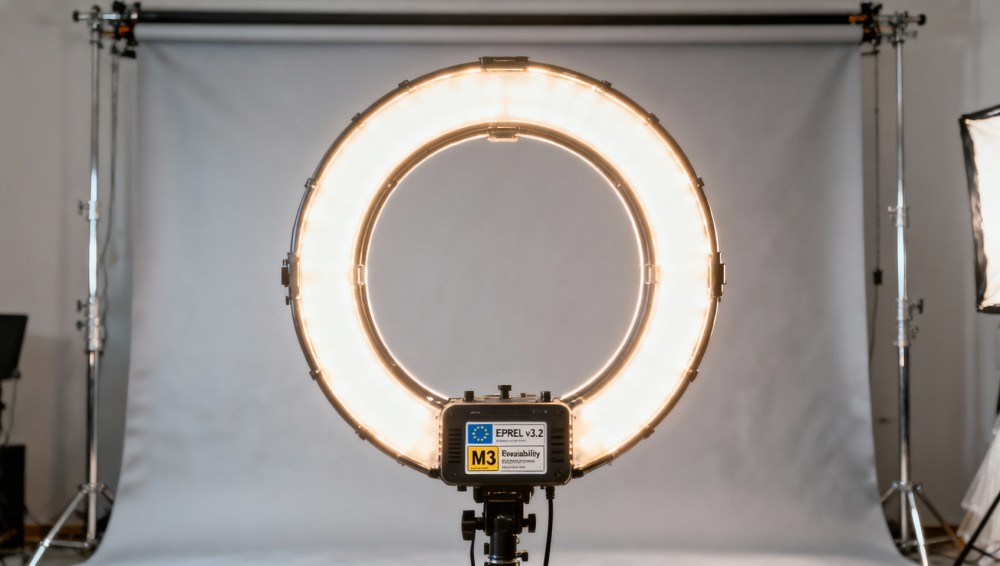
In summary, the EPREL v3.2 activation formalises enforceable repairability accountability for professional LED lighting in the EU. It does not introduce new design obligations per se, but transforms previously declarative requirements into auditable, database-linked conditions. For exporters, this marks the point where repairability transitions from a marketing attribute to a mandatory, traceable product parameter — with direct consequences for listing eligibility, inventory planning, and technical file management.
Source: European Commission – EPREL v3.2 Launch Notice (22 April 2026); Commission Delegated Regulation (EU) 2023/1715 on ecodesign requirements for LED lighting equipment. Areas requiring ongoing observation: Potential extension of M3+ requirements to non-professional LED lamps (e.g., home video lights), and harmonisation timelines for firmware update protocol standards across notified bodies.
Recommended News
 Industry NewsUS CPSC Updates Safety Guidelines for Wedding Prop Fabrics: Glitter Coatings Must Pass EN71-3 Migration TestUS CPSC now requires EN71-3 migration testing for glitter coatings on wedding props & cosmetic packaging. Exporters must comply to avoid customs delays. Learn key action steps for 2026 regulations.Apr 21, 2026
 Industry NewsWEPACK 2026 Shenzhen Show Highlights PHA-Based Barrier System for Global MarketsDiscover BoCarbon's PHA-based barrier system at WEPACK 2026 Shenzhen, a game-changing sustainable packaging solution with FDA/EFSA certification. Learn how global brands like KHS and Indofood are adopting this plastic alternative for paper-based packaging.Apr 21, 2026
 Industry NewsRed Sea Crisis Escalates: Dubai Port Imposes High-Risk Surcharge on Packaging GoodsDubai's new High-Risk Surcharge on packaging goods via Red Sea routes ($850-$1,420/container) plus 18% Suez toll hike forces businesses to rethink logistics strategies. Learn cost impacts & mitigation tactics.Apr 21, 2026
 Industry NewsEU REACH Annex XVII Adds Glitter Coating Restrictions, Requiring SVHC Declarations for Chinese Exporters from July 2026EU REACH Annex XVII now restricts glitter coatings in packaging, requiring SVHC declarations from Chinese exporters by July 2026. Learn how this impacts packaging, cosmetics & luxury goods sectors and key compliance steps to avoid trade disruptions.Apr 21, 2026