Industry News
Curation by industry experts
Hot Articles
Popular Tags
India BIS Enforces IP65 & Drop Test for Wedding LED Lights
On April 28, 2026, the Bureau of Indian Standards (BIS) released the final IS 15871:2026 standard, mandating IP65 ingress protection and 1.2-meter concrete-surface drop testing (per IEC 60529 and IS 302-2-38) for all LED lighting products intended for wedding photography sold in India. Enforcement begins October 15, 2026. Exporters—particularly manufacturers and traders of professional LED studio lighting—must now prioritize compliance verification, BIS product registration, and third-party testing from BIS-recognized laboratories.
Event Overview
The Bureau of Indian Standards (BIS) published IS 15871:2026 on April 28, 2026. The standard specifies mandatory requirements for LED lamps used in wedding photography applications in India. Effective October 15, 2026, all such products placed on the Indian market must meet IP65 protection level and pass a 1.2-meter drop test onto a concrete surface, as defined by IEC 60529 and IS 302-2-38. Compliance requires product registration via the BIS online portal and test reports issued exclusively by BIS-recognized laboratories. Non-compliant products will be prohibited from import and sale in India.
Industries Affected by Segment
Direct Exporters (China-based)
Chinese enterprises exporting LED wedding lighting to India are directly subject to the new requirement. Non-registration or failure to obtain valid test reports from BIS-recognized labs will block customs clearance and shelf placement. Impact manifests in delayed shipments, rejected consignments, and potential contract penalties with Indian distributors.
LED Fixture Manufacturers (OEM/ODM)
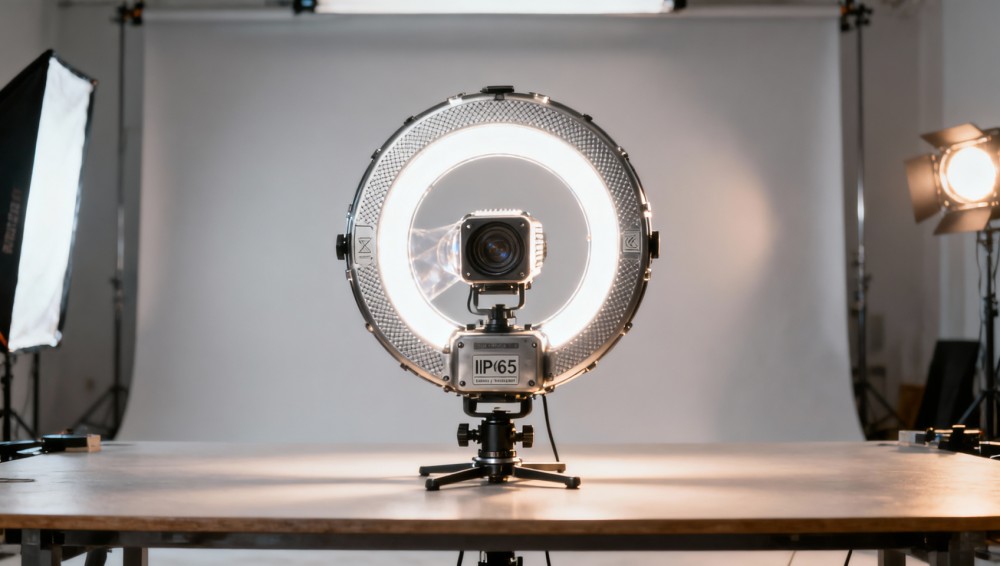
Manufacturers supplying finished LED studio lights—including ring lights, panel lights, and softboxes—must verify structural integrity for the 1.2 m drop test and re-evaluate enclosure design for IP65 compliance. This may necessitate redesign of housings, gaskets, lens seals, and mounting hardware—impacting lead times and unit costs for India-bound batches.
Supply Chain Service Providers (Testing & Certification)
Third-party testing labs and certification consultants accredited by BIS—or seeking recognition—face increased demand for IS 15871:2026 validation services. Their capacity to issue accepted reports determines how quickly exporters can achieve market access. Delays in lab scheduling or report issuance may bottleneck entire export pipelines.
Key Focus Areas and Recommended Actions
Confirm Lab Recognition Status Before Testing
Verify that the chosen laboratory is currently listed as BIS-recognized for IS 302-2-38 and IP65 evaluation under IS 15871:2026. BIS updates its list of approved labs periodically; using an unlisted lab renders the report invalid for registration.
Initiate Product Registration Immediately After Test Report Submission
BIS product registration is a separate, non-automated process requiring manual documentation upload and fee payment. Allow at least 4–6 weeks between test completion and registration approval—do not assume test report issuance equals market readiness.
Review Packaging and Logistics for Drop Test Alignment
The 1.2 m drop test applies to the product *as shipped*, including retail packaging and internal cushioning. Manufacturers should assess whether current packaging meets the test condition—not just the bare fixture—since damage during the test may originate from inadequate shipping protection.
Flag India-Bound SKUs for Separate QC and Documentation Tracking
Introduce internal SKU tagging (e.g., “IN-WED-2026”) to isolate units destined for India. This supports dedicated quality checks, ensures correct labeling per IS 15871:2026, and prevents inadvertent commingling with non-compliant inventory.
Editorial Observation / Industry Perspective
Observably, IS 15871:2026 signals a shift toward performance-based safety enforcement—not just electrical safety, but environmental resilience and mechanical robustness—for niche professional lighting categories in India. Analysis shows this is not an isolated technical update, but part of BIS’s broader effort to align domestic standards with IEC benchmarks while tightening market gatekeeping for imported electronics. From an industry perspective, it reflects growing regulatory attention on application-specific use cases (e.g., studio environments with frequent handling, dust, and humidity), rather than generic LED lamp rules. Current enforcement timing—six months after publication—suggests BIS intends this as an operational requirement, not merely a policy signal; however, actual port-level enforcement consistency remains subject to field-level interpretation and may evolve through Q4 2026.
Conclusion: IS 15871:2026 establishes enforceable physical durability and environmental protection thresholds for a high-value, low-volume segment of the Indian LED lighting market. It does not revise general safety standards, but adds distinct, verifiable conditions tied to real-world usage scenarios. For affected stakeholders, this is best understood not as a temporary hurdle, but as a permanent baseline for market access—requiring integration into product development, QA planning, and export logistics workflows.
Source: Bureau of Indian Standards (BIS), Official Gazette Notification No. IS 15871:2026, published April 28, 2026.
Note: Ongoing observation is recommended regarding BIS’s official list of recognized laboratories and any clarifications issued prior to October 15, 2026.
Recommended News
 Eco PackagingCanton Fair Wedding Photo Props Zone Sees 37% YoY GrowthWedding photo props at Canton Fair surge 37% YoY—biodegradable packaging & magnetic modular backdrops lead global demand. Discover key trends now!Packaging Supply ExpertApr 24, 2026
 Export UpdatesChina Customs Launches Beta 'Wedding Photo Props Export Compliance Self-Check Platform'Wedding photo props exporters: Use China Customs’ new beta Self-Check Platform for real-time export compliance guidance on HS codes like 9405.40, 4202.92 & 6307.90 — avoid delays in US, EU, ASEAN & Middle East markets.Apr 24, 2026
 Commercial LEDEN 14982:2026 Effective: LED Softlight Devices for Wedding Photography Must Pass Enhanced EMC Immunity TestsLED softlight devices for wedding photography must now pass enhanced EMC immunity tests per EN 14982:2026 — ensure CE compliance before EU market entry!Commercial Tech EditorApr 24, 2026
 Carton & PlasticsUS CPSC Recalls 7 Chinese Wedding Backdrop Makers for FormaldehydeUS CPSC recalls 7 Chinese wedding backdrop makers for formaldehyde—critical alert for婚纱摄影 exporters, MDF suppliers & US importers. Act now to avoid detention & liability.Packaging Supply ExpertApr 24, 2026