Industry News
Curation by industry experts
Hot Articles
Popular Tags
SASO Mandates Arabic LED Wedding Light Registration in Saudi Arabia
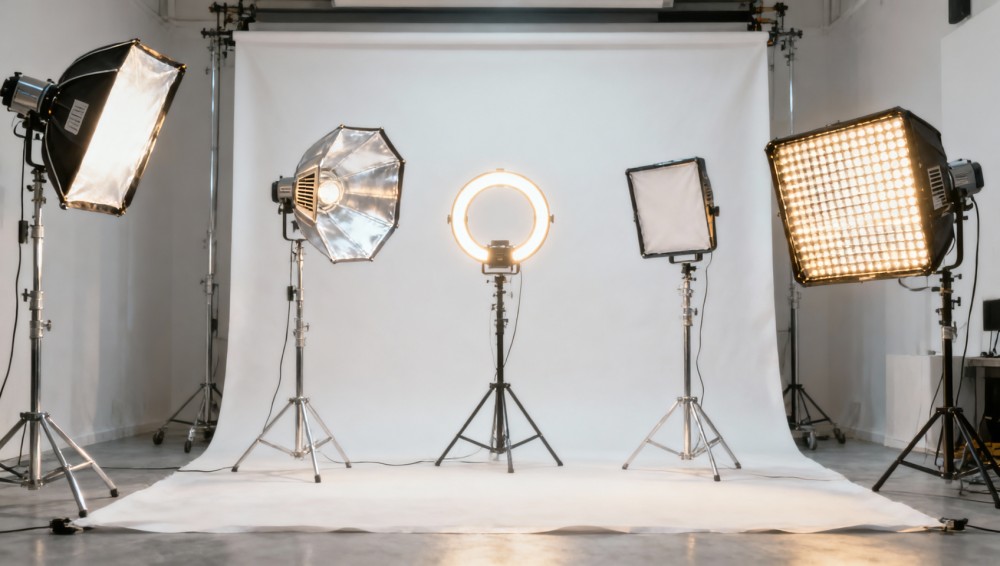
Saudi Standards, Metrology and Quality Organization (SASO) launched a new SABER system module on April 28, 2026, requiring mandatory product registration for LED lighting equipment used in wedding photography (HS code 9405.40) entering the Saudi market — effective July 1, 2026. This development directly affects manufacturers, exporters, and distributors of professional photographic lighting, particularly those supplying from China and other non-GCC countries, and signals tightening regulatory enforcement at the point of market access.
Event Overview
On April 28, 2026, SASO activated a dedicated module within its SABER platform to enforce compulsory registration for LED lamps intended for bridal and studio photography (classified under HS 9405.40). From July 1, 2026, all such products must be registered in SABER and linked to a SASO-certified Local Authorized Representative (LAR) based in Saudi Arabia. Additionally, technical documentation — including user manuals and warning labels — must be submitted in Arabic. Without an appointed LAR, applicants cannot generate the required SABER Certificate of Conformity (CoC).
Industries Affected
Manufacturers of Professional Photography Lighting
Chinese and other non-Saudi manufacturers producing LED fixtures specifically marketed for wedding studios or portrait photography fall under this requirement. They are affected because SASO’s rule applies at the product level, not by brand or origin alone — meaning even OEM/ODM suppliers without direct Saudi distribution channels may face shipment blocks if downstream importers lack valid CoC.
Exporters and Trading Companies Handling Photographic Equipment
Trading firms exporting LED lighting to Saudi Arabia — especially those operating without in-country representation — will encounter immediate operational friction. The absence of a pre-qualified LAR prevents CoC issuance, halting customs clearance. Unlike general consumer lighting, this category now requires documented compliance before physical entry.
Supply Chain Service Providers (Certification, Logistics, Compliance)
Third-party compliance facilitators, certification agents, and freight forwarders supporting cross-border trade into Saudi Arabia must now verify whether client products fall under HS 9405.40 and confirm Arabic-language documentation readiness. Their service scope is effectively expanded to include LAR coordination and translation validation — tasks previously optional for many lighting categories.
What Stakeholders Should Focus On — And How to Respond
Monitor official SABER updates for scope clarification
SASO has not published a formal definition of “wedding photography LED lamps” beyond HS 9405.40. Stakeholders should track SABER announcements for any guidance on functional criteria (e.g., color temperature range, CRI thresholds, dimming features) that may further delineate applicability — as misclassification could lead to delayed registration or rejected submissions.
Confirm LAR engagement before June 2026
Given the July 1, 2026 enforcement date, companies without an existing SASO-authorized LAR must initiate selection and contractual alignment no later than early June. LAR onboarding involves document verification and system access setup; delays risk missing the deadline and disrupting planned shipments.
Validate Arabic technical documentation with native reviewers
Machine-translated or bilingual (English-Arabic) manuals do not satisfy the requirement. All safety warnings, installation instructions, and specifications must be fully localized into Modern Standard Arabic and reviewed for technical accuracy — particularly terms related to electrical safety, IP ratings, and thermal management.
Separate this requirement from broader SASO IECEE or SASO Energy Efficiency programs
This registration is distinct from voluntary energy labeling or IEC-based type testing. Companies already compliant with SASO’s general lighting regulations should not assume coverage — the new mandate introduces a parallel, product-specific workflow tied explicitly to use-case classification (wedding/studio), not just electrical design.
Editorial Observation / Industry Insight
Observably, this measure reflects SASO’s ongoing shift toward use-case–driven conformity assessment — moving beyond generic product categories to regulate equipment based on application context and end-user exposure risk. Analysis shows it is less a one-off policy expansion and more a signal of future segmentation: similar requirements may emerge for other high-intensity or user-facing lighting applications (e.g., medical, stage, or educational lighting) where human proximity and extended operation increase safety relevance. From an industry perspective, it underscores that regulatory readiness now hinges not only on technical compliance but also on local representation infrastructure and linguistic localization capability — capabilities increasingly treated as prerequisites, not add-ons.
Conclusion: This requirement does not introduce a new safety standard, but it does introduce a new procedural gate for market access. Its significance lies in operational impact — not technical novelty. It is best understood not as a technical barrier, but as a structural checkpoint reinforcing the necessity of embedded local compliance capacity for targeted product segments in Saudi Arabia.
Source: Saudi Standards, Metrology and Quality Organization (SASO), official SABER system announcement dated April 28, 2026. Note: Scope boundaries (e.g., exact product definitions under HS 9405.40) remain subject to further clarification by SASO and are under ongoing observation.
Recommended News
 Eco PackagingCanton Fair Wedding Photo Props Zone Sees 37% YoY GrowthWedding photo props at Canton Fair surge 37% YoY—biodegradable packaging & magnetic modular backdrops lead global demand. Discover key trends now!Packaging Supply ExpertApr 24, 2026
 Export UpdatesChina Customs Launches Beta 'Wedding Photo Props Export Compliance Self-Check Platform'Wedding photo props exporters: Use China Customs’ new beta Self-Check Platform for real-time export compliance guidance on HS codes like 9405.40, 4202.92 & 6307.90 — avoid delays in US, EU, ASEAN & Middle East markets.Apr 24, 2026
 Commercial LEDEN 14982:2026 Effective: LED Softlight Devices for Wedding Photography Must Pass Enhanced EMC Immunity TestsLED softlight devices for wedding photography must now pass enhanced EMC immunity tests per EN 14982:2026 — ensure CE compliance before EU market entry!Commercial Tech EditorApr 24, 2026
 Carton & PlasticsUS CPSC Recalls 7 Chinese Wedding Backdrop Makers for FormaldehydeUS CPSC recalls 7 Chinese wedding backdrop makers for formaldehyde—critical alert for婚纱摄影 exporters, MDF suppliers & US importers. Act now to avoid detention & liability.Packaging Supply ExpertApr 24, 2026