Industry News
Curation by industry experts
Hot Articles
Popular Tags
SASO New Rule for LED Softlights in Saudi Arabia (2026)
Saudi Arabia’s Standards, Metrology and Quality Organization (SASO) issued updated requirements for LED softlights used in wedding photography on April 27, 2026. The revision to SASO IEC 62471:2026 introduces mandatory built-in thermal protection and Arabic-language voice alerts — impacting manufacturers, exporters, and compliance service providers serving the Saudi market.
Event Overview
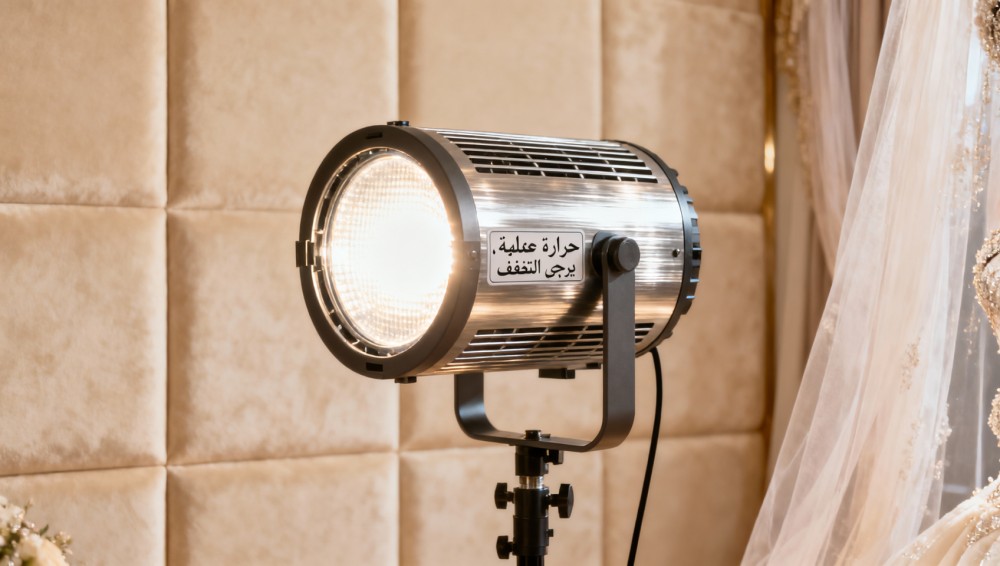
On April 27, 2026, SASO published an amendment to SASO IEC 62471:2026, specifying that all LED softlights intended for wedding photography — including battery-powered models — imported into or sold in Saudi Arabia must incorporate: (1) an internal temperature sensor and automatic overheat cut-off module; and (2) Arabic-language voice prompts (e.g., ‘حرارة عالية، يرجى التوقف’). The requirement becomes mandatory on October 1, 2026. Exporters from China — and other countries — must also update their EMC and energy efficiency test reports to reflect compliance with this amendment.
Industries Affected
Direct Exporters (Especially Chinese Manufacturers)
Exporters supplying LED softlights to Saudi distributors or e-commerce platforms will face immediate conformity obligations. Non-compliant units risk rejection at customs or post-market withdrawal after October 1, 2026. Impact manifests in product redesign timelines, retesting costs, and potential delays in shipment scheduling.
LED Lighting OEM/ODM Manufacturers
OEMs producing under private labels or white-label agreements for global brands must verify whether their current wedding-photography–focused softlight models meet the new thermal and voice-alert specifications. Retrofitting existing designs may require PCB layout revisions, firmware updates, and acoustic component integration — all affecting bill-of-materials and production lead times.
Compliance & Certification Service Providers
Third-party labs and certification bodies supporting SASO conformity assessment must now validate both hardware-level thermal cut-off functionality and Arabic voice prompt accuracy — including correct pronunciation, timing, and trigger logic. This adds a new layer to testing protocols beyond standard photobiological safety and EMC assessments.
Distributors & Import Agents in Saudi Arabia
Local importers handling inventory of non-upgraded LED softlights face increased liability post-October 2026. Stock clearance planning, supplier renegotiation, and documentation traceability (e.g., linking test reports to batch numbers) become operationally critical to avoid regulatory exposure.
What Enterprises and Practitioners Should Focus On Now
Monitor official SASO implementation guidance
While the amendment is published, SASO has not yet released detailed technical implementation notes — such as acceptable sensor placement, minimum voice prompt loudness, or firmware validation criteria. Enterprises should track SASO’s official portal and accredited certification bodies for supplementary notices before finalizing design changes.
Verify scope applicability for specific product categories
The rule explicitly targets “wedding photography LED softlights”, not general-purpose studio lighting. Analysis shows ambiguity remains around borderline cases — e.g., multi-use softboxes marketed for both portrait and event photography. Companies should document intended use, marketing claims, and user manuals to support classification decisions.
Update testing documentation ahead of deadline
EMC and energy efficiency reports submitted for SASO certification must reflect compliance with the April 2026 amendment. Observably, many labs require 6–8 weeks for full retesting — meaning submissions should begin no later than July 2026 to ensure October 1 readiness. Retesting cannot rely on legacy reports unless explicitly endorsed by SASO.
Prepare supply chain coordination for component sourcing
Arabic voice modules and certified thermal cut-off ICs may not be available off-the-shelf from standard electronics distributors. From industry perspective, early engagement with component suppliers — especially those with SASO-recognized qualification — is advisable to secure lead time and avoid bottlenecks in final assembly.
Editorial Perspective / Industry Observation
This amendment is better understood as a regulatory signal than an isolated compliance checkpoint. It reflects SASO’s broader shift toward integrating localized human-factor safeguards — such as native-language warnings — into electrical safety frameworks. Analysis shows similar requirements are under discussion for consumer-grade LED lighting in other Gulf Cooperation Council (GCC) markets, suggesting this may presage regional harmonization efforts. Current enforcement focus remains narrowly defined, but sustained attention is warranted as implementation experience accumulates.
Conclusion: The SASO amendment marks a targeted, enforceable change — not a broad market barrier — with clear technical thresholds and a defined timeline. It signals growing emphasis on real-world usability and localized safety communication in GCC lighting regulations. For affected stakeholders, the most appropriate interpretation is operational: treat it as a fixed compliance milestone requiring coordinated engineering, testing, and documentation actions — not as an open-ended policy trend.
Information Source: Saudi Standards, Metrology and Quality Organization (SASO), official amendment notice to SASO IEC 62471:2026 dated April 27, 2026. Note: SASO’s technical implementation guidelines and lab acceptance criteria remain pending and require ongoing monitoring.
Recommended News
 Eco PackagingCanton Fair Wedding Photo Props Zone Sees 37% YoY GrowthWedding photo props at Canton Fair surge 37% YoY—biodegradable packaging & magnetic modular backdrops lead global demand. Discover key trends now!Packaging Supply ExpertApr 24, 2026
 Export UpdatesChina Customs Launches Beta 'Wedding Photo Props Export Compliance Self-Check Platform'Wedding photo props exporters: Use China Customs’ new beta Self-Check Platform for real-time export compliance guidance on HS codes like 9405.40, 4202.92 & 6307.90 — avoid delays in US, EU, ASEAN & Middle East markets.Apr 24, 2026
 Commercial LEDEN 14982:2026 Effective: LED Softlight Devices for Wedding Photography Must Pass Enhanced EMC Immunity TestsLED softlight devices for wedding photography must now pass enhanced EMC immunity tests per EN 14982:2026 — ensure CE compliance before EU market entry!Commercial Tech EditorApr 24, 2026
 Carton & PlasticsUS CPSC Recalls 7 Chinese Wedding Backdrop Makers for FormaldehydeUS CPSC recalls 7 Chinese wedding backdrop makers for formaldehyde—critical alert for婚纱摄影 exporters, MDF suppliers & US importers. Act now to avoid detention & liability.Packaging Supply ExpertApr 24, 2026