Industry News
Curation by industry experts
Hot Articles
Popular Tags
US CPSC Mandates IEC 62471:2023 RG0 for LED Photo Lights
On May 1, 2026, the U.S. Consumer Product Safety Commission (CPSC) updated its Guidance on Safety Compliance for Lighting Products, introducing mandatory photobiological safety requirements for LED softbox lights and ring lights used in wedding photography. Effective October 1, 2026, such portable photographic lighting equipment exported to the U.S. must comply with IEC 62471:2023 at Risk Group 0 (RG0, 'no hazard'). This development directly affects Chinese manufacturers of LED lighting equipment supplying the U.S. market — impacting market access, testing timelines, and certification costs. Exporters, lighting OEMs, and supply chain service providers should treat this as a near-term compliance priority.
Event Overview
The U.S. Consumer Product Safety Commission (CPSC) published an updated Guidance on Safety Compliance for Lighting Products on May 1, 2026. The revision explicitly includes portable LED photographic lighting devices — specifically LED softbox lights and ring lights commonly used in bridal photography — under mandatory photobiological safety regulation. As of October 1, 2026, these products must be certified to IEC 62471:2023 at Risk Group 0 (RG0). Non-compliant units will be denied U.S. customs clearance.
Industries Affected by Segment
Direct Exporters (U.S.-bound)
These companies face immediate regulatory exposure: failure to obtain IEC 62471:2023 RG0 certification before October 1, 2026, will result in shipment rejection at U.S. ports. Impact manifests in delayed revenue recognition, retesting costs, and potential contract renegotiation with U.S. distributors or studios.
LED Lighting Manufacturers (OEM/ODM)
Manufacturers producing softbox or ring lights for export are required to redesign or validate existing optical and thermal management systems to meet RG0 limits — particularly for blue-light hazard (BLH) and retinal thermal hazard. Testing must be conducted by CPSC-recognized laboratories, adding lead time and cost to product launch cycles.
Supply Chain Service Providers (Testing, Certification, Logistics)
Third-party labs, certification bodies, and customs brokers serving LED lighting exporters will see increased demand for IEC 62471:2023 RG0 assessments. Capacity constraints may arise, especially for labs accredited to the 2023 edition; early engagement is advised to avoid bottlenecks ahead of the October deadline.
What Relevant Enterprises or Practitioners Should Focus On Now
Monitor official CPSC implementation clarifications
While the guidance was issued on May 1, 2026, CPSC has not yet published enforcement protocols, transitional arrangements, or definitions of 'portable photographic lighting' in regulatory text. Analysis shows that stakeholders should track Federal Register notices and CPSC stakeholder webinars through Q3 2026 for operational details.
Prioritize verification for high-volume U.S.-destined SKUs
Observably, not all LED photo lights fall under the new scope — only those marketed or functionally used in close-proximity, prolonged-exposure settings (e.g., studio portrait or bridal shoots). Companies should audit their U.S.-bound product catalog against CPSC’s functional criteria, focusing first on best-selling softbox and ring light models.
Distinguish between policy signal and commercial readiness
Current more accurately reflects a regulatory signal than an immediate enforcement reality: the October 1, 2026, date sets the compliance threshold, but CBP (U.S. Customs and Border Protection) enforcement typically follows formal rulemaking. From industry perspective, certification documentation must be ready by October — but physical inspection ramp-up may occur gradually over Q4 2026 and Q1 2027.
Initiate lab coordination and sample submission now
IEC 62471:2023 RG0 testing requires calibrated spectroradiometric measurement under defined operating conditions (e.g., worst-case dimming level, ambient temperature). Lead times for accredited labs currently average 6–8 weeks. Current more advisable is to submit pre-production samples by July 2026 to secure test slots and allow time for design iteration if initial results fail RG0.
Editorial Perspective / Industry Observation
This update is better understood as a targeted expansion of CPSC’s photobiological safety enforcement — not a broad-based overhaul of lighting regulation. Analysis shows it aligns with growing global attention to LED-specific optical hazards in consumer-facing proximity applications, following similar moves in EU (EN 62471:2015 + amendment A1:2021) and South Korea (KC 62471). However, unlike harmonized regional frameworks, CPSC guidance remains non-regulatory in nature — meaning enforcement relies on case-by-case risk assessment unless elevated to formal rulemaking. Observably, the timing suggests CPSC is responding to incident reports involving eye discomfort from unshielded studio LEDs, though no public incident database has been cited in the guidance. Industry should therefore treat this as both a compliance milestone and an indicator of increasing scrutiny on human-centric lighting parameters in consumer electronics adjacent categories.
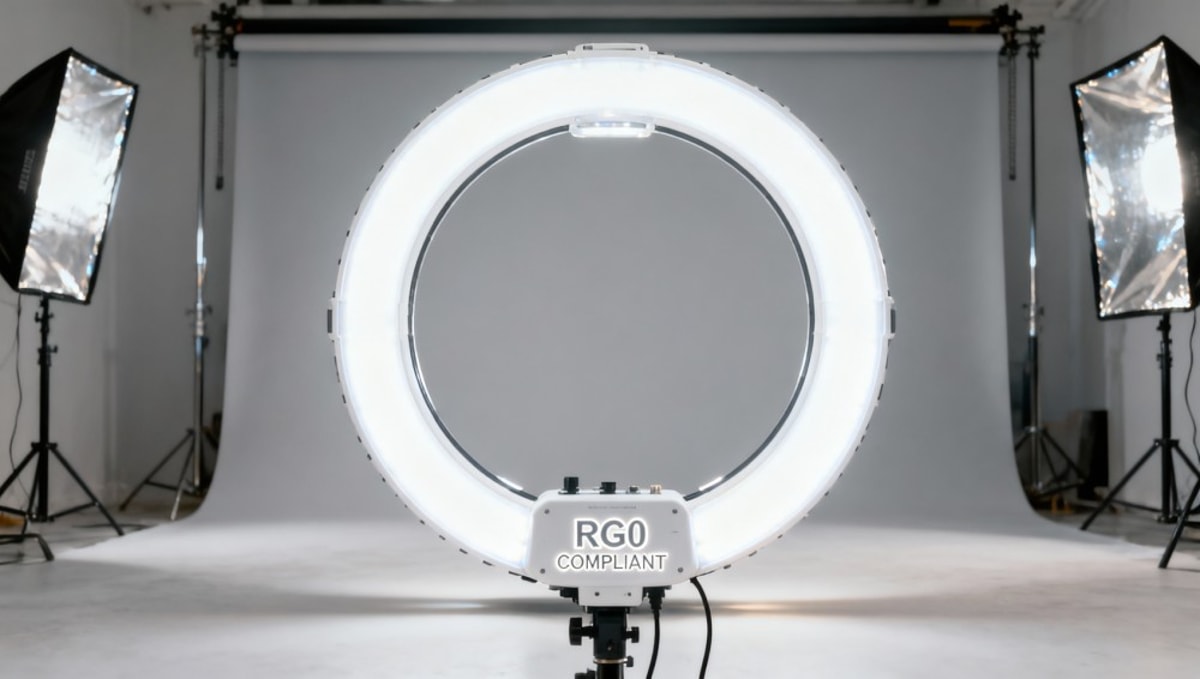
In summary, the CPSC’s May 2026 guidance marks a concrete step toward formalizing photobiological safety as a gatekeeping requirement for specific LED lighting products entering the U.S. market. It does not represent a general lighting standard shift, nor does it apply retroactively to existing inventory. Rather, it signals a focused, timeline-bound obligation for new shipments — one that demands technical validation, not just documentation. For affected enterprises, the most rational interpretation is: this is a binding compliance checkpoint, not a speculative trend.
Source: U.S. Consumer Product Safety Commission (CPSC), Guidance on Safety Compliance for Lighting Products, effective May 1, 2026; IEC 62471:2023, Photobiological safety of lamps and lamp systems. Note: CPSC’s enforcement methodology, definition of covered product scope, and acceptance criteria for third-party test reports remain subject to further clarification and are under active observation.
Recommended News
 Commercial LEDBrazil INMETRO Proposes IP65 Certification for LED Ring LightsBrazil INMETRO proposes IP65 certification for LED ring lights—critical for wedding photography gear exporters. Act now to avoid 2027 import bans.Commercial Tech EditorMay 02, 2026
 Carton & PlasticsTurkey Customs AI System Raises Inspection Rate for Acrylic Photo BackdropsTurkey’s new AI customs system targets acrylic photo backdrops—key for wedding photography—raising inspections to 41%. Exporters, manufacturers & logistics firms must act now.Packaging Supply ExpertMay 02, 2026
 Printing EquipmentJIS T 0601-2026 Revision: UV Ink for Wedding Backdrops Must Declare Full Composition & Phthalate Migration LimitsUV ink for wedding backdrops: JIS T 0601-2026 now mandates full composition disclosure & ≤0.1% phthalate migration—key for Japan-bound exports. Act before Nov 1!Packaging Supply ExpertMay 02, 2026
 Fabrics & YarnsCanton Fair Phase III: Sustainable Wedding Backdrops Top RCEP Buyers' ListSustainable wedding backdrops made from recycled polyester & ocean-recovered nylon top RCEP buyer inquiries at Canton Fair Phase III—discover why eco-friendly婚纱摄影 backdrops are now B2B essentials.Textile Industry AnalystMay 02, 2026