Industry News
Curation by industry experts
Hot Articles
Popular Tags
Vietnam Imposes 28.1% Anti-Dumping Duty on Chinese Wedding Backdrops
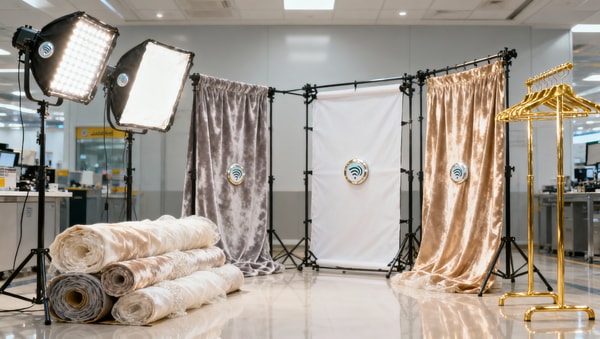
On May 5, 2026, Vietnam’s Ministry of Industry and Trade (MOIT) issued Decision No. 58/QĐ-BCT, imposing a definitive anti-dumping duty of 28.1% on PVC- and non-woven-based wedding photography backdrops originating from China. The measure—effective immediately at Ho Chi Minh City and Hai Phong ports—applies to over 90% of Chinese-exported backdrop products and is retroactively applied from the立案 date (November 2025). This development directly impacts cross-border trade, supply chain planning, and sourcing strategies for businesses engaged in wedding décor, photo studio equipment, and textile-based visual production materials.
Event Overview
Vietnam’s Ministry of Industry and Trade (MOIT) published Decision No. 58/QĐ-BCT on May 5, 2026, confirming the final anti-dumping duty of 28.1% on wedding photography backdrops made of PVC or non-woven fabric and originating in China. The duty applies to imports cleared at Ho Chi Minh City and Hai Phong seaports, effective as of the announcement date. It covers more than 90% of Chinese export categories under this product scope and is retroactively levied from the initiation date of the investigation (November 2025).
Impact on Specific Industry Segments
Direct Trading Enterprises
Exporters and importers engaged in bilateral trade of wedding backdrops between China and Vietnam face immediate cost increases on customs clearance. With duties applied at point of entry, landed costs rise sharply—reducing margin visibility and complicating pricing agreements already negotiated prior to May 2026.
Channel Distribution Companies
Distributors and wholesalers in Vietnam supplying studios and e-commerce sellers must absorb or pass through the 28.1% tariff. Given limited price elasticity in the local wedding service market, margin compression is likely—prompting accelerated evaluation of alternative suppliers in Thailand and India, as noted in MOIT’s public statement.
Raw Material Procurement Units
While the duty targets finished backdrops—not base substrates—the upstream procurement function may observe indirect pressure: Vietnamese converters or laminators sourcing Chinese PVC film or non-woven rolls for domestic backdrop assembly could face scrutiny if downstream products fall under the same HS classification. Clarity on origin tracing and value-add thresholds remains pending.
Manufacturing & Contract Production Firms
Chinese manufacturers exporting directly—or via third-country OEM arrangements—must now verify whether their shipments meet Vietnam’s definition of “originating in China.” Any consignment routed through intermediary jurisdictions without sufficient transformation risks classification under the same duty regime, per MOIT’s enforcement guidance.
What Relevant Enterprises Should Monitor and Do Now
Track official classification updates and exemption clarifications
The MOIT decision references specific HS codes but does not publish full tariff line details in the public notice. Affected companies should monitor Vietnam Customs’ forthcoming binding rulings or explanatory circulars—particularly regarding borderline cases such as hybrid fabric blends or digitally printed variants.
Verify product coverage against actual export SKUs
Although MOIT states the duty covers “over 90% of Chinese export categories,” precise scope depends on physical composition (PVC vs. polypropylene non-woven), backing structure, and surface treatment. Companies should audit current export SKUs against the technical description in Decision No. 58/QĐ-BCT—not rely solely on broad category labels.
Distinguish between policy signal and operational impact
The retroactive application (from November 2025) means some shipments already cleared may be subject to reassessment. However, Vietnam Customs has not yet published procedures for post-clearance duty calls. Enterprises should retain full documentation—including invoices, packing lists, and origin declarations—for all relevant shipments since November 2025, but avoid assuming automatic reassessment without formal notification.
Prepare for near-term sourcing shifts in Vietnam
With MOIT explicitly citing accelerated substitution toward Thai and Indian suppliers, Vietnamese distributors are likely to request new samples, certifications, and lead-time commitments within Q2–Q3 2026. Proactive engagement with verified alternative sources—including logistics readiness and compliance with Vietnam’s labeling and safety requirements—is advisable ahead of formal RFQ cycles.
Editorial Perspective / Industry Observation
Observably, this measure signals a tightening of trade defense enforcement in Vietnam’s light manufacturing import segment—not merely a one-off adjustment. While the 28.1% rate aligns with preliminary findings, its immediate implementation across two major ports suggests prioritized customs enforcement capacity. From an industry perspective, this is less a temporary trade friction episode and more a structural recalibration: it reflects growing sensitivity to concentrated supply chains in visual production consumables, especially where domestic alternatives remain underdeveloped. Analysis shows that similar investigations—such as those previously initiated against Chinese aluminum foil or plastic tableware—have led to sustained duty regimes lasting five years or longer unless overturned on review. Therefore, the current situation is better understood as an established regulatory reality, not a provisional measure awaiting reversal.

Conclusion
This anti-dumping duty marks a material shift in the cost structure and risk profile of importing wedding photography backdrops into Vietnam. Its significance lies not only in the tariff level itself, but in the precedent it sets for applying trade remedies to mid-value decorative textile products—a category previously outside the scope of Vietnam’s frequent anti-dumping actions. For stakeholders, the appropriate stance is neither alarm nor dismissal, but calibrated operational adaptation grounded in verified scope, documented compliance, and diversified contingency planning.
Information Sources
Main source: Vietnam Ministry of Industry and Trade (MOIT), Decision No. 58/QĐ-BCT, dated May 5, 2026.
Note: Further implementation details—including exact HS code ranges, administrative appeal procedures, and potential sunset review timelines—are pending publication by Vietnam Customs and remain under observation.
Recommended News
 Supply Chain InsightsGSPFI Surges 12.4% Amid Red Sea Diversion Impacting Wedding Prop ShippingGSPFI surged 12.4% due to Red Sea diversions—impacting wedding prop shipping costs & timelines. Discover how Asian-sourced photography props affect your EU logistics, pricing, and Q2 planning.May 06, 2026
 Carton & PlasticsECHA Proposes DEHP in PVC Photo Backdrops for SVHC ListDEHP in PVC photo backdrops proposed for EU SVHC list—Chinese婚纱摄影 exporters must act now to ensure REACH & SCIP compliance by August 2026.Packaging Supply ExpertMay 06, 2026
 Industrial FastenersSaudi SABER Mandates RFID/NFC Tags for Wedding Photo Props from May 2026Saudi SABER now mandates RFID/NFC tags on wedding photo props from May 2026—ensure compliance for backdrops, LED stands & portable studios to clear Dammam Port.Tooling & Hardware LeadMay 06, 2026
 Carton & PlasticsVietnam Imposes 28.1% Anti-Dumping Duty on Chinese Wedding BackdropsVietnam imposes 28.1% anti-dumping duty on Chinese wedding backdrops—impacting sourcing, costs & supply chains. Act now to secure compliant, cost-effective alternatives.Packaging Supply ExpertMay 06, 2026