Industry News
Curation by industry experts
Hot Articles
- Industry NewsUS CPSC Updates Safety Guidelines for Wedding Prop Fabrics: Glitter Coatings Must Pass EN71-3 Migration Test
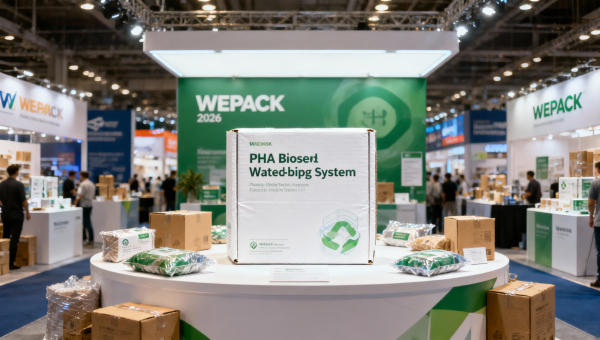
- Industry NewsWEPACK 2026 Shenzhen Show Highlights PHA-Based Barrier System for Global Markets
- Industry NewsRed Sea Crisis Escalates: Dubai Port Imposes High-Risk Surcharge on Packaging Goods
Popular Tags
How to Compare Biodegradable Plastic Bags Manufacturers
Choosing among biodegradable plastic bags manufacturers requires more than comparing prices—it demands a clear view of compliance, production capacity, and sustainability claims. For buyers in lighting and related sectors seeking an eco friendly packaging supplier, this guide explains how to assess supplier credibility, product quality, and export readiness to support smarter sourcing decisions and long-term procurement value.
Why packaging supplier comparison matters in the lighting industry
For lighting brands, importers, and distributors, packaging is not a secondary purchase. It affects product protection, warehouse efficiency, retail presentation, and ESG positioning at the same time. When comparing biodegradable plastic bags manufacturers, procurement teams need to evaluate whether the supplier understands the risks of packing lamps, LED accessories, wiring kits, or fragile decorative lighting during storage and export transit.
A biodegradable bag that works for lightweight textiles may not perform well for metal lamp parts, coated fixtures, or moisture-sensitive electronic components. In lighting supply chains, packaging often needs to withstand 7–30 days of inland transport, container loading, and destination warehousing. That means bag thickness, sealing consistency, puncture resistance, and labeling compatibility must be reviewed together rather than as isolated specifications.
Many buyers also face a structural challenge: sustainability claims are easier to market than to verify. Some suppliers use broad terms such as compostable, biodegradable, eco friendly, or green packaging without clarifying the actual resin system, disposal condition, or certification scope. A reliable comparison process reduces the risk of buying packaging that creates compliance problems or damages brand credibility in B2B and retail channels.
This is where a sourcing intelligence approach becomes useful. Global Supply Review supports procurement and business evaluation teams by connecting packaging assessment with the operating realities of light manufacturing, including lighting and displays. Instead of screening vendors on price alone, buyers can compare factory readiness, export documentation, production logic, and sustainability evidence in a way that supports practical decisions.
Core buying pressures for lighting packaging teams
- Fragile and mixed-material products require packaging that protects surfaces, finishes, and accessories without creating unnecessary bulk.
- Distributors often need stable replenishment cycles every 2–8 weeks, so supply continuity matters as much as unit price.
- Commercial and retail buyers may request sustainability documentation before approving packaging for new product lines.
- Export teams need barcode printing, carton integration, and multilingual labeling support to avoid shipment delays.
How to compare biodegradable plastic bags manufacturers step by step
A useful comparison framework starts with four questions: What material is actually being offered, what is the intended disposal route, what production capacity is available, and what quality controls are documented? Without those four checks, buyers may compare quotations that look similar on paper but represent very different products and service levels.
For lighting applications, it is also important to divide demand into at least 3 categories: inner protective bags for components, retail or accessory bags, and warehouse or kitting bags. These categories may require different thickness ranges, transparency levels, print methods, and sealing formats. A supplier that performs well in one category may not be the best fit for all three.
During vendor comparison, ask for sample packs from 2–4 manufacturers under the same specification brief. Use a consistent review sheet covering dimensions, tolerances, odor, finish quality, tear behavior, and print accuracy. This avoids a common sourcing mistake where buyers compare one detailed quote against another that hides key material or process differences.
A structured evaluation also makes internal approval easier. Procurement, quality, and commercial teams often care about different things. Procurement may focus on MOQ and lead time, while quality checks bag consistency and the sales team wants claims that can be safely used in customer communications. A step-based review aligns these interests before the order is placed.
Five checkpoints before shortlisting a supplier
- Confirm material type and decomposition claim, including whether the bag is intended for industrial composting, home composting, or broader biodegradable positioning.
- Review production capability, such as film blowing, printing, bag converting, and sealing capacity for your likely monthly volume range.
- Check dimensional consistency and seal quality using pilot samples, especially if bags will hold lamp fittings, screws, cables, or coated surfaces.
- Assess export readiness, including carton packing logic, labeling, shipping marks, and standard documentation for international orders.
- Validate commercial terms such as MOQ, sample timing, mass production lead time, and policy for batch variation or replacement.
What buyers should ask in the first inquiry
An effective first inquiry should not stop at “Please quote.” Include target bag size, estimated thickness range, intended use, print requirement, annual demand estimate, and destination market. Even a basic brief with 6 key inputs helps suppliers respond more accurately and allows easier comparison across multiple biodegradable plastic bags manufacturers.
If you source for lighting accessories, mention whether the bag will contact plated parts, painted surfaces, wire terminals, labels, or instruction sheets. This matters because anti-block behavior, migration risk, and sealing temperature consistency can affect the final packing result. Manufacturers with real application experience usually ask follow-up questions within 24–72 hours.
Which technical and compliance factors deserve the closest review?
Technical comparison is where many eco friendly packaging supplier evaluations become more meaningful. The goal is not to chase the most advanced specification by default, but to match material behavior to packaging use. Lighting products often involve mixed weights, sharp edges, coated surfaces, and multiple accessories in one carton, so bag performance has to be judged under real packing conditions.
Typical review items include bag thickness range, seal strength, puncture resistance, transparency, print adhesion, odor level, and storage stability. In many procurement situations, buyers compare samples in the 20–60 micron range depending on whether the bag is used for small screws, lamp shades, mounting kits, or bundled accessory packs. The right range depends on application, not generic claims.
Compliance review should be equally practical. Ask the manufacturer what standards or declarations they can provide for the offered product, and whether the claim applies to the exact bag construction being quoted. A certificate for one material grade does not automatically validate all thicknesses, prints, or blended formulations. Matching document scope to shipment scope is essential.
For importers and business evaluators, another key point is consistency over time. A supplier may provide a good first sample but fail to keep the same resin source or process control in repeat orders. This is why batch-level QC records, incoming material control, and sample retention practices matter, especially for rolling purchase cycles every month or quarter.
A practical comparison table for lighting buyers
The table below helps procurement teams compare biodegradable plastic bags manufacturers using criteria that matter in lighting and electrical accessory packaging, not just generic sustainability messaging.
This framework is especially useful when multiple suppliers appear competitive on price. It turns comparison into a decision matrix based on product fit, documentation quality, and fulfillment reliability. For lighting importers, that often leads to better total procurement outcomes than selecting the lowest quotation.
Common standards and documentation buyers may request
- Material specification sheet covering thickness, dimensions, and intended use conditions.
- Declaration or test reference related to biodegradability or compostability where applicable.
- RoHS or similar declarations if the packaging enters electrical product documentation workflows.
- Packaging artwork approval records for barcodes, recycling marks, and warning statements.
How to compare cost, MOQ, lead time, and service without missing hidden risk
Price comparison becomes misleading when bag specifications are not normalized. One manufacturer may quote on a thinner film, another may exclude printing plates, and another may use a different packing method that raises warehouse handling time. For fair comparison, create a cost sheet with at least 5 columns: material, size, thickness, print setup, and outer carton configuration.
In lighting procurement, MOQ can be decisive. Accessory bags for a high-volume LED line may justify a large order, while replacement-part kits or decorative fixture sets may need smaller, more flexible runs. Buyers should compare whether the supplier supports pilot orders, repeat orders, and SKU variation without causing excessive inventory pressure over a 3–6 month planning window.
Lead time should be separated into at least 3 stages: sample preparation, artwork confirmation, and mass production. In many practical sourcing cases, samples may take 3–10 days, artwork and approval another 3–7 days, and production 2–4 weeks depending on quantity and print complexity. A short quoted lead time has little value if approval and revision steps are ignored.
Service capability is another differentiator. A strong manufacturer does more than ship bags. They can support packing advice, carton quantity planning, SKU-based labeling, and change control when a new lamp model enters production. These service details reduce operational friction for distributors and OEM buyers working across multiple lighting products.
Cost and sourcing comparison table
The following table summarizes how buyers can compare quotations from biodegradable plastic bags manufacturers beyond the headline unit price.
For business evaluators, the strongest supplier is often not the cheapest one but the one that provides the clearest cost logic, the most transparent assumptions, and the fewest downstream disruptions. That is particularly true for lighting companies balancing sustainability goals with packaging reliability and tight shipment schedules.
When alternatives should be considered
Not every lighting product needs biodegradable plastic bags. In some cases, paper-based protective wraps, recycled poly options, or hybrid packing systems may offer a better fit. If the bag is used only for short-term bundling inside a master carton, the decision should compare disposal route, moisture sensitivity, warehouse handling, and cost per packed unit rather than assuming one material category is always superior.
A practical sourcing review compares at least 2–3 packaging routes for each product family. This is especially relevant for distributors managing decorative fixtures, spare parts, or smart lighting accessories with different turnover rates and export destinations.
What mistakes do buyers make when evaluating biodegradable bag suppliers?
The first common mistake is treating sustainability wording as proof of performance. A supplier may present a strong eco message but still lack the consistency, print control, or lead-time discipline needed for industrial packaging programs. For lighting buyers, packaging must work operationally first and communicate responsibly second.
The second mistake is approving samples without testing real pack-out conditions. A bag that looks acceptable when empty may split under sharp brackets, lose seal integrity in warm storage, or fail to hold grouped accessories. Whenever possible, run a pilot test using actual lamp components, expected carton counts, and normal handling steps over several days.
The third mistake is underestimating documentation detail. Commercial teams may want to advertise eco friendly packaging, but if procurement has not confirmed the exact wording allowed by the supplier’s documentation, the brand may overstate the claim. Careful language review is especially important for cross-border sales where buyer expectations differ by market.
The fourth mistake is ignoring supplier communication quality. Delayed replies, vague answers, or inconsistent specification files during the quotation stage often signal future execution problems. For recurring lighting programs, communication speed within 24–48 hours can be almost as valuable as a marginal price advantage.
FAQ for procurement and sourcing teams
How many manufacturers should I compare before making a decision?
In most B2B packaging projects, comparing 3 qualified manufacturers is enough to see market range without slowing the process. If the project involves custom printing, strict compliance review, or multiple SKUs for lighting accessories, 4 suppliers may provide a better benchmark. More than that can create administrative noise unless the requirement is highly strategic.
What lead time is typical for custom biodegradable plastic bags?
Typical timing depends on artwork complexity, sample needs, and order size. Buyers often see 3–10 days for sampling, 3–7 days for artwork confirmation, and 2–4 weeks for production. During peak periods or when resin availability changes, timelines may extend, so build buffer time into launch plans for new lighting products.
What matters most for lighting accessories: thickness or material claim?
Both matter, but application fit comes first. If the bag must hold screws, clips, terminal parts, or small brackets, thickness and puncture behavior are critical. If the bag is visible to end users or used in a sustainability-led product line, the material claim and supporting documentation become more important. The right decision balances protection, communication, and disposal expectations.
Should distributors request samples for every SKU?
Not always, but they should sample every material or construction type. If 10 SKUs share the same bag structure and only dimensions change slightly, sample review can focus on representative sizes. If one set is for heavy mounting hardware and another is for lightweight manuals or cable ties, separate validation is advisable.
Why work with Global Supply Review for supplier evaluation and sourcing insight
For buyers in lighting and related light-manufacturing sectors, supplier comparison is no longer just a factory search exercise. It requires cross-functional judgment spanning packaging technology, procurement discipline, sustainability review, and export execution. Global Supply Review helps decision-makers approach that complexity with a more structured, market-aware sourcing lens.
Because GSR focuses on foundational sectors such as Packaging & Printing and Lighting & Displays, its value lies in connecting material-level evaluation with practical B2B trade realities. Procurement directors can use this perspective to screen biodegradable plastic bags manufacturers more efficiently, while distributors and commercial teams can better understand which supplier profiles match their channel and product strategy.
If your team is assessing an eco friendly packaging supplier for lamps, LED kits, spare parts, or retail-ready lighting accessories, a structured discussion can save weeks of trial and error. The most useful starting points usually include 6 items: bag dimensions, thickness target, print needs, monthly demand, destination market, and required documentation.
You can contact GSR to explore supplier comparison frameworks, packaging selection logic, lead-time planning, sample evaluation, certification scope questions, and quotation alignment for export programs. This is especially valuable when you need to balance sustainability goals with packaging reliability, custom requirements, and commercial launch timing.
What you can discuss with our team
- How to compare biodegradable plastic bags manufacturers for different lighting product categories.
- How to confirm material claims, documentation scope, and export suitability before purchasing.
- How to evaluate MOQ, lead time, and sampling plans for pilot runs or ongoing replenishment.
- How to align packaging specifications with cost targets, retail presentation, and distributor handling needs.
- How to organize quotation review, custom printing checks, and supplier shortlisting for faster decision-making.
If you are preparing a new sourcing round, planning a packaging switch, or validating supplier options for an upcoming lighting shipment cycle, reach out with your specification sheet or sample requirements. A clearer comparison process leads to more reliable packaging decisions and stronger long-term procurement value.
Recommended News
 Industry NewsUS CPSC Updates Safety Guidelines for Wedding Prop Fabrics: Glitter Coatings Must Pass EN71-3 Migration TestUS CPSC now requires EN71-3 migration testing for glitter coatings on wedding props & cosmetic packaging. Exporters must comply to avoid customs delays. Learn key action steps for 2026 regulations.Apr 21, 2026
 Industry NewsWEPACK 2026 Shenzhen Show Highlights PHA-Based Barrier System for Global MarketsDiscover BoCarbon's PHA-based barrier system at WEPACK 2026 Shenzhen, a game-changing sustainable packaging solution with FDA/EFSA certification. Learn how global brands like KHS and Indofood are adopting this plastic alternative for paper-based packaging.Apr 21, 2026
 Industry NewsRed Sea Crisis Escalates: Dubai Port Imposes High-Risk Surcharge on Packaging GoodsDubai's new High-Risk Surcharge on packaging goods via Red Sea routes ($850-$1,420/container) plus 18% Suez toll hike forces businesses to rethink logistics strategies. Learn cost impacts & mitigation tactics.Apr 21, 2026
 Industry NewsEU REACH Annex XVII Adds Glitter Coating Restrictions, Requiring SVHC Declarations for Chinese Exporters from July 2026EU REACH Annex XVII now restricts glitter coatings in packaging, requiring SVHC declarations from Chinese exporters by July 2026. Learn how this impacts packaging, cosmetics & luxury goods sectors and key compliance steps to avoid trade disruptions.Apr 21, 2026