Industry News
Curation by industry experts
Hot Articles
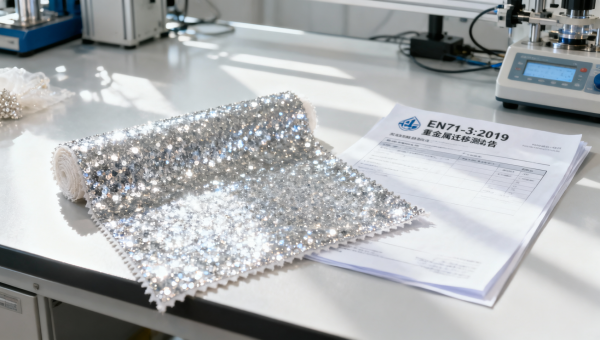
- Industry NewsUS CPSC Updates Safety Guidelines for Wedding Prop Fabrics: Glitter Coatings Must Pass EN71-3 Migration Test
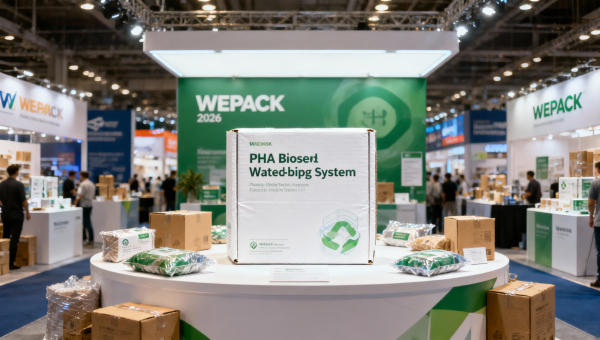
- Industry NewsWEPACK 2026 Shenzhen Show Highlights PHA-Based Barrier System for Global Markets
- Industry NewsRed Sea Crisis Escalates: Dubai Port Imposes High-Risk Surcharge on Packaging Goods
Popular Tags
WEPACK Shenzhen 2026: BoCarbon’s PHA Paper Barrier System Draws Global Buyer Validation
At the WEPACK Shenzhen International Packaging Exhibition, opening on April 21, 2026, BoCarbon Technology’s PHA-based柔光布 (soft-light fabric) barrier system—designed for paper substrates—emerged as a focal point for technical validation by buyers from Europe, the U.S., and the Middle East. The development signals relevance for packaging converters, sustainable photography supply chains, and food-contact material importers seeking certified, compostable alternatives.
Event Overview
The WEPACK Shenzhen International Packaging Exhibition opened on April 21, 2026. During the event, Chinese company BoCarbon Technology unveiled its PHA (polyhydroxyalkanoate) paper-based soft-light fabric barrier system. The material is derived from sugarcane bagasse, achieves ≥85% light transmittance, and is fully industrially compostable. It has obtained FDA 21 CFR 176.170 certification for food contact use. Applications highlighted include single-use soft-light fabrics and eco-friendly backdrop liners for premium wedding photography studios. Multiple international photography equipment distributors signed technical compatibility agreements on-site; initial trial orders are expected to commence in Q3 2026.
Impact on Specific Industry Segments
Direct Trading Enterprises
Trading firms specializing in packaging materials or photography consumables face new sourcing considerations. The validated demand from EU and Middle Eastern buyers reflects shifting procurement criteria—not only for performance (e.g., light diffusion, printability) but also for third-party compostability and food-contact compliance. Impact manifests in increased due diligence requirements for supplier certifications and traceability documentation.
Raw Material Procurement Entities
Procurement teams sourcing bio-based polymers or fiber substrates may observe early-stage market signaling toward PHA-derived functional barriers. While current volume remains limited to pilot-scale adoption, the presence of FDA certification—and origin from non-food-competing feedstock (sugarcane bagasse)—may influence long-term strategic assessments of PHA versus PLA or PBAT in barrier applications.
Conversion & Manufacturing Firms
Converters producing coated papers or specialty laminates for photographic or display use must assess process compatibility with PHA-based coatings. The reported light transmittance (≥85%) and substrate flexibility suggest suitability for roll-to-roll coating lines—but no public data on thermal stability, coating weight range, or drying parameters has been released. Impact centers on preliminary technical evaluation, not immediate production integration.
Distribution & Channel Partners
Photography equipment distributors engaging in value-added consumables (e.g., backdrops, lighting accessories) are directly involved: several signed technical adaptation agreements at the show. This indicates a near-term shift toward bundling certified sustainable substrates with hardware—a model requiring updated technical training, updated product documentation, and alignment with end-user sustainability claims.
Key Points for Relevant Enterprises and Practitioners to Monitor
Track official certification scope and regional regulatory alignment
Current FDA 21 CFR 176.170 approval applies to food-contact use—but does not confirm equivalency under EU Regulation (EC) No 1935/2004 or ISO 14855 compostability standards. Enterprises should monitor whether BoCarbon pursues additional certifications aligned with target export markets before committing to scale-up.
Monitor application-specific validation beyond photography
The showcased use cases focus on wedding photography soft-light fabrics and backdrop liners. Analysis来看, broader applicability in food packaging or medical-grade paper barriers remains unconfirmed. Companies evaluating substitution potential should distinguish between demonstrated use cases and speculative extensions.
Distinguish between technical agreement and commercial order readiness
On-site technical adaptation agreements reflect intent—not fulfillment. From industry角度看, Q3 2026 trial orders remain subject to successful material qualification, logistics setup, and customs clearance pathways. Early engagement with BoCarbon’s export documentation team is advisable, rather than assuming drop-ship readiness.
Prepare for documentation and traceability requirements
FDA certification requires full batch traceability and supplier declarations. Current more suitable understanding is that procurement workflows will need to incorporate feedstock origin verification (e.g., sugarcane bagasse sourcing records), processing temperature logs, and industrial composting facility acceptance letters—even for non-food applications marketed as ‘compostable’.
Editorial Perspective / Industry Observation
This development is best understood as a technical validation signal—not yet a commercial inflection point. Observation来看, the concentration of international buyer interest at WEPACK Shenzhen 2026 reflects growing scrutiny of functional biopolymers beyond basic film or cup applications. It highlights how niche, high-value B2B segments (e.g., professional photography supplies) are becoming early adopters for certified bio-based barriers—often ahead of mass-market packaging. However, scalability hinges on consistent PHA resin supply, cost parity versus conventional PE coatings, and clarity on end-of-life infrastructure access. Industry should treat this as an indicator of evolving specification expectations—not as evidence of imminent mainstream substitution.
Overall, the event underscores a tightening linkage between material certification, application performance, and downstream marketing claims—particularly where sustainability narratives intersect with functional requirements like optical clarity and barrier integrity. For stakeholders, sustained attention is warranted—not because volume is imminent, but because specification thresholds are shifting incrementally across premium verticals.
Conclusion
The appearance of BoCarbon’s PHA paper-based barrier system at WEPACK Shenzhen 2026 represents a targeted, application-specific milestone—not a broad industry transition. It signals heightened international interest in certified, compostable functional barriers within specialized B2B channels. Current更适合理解为 a specification benchmarking moment: one that clarifies emerging expectations around feedstock origin, regulatory alignment, and technical adaptability—rather than indicating near-term supply chain replacement.
Source Attribution
Main source: Official exhibition reporting and verified exhibitor announcements from WEPACK Shenzhen 2026.
Items under ongoing observation: Commercial scale-up timeline, regional regulatory expansion beyond FDA, and independent verification of industrial compostability claims.
Recommended News
 Industry NewsUS CPSC Updates Safety Guidelines for Wedding Prop Fabrics: Glitter Coatings Must Pass EN71-3 Migration TestUS CPSC now requires EN71-3 migration testing for glitter coatings on wedding props & cosmetic packaging. Exporters must comply to avoid customs delays. Learn key action steps for 2026 regulations.Apr 21, 2026
 Industry NewsWEPACK 2026 Shenzhen Show Highlights PHA-Based Barrier System for Global MarketsDiscover BoCarbon's PHA-based barrier system at WEPACK 2026 Shenzhen, a game-changing sustainable packaging solution with FDA/EFSA certification. Learn how global brands like KHS and Indofood are adopting this plastic alternative for paper-based packaging.Apr 21, 2026
 Industry NewsRed Sea Crisis Escalates: Dubai Port Imposes High-Risk Surcharge on Packaging GoodsDubai's new High-Risk Surcharge on packaging goods via Red Sea routes ($850-$1,420/container) plus 18% Suez toll hike forces businesses to rethink logistics strategies. Learn cost impacts & mitigation tactics.Apr 21, 2026
 Industry NewsEU REACH Annex XVII Adds Glitter Coating Restrictions, Requiring SVHC Declarations for Chinese Exporters from July 2026EU REACH Annex XVII now restricts glitter coatings in packaging, requiring SVHC declarations from Chinese exporters by July 2026. Learn how this impacts packaging, cosmetics & luxury goods sectors and key compliance steps to avoid trade disruptions.Apr 21, 2026