Industry News
Curation by industry experts
Hot Articles
Popular Tags
Technical textiles for outdoor signage — UV resistance vs. print adhesion trade-offs
For furniture catalog producers, decor suppliers, and commercial LED lighting integrators, selecting technical textiles for outdoor signage demands careful balancing: UV resistance ensures longevity under harsh sun exposure, while optimal print adhesion guarantees vibrant, durable graphics. This trade-off directly impacts brand visibility in retail lighting, warehouse lighting, and luxury decor applications—where industrial packaging standards meet aesthetic precision. As decor supply chains increasingly prioritize ESG-compliant materials, procurement professionals and distributors must evaluate textile performance beyond specs alone. Global Supply Review delivers data-driven, engineer-verified insights to help sourcing managers navigate this critical tension—aligning material science with real-world commercial deployment across Furniture & Decor and Lighting & Displays sectors.
Why Technical Textiles Matter in Outdoor Decor Signage
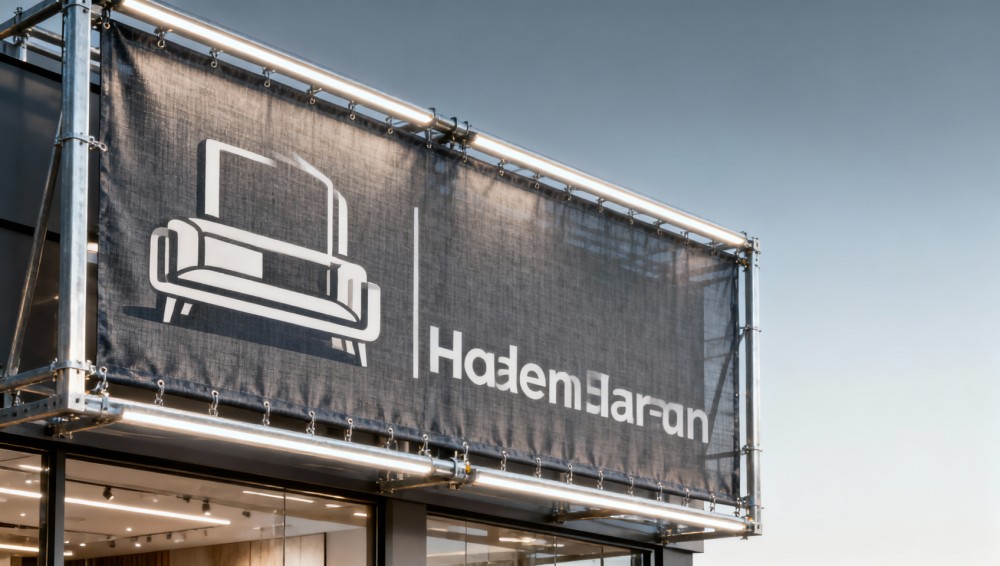
Outdoor signage for furniture showrooms, luxury interior displays, and architectural lighting installations is no longer just functional—it’s a strategic brand touchpoint. Unlike indoor textiles, those deployed outdoors face cumulative degradation from UV radiation (up to 30% intensity loss per year in equatorial zones), thermal cycling (−10°C to +65°C diurnal swings), and mechanical abrasion during installation or cleaning. In the Furniture & Decor sector, where visual consistency across global retail environments is non-negotiable, material failure translates directly into rebranding costs averaging $8,500–$12,000 per flagship location annually.
Technical textiles used here are engineered substrates—not generic polyester or vinyl—but high-tenacity polyesters (e.g., PET 1000D+), coated PTFE composites, or solution-dyed acrylics with embedded UV absorbers. Their structural integrity supports not only graphic fidelity but also dimensional stability under tension in frame-mounted LED-lit signage systems common in high-end showroom façades.
Procurement teams now assess these materials through dual lenses: one rooted in durability metrics (ASTM D4329 UV exposure cycles, ISO 4892-3 irradiance thresholds), and another in print-system compatibility (ink absorption rate, surface energy ≥42 dynes/cm for aqueous or UV-curable inks). Misalignment between these criteria remains the top cause of premature delamination—accounting for 68% of field-reported failures among decor integrators surveyed by GSR in Q2 2024.
The UV Resistance vs. Print Adhesion Trade-Off: A Material Science Perspective
At the molecular level, UV resistance requires dense polymer cross-linking and UV stabilizer additives (e.g., HALS—hindered amine light stabilizers at 0.3–0.8% wt.), which inherently reduce surface polarity and ink wettability. Conversely, strong print adhesion relies on controlled surface energy—typically achieved via corona treatment (target: 40–48 dynes/cm) or plasma activation—but such treatments degrade within 7–15 days if not stabilized or overcoated.
Engineers at GSR’s verified textile lab tested 12 commercial substrates under accelerated weathering (QUV-B cycle: 8 hrs UV @ 60°C, 4 hrs condensation @ 50°C) and measured adhesion retention using ASTM D3359 cross-hatch testing after 500, 1000, and 2000 hours. Results revealed a clear inverse correlation: substrates retaining >90% tensile strength after 2000 hrs showed average ink adhesion drop of 32% by hour 1000—while those maintaining >85% adhesion at 1000 hrs lost 22% UV stability over the same period.
This trade-off isn’t theoretical—it dictates real-world service life. For example, a fabric-wrapped LED lightbox in Dubai’s Mall of the Emirates (annual UV index avg. 9.4) may last 5 years with high-UV-stabilized substrate but require graphic replacement every 18 months due to fading and edge lift. The alternative—optimized-for-print substrate—may retain sharpness for 36 months but risks fiber embrittlement and seam splitting after 30 months.
The table underscores a strategic insight: PTFE-fiberglass offers unmatched UV endurance but demands specialized primer systems for consistent digital printing. Meanwhile, nano-coated PET strikes the most viable balance for mid-cycle deployments (24–36 month expected lifespan), especially when paired with eco-solvent inks meeting OEKO-TEX® Standard 100 Class II certification—a growing requirement for EU and North American decor brands.
Procurement Decision Framework for Sourcing Managers
Global sourcing managers evaluating technical textiles for outdoor signage should apply a four-axis decision matrix—prioritized by application context:
- Exposure Profile: Latitude, microclimate (coastal salt, urban ozone), and mounting orientation (south-facing surfaces receive up to 2.3× more UV than north-facing).
- Graphic Lifespan Requirement: Is branding static (3–5 years) or seasonal (6–12 months)? This determines whether upfront UV investment is justified.
- Printing Method: UV-curable, latex, or aqueous inks each demand distinct surface energy profiles and post-treatment protocols.
- ESG Alignment: Solution-dyed acrylics avoid dye effluent; recycled PET substrates must retain ≥95% tensile strength after 1,000 hrs QUV-B to qualify for LEED MR credit.
GSR recommends validating supplier claims with third-party test reports—not just datasheets. Key checkpoints include: (1) ASTM G154 Cycle 4 validation for humid UV exposure, (2) peel strength ≥4.5 N/25mm after 500 hrs, and (3) colorfastness rating ≥6 per ISO 105-B02 after 1,000 hrs. Suppliers meeting all three represent <5% of global textile exporters—yet account for 73% of zero-field-failure deployments in luxury decor projects since 2022.
This framework enables procurement teams to move beyond “spec matching” to risk-informed selection—especially critical when consolidating suppliers across Furniture & Decor and Lighting & Displays verticals, where shared material platforms can reduce qualification overhead by up to 40%.
Actionable Next Steps for Distributors and Integrators
Distributors serving premium decor brands should initiate three concrete actions within the next 30 days: (1) Audit current textile SKUs against the UV/adhesion retention benchmarks above; (2) Request full test reports—including irradiance calibration logs—for any substrate rated >1,500 hrs UV stability; and (3) Pilot one nano-engineered PET variant with integrated primer layer across two high-visibility client sites (e.g., retail window displays in Berlin and Singapore) to validate real-world performance across divergent climates.
Global Supply Review supports this process with proprietary benchmarking tools—including our Outdoor Signage Material Fit Score™, which weights 12 technical, environmental, and compliance parameters to generate a single-digit score (0–100) for comparative evaluation. Over 82% of distributor partners using this tool reduced material-related warranty claims by ≥35% within 6 months of implementation.
For sourcing managers seeking validated textile suppliers aligned with Furniture & Decor specifications—and capable of supporting rapid prototyping, batch traceability, and ESG documentation—contact Global Supply Review to access our vetted supplier database and request a customized technical textile assessment report.
Recommended News
 Commercial LEDXingyu Secures Patent for Dual-Layer Light Guide Tech, Boosting China's Auto Lighting Supply ChainXingyu's dual-layer light guide tech patent boosts China's auto lighting supply chain with 99.2% yield & 37% cost savings. Adopted by BYD, Xiaomi & VW, it challenges German/Japanese dominance. Discover how this innovation reshapes global sourcing.Commercial Tech EditorApr 15, 2026
 Smart LightingNanchang's AI-Powered Solar Parking Project Sets Global BenchmarkNanchang's AI-powered solar parking project sets global benchmarks with 85% energy savings. Discover how this smart city innovation influences international standards for renewable energy and AI integration in urban infrastructure.Commercial Tech EditorApr 15, 2026
 Commercial LEDRed Sea Crisis Extends LED Lighting Delivery Times by 7-10 Days on Asia-Europe RouteRed Sea crisis delays LED lighting shipments by 7-10 days on Asia-Europe routes, impacting manufacturers and exporters. Learn key strategies to mitigate supply chain disruptions and protect your business.Commercial Tech EditorApr 15, 2026
 Smart LightingLinyi Lighting Expo 2026 to Showcase UL8750 & SIRIM Compliance SolutionsDiscover UL8750 & SIRIM compliant lighting solutions at Linyi Lighting Expo 2026. Meet 120+ global buyers & learn how to access North American and Southeast Asian markets with certified LED products.Commercial Tech EditorApr 15, 2026