Industry News
Curation by industry experts
Hot Articles
Popular Tags
Brazil ANVISA Proposes Regulating Bridesmaid Dresses as Children's Textiles
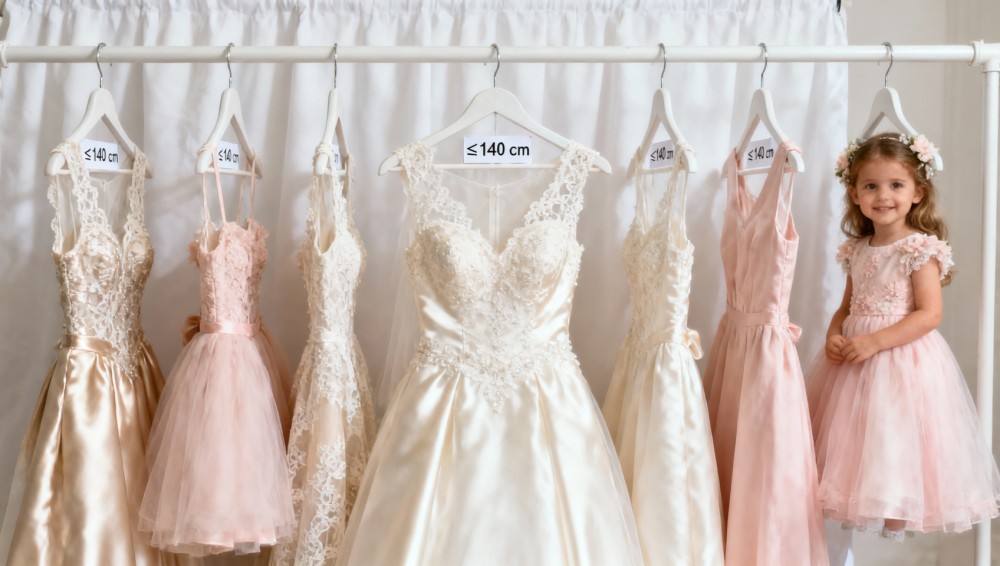
On April 17, 2026, Brazil’s National Health Surveillance Agency (ANVISA) released Draft Normative Instruction No. 12/2026, proposing to classify garments sized ≤140 cm—including bridesmaid dresses and flower girl outfits—as children’s textiles. This regulatory shift triggers mandatory compliance with NBR 16102 (flammability) and NBR 16210 (small parts detachment) testing for affected products. Exporters of Chinese textile accessories supplying such apparel must now conduct both tests pre-shipment—impacting cost, lead time, and supply chain planning. Apparel brands, accessory suppliers, and third-party testing service providers should monitor developments closely.
Event Overview
On April 17, 2026, ANVISA published Draft Normative Instruction No. 12/2026. The draft proposes reclassifying garments with a size label of ≤140 cm—including bridesmaid dresses and flower girl outfits—as children’s textiles under Brazilian regulation. If adopted, these items would fall under the scope of NBR 16102 (flammability requirements) and NBR 16210 (small parts detachment testing). The draft is currently open for public consultation; no final effective date has been announced.
Which Sub-Sectors Are Affected
Direct Exporters of Chinese Accessories
Chinese manufacturers and traders supplying trims, linings, embellishments, or pre-assembled components for bridesmaid/flower girl garments sized ≤140 cm may be required to provide test reports aligned with NBR 16102 and NBR 16210—even if their role is limited to component supply. This arises because downstream garment producers in Brazil may hold upstream suppliers contractually liable for compliance verification.
Apparel Manufacturers Serving Brazilian Retailers or E-commerce Platforms
Contract manufacturers producing finished bridesmaid or flower girl outfits for Brazilian importers face direct regulatory obligation. Compliance will require full garment-level testing—not just fabric or trim samples—adding complexity where layered construction includes multiple materials and attachment methods.
Third-Party Testing and Certification Service Providers
Laboratories accredited for NBR standards—and those supporting Chinese exporters—may see increased demand for dual-standard testing packages. However, only labs recognized by ANVISA or operating under mutual recognition arrangements with INMETRO are authorized to issue valid reports for Brazilian market entry.
What Relevant Enterprises or Practitioners Should Monitor and Do Now
Track the official status and timeline of Draft NI No. 12/2026
The draft remains under public consultation. Stakeholders should subscribe to ANVISA’s official notices and verify whether the final version retains the ≤140 cm size threshold—and whether exemptions apply for specific garment types (e.g., adult-style designs worn by minors).
Identify high-risk product lines by size band and end-use labeling
Companies should audit current export SKUs: any bridesmaid or flower girl dress labeled ≤140 cm—even if marketed as ‘junior’ or ‘petite’—may fall within scope. Packaging, tags, and e-commerce product descriptions referencing age group or height-based sizing could further influence classification.
Assess existing testing capacity and lead-time buffers
Given the estimated $420 per-batch cost increase and 5–7 working day extension for dual testing, firms should review current QC workflows. Prioritizing early submission to accredited labs—and confirming report validity for ANVISA acceptance—can mitigate shipment delays.
Clarify compliance responsibility across the supply chain
Exporters should proactively align with Brazilian importers on documentation ownership: whether test reports must be issued in the importer’s name, whether component-level data suffices, and how non-compliant batches will be handled contractually.
Editorial Observation / Industry Perspective
From industry perspective, this proposal signals ANVISA’s broader trend toward harmonizing children’s product safety enforcement—not only for obvious categories like babywear, but also for event-driven apparel with child end-users. Analysis来看, the inclusion of bridesmaid dresses reflects an interpretation of ‘children’s use’ based on anthropometric criteria (size), rather than intended marketing or labeling alone. Current more appropriate understanding is that this remains a draft with uncertain adoption timing and potential scope adjustments; it is not yet an enforceable requirement. That said, its publication marks a concrete policy signal warranting proactive readiness—not urgent overhaul.
Conclusion
This proposal does not immediately change market access rules—but it introduces a new compliance pathway for a previously unregulated apparel segment. For Chinese accessory exporters and their Brazilian partners, the key implication lies in risk anticipation: decisions made today regarding product sizing, labeling, and testing partnerships may determine operational flexibility six to twelve months from now. It is best understood not as an imminent mandate, but as an early-stage regulatory inflection point requiring calibrated attention.
Information Source
Main source: ANVISA Draft Normative Instruction No. 12/2026, published April 17, 2026.
Note: The draft status, consultation period, and potential amendments remain subject to official updates from ANVISA and INMETRO. Continued monitoring is advised.
Recommended News
 Expert AnalysisIWA Launches Green Studio Certification for Chinese Photo Studio SuppliersGreen Studio Certification for Chinese photo studio suppliers — IWA's GGSC opens to LED lighting, eco-backdrops, biodegradable props & retouching software. Apply by May 31!Apr 17, 2026
 Fabrics & YarnsTurkey TSE New Standard for Linen-Blend Backdrop FabricsTurkey TSE new standard for linen-blend backdrop fabrics: mandatory antibacterial & stability tests by Aug 2026—secure compliance now to keep supplying Istanbul wedding studios.Textile Industry AnalystApr 17, 2026
 Supply Chain InsightsWedding Photography Prop Freight Rates Surge 23% on Red Sea DisruptionWedding photography prop freight rates surge 23% amid Red Sea disruption—impact on lead times, air costs & supply chain strategy revealed.Apr 17, 2026
 Garment MfgBrazil ANVISA Proposes Child Textile Rules for Bridesmaid AttireBrazil ANVISA’s new child textile rules for bridesmaid attire—lace veils, satin ribbons, silk bouquets—demand ISO flammability & safety testing. Act now!Textile Industry AnalystApr 17, 2026