Industry News
Curation by industry experts
Hot Articles
Popular Tags
US CPSC Proposes New Safety Rules for Children's Bridesmaid Dresses
On April 14, 2026, the U.S. Consumer Product Safety Commission (CPSC) published a draft amendment to children’s clothing safety standards — FR Doc No. CPSC-2026-0028 — proposing mandatory compliance for children’s bridesmaid dresses and flower girl gowns (ages 3–12) under ASTM F1816. This development directly affects exporters of children’s-style bridal accessories from China, particularly those in Yiwu (Zhejiang) and Chaonan (Guangdong), and signals new regulatory pressure on flammability, small parts, and lead content.
Event Overview
The U.S. Consumer Product Safety Commission (CPSC) issued the Draft Amendment to Children’s Clothing Safety Standards (FR Doc No. CPSC-2026-0028) on April 14, 2026. The draft proposes extending mandatory coverage under ASTM F1816 to children’s bridesmaid dresses and flower girl gowns aged 3–12 years. Three new requirements are introduced: (1) flame resistance meeting 16 CFR 1610 Class 1; (2) small parts retention tested per 16 CFR 1501; and (3) total lead content capped at ≤90 ppm. Implementation is scheduled for Q3 2026. Exporters in Yiwu and Chaonan have initiated pre-compliance testing with SGS.
Industries Affected by This Regulation
Direct Exporters of Children’s Bridal Apparel
These enterprises — primarily SMEs in Yiwu and Chaonan producing ‘child-sized’ bridesmaid dresses and flower girl gowns — face immediate compliance obligations. Their products will now fall under ASTM F1816’s scope, triggering mandatory third-party testing and certification before U.S. entry. Non-compliant shipments risk detention, re-export, or destruction upon arrival.
Suppliers of Fabric, Trims, and Embellishments
Material suppliers providing lace, ribbons, sequins, appliqués, or synthetic linings must ensure their components meet both flammability (16 CFR 1610 Class 1) and small parts pull-force thresholds. Flame-retardant finishing or substrate selection may require revalidation; decorative elements attached via stitching or glue must pass 16 CFR 1501 pull tests — a shift from prior cosmetic-only quality checks.
Contract Manufacturers & Cut-Make-Trim (CMT) Factories
Factories handling assembly, embellishment, and final packaging must revise internal QC checkpoints. For example, seam strength around detachable bows or waistbands now carries regulatory weight. Pre-shipment audits will need to include documented pull-test records and lab reports verifying lead levels in thread, zippers, and metal findings — not just fabric.
Testing & Certification Service Providers
Third-party labs and certification bodies serving Chinese exporters are seeing early demand for pre-assessment against the three new criteria. SGS has already been engaged by multiple clients for gap analysis and mock testing — indicating rising reliance on external validation ahead of formal enforcement.
What Relevant Enterprises or Practitioners Should Focus On and How to Respond
Monitor Official CPSC Updates Through the Federal Register Docket
The draft remains subject to public comment until the deadline published in FR Doc No. CPSC-2026-0028. Stakeholders should track revisions, especially any adjustments to age range, effective date, or test method equivalencies (e.g., whether ISO 6941 or ASTM D6413 may be accepted as alternatives to 16 CFR 1610). Final rule publication — not the draft — triggers binding timelines.
Prioritize High-Risk Components in Current Production Runs
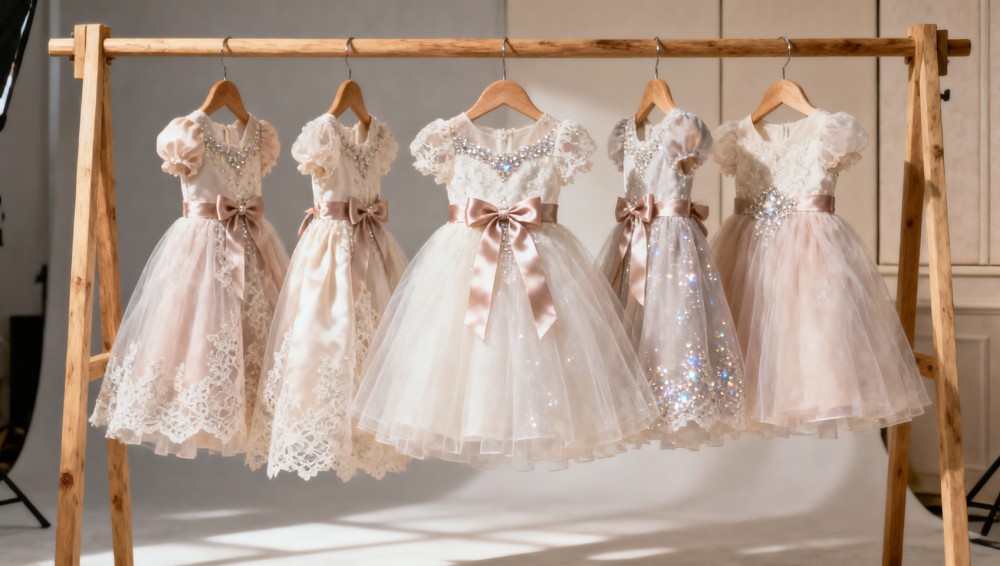
Focus verification efforts on items most likely to fail: synthetic tulle skirts (flammability), glued-on rhinestones or satin bows (small parts retention), and metallic trims (lead). Conduct targeted SGS or equivalent pre-tests on these — not full-line revalidation — to identify remediation needs before Q3 2026.
Distinguish Between Regulatory Signal and Enforceable Requirement
This draft reflects CPSC’s intent but does not yet carry legal force. Exporters should avoid halting orders or renegotiating contracts solely on the draft. Instead, treat it as a signal to align technical documentation, update supplier agreements to include compliance clauses, and build buffer time into shipping schedules for future certification steps.
Prepare Documentation and Supplier Communication Protocols Now
Begin drafting updated specifications for fabric mills and trim vendors that explicitly reference 16 CFR 1610 Class 1, 16 CFR 1501, and 90 ppm lead limits. Share test report templates with key partners to standardize evidence collection. Assign internal compliance ownership — e.g., a product safety coordinator — to manage cross-functional alignment across design, sourcing, and QA teams.
Editorial Perspective / Industry Observation
From an industry perspective, this proposal is best understood as a regulatory signal — not yet an implemented requirement — but one with high likelihood of adoption given CPSC’s consistent focus on children’s apparel hazards. Analysis来看, the inclusion of ‘children’s bridesmaid dresses’ reflects a narrowing of definitional loopholes: garments previously marketed as ‘costumes’ or ‘special occasion wear’ are now being treated functionally as children’s clothing. Observation来看, the timing — with Q3 2026 enforcement — suggests CPSC expects a 12-month transition window post-final rule, implying finalization likely in mid-2026. Current more appropriate interpretation is that this is a structured warning: compliance infrastructure built now will reduce operational friction later, especially for firms without existing ASTM F1816 experience.
Conclusion
This regulation marks a formal expansion of U.S. children’s apparel safety oversight into niche but commercially active categories — children’s bridal wear. Its significance lies less in novelty than in enforceability: unlike voluntary standards, ASTM F1816 carries mandatory third-party testing and CPSC enforcement teeth. For affected exporters and suppliers, the current phase is preparatory — not reactive. It is more accurate to view this draft as a defined milestone in supply chain due diligence, rather than an abrupt disruption. Rational response prioritizes documentation readiness, component-level risk assessment, and calibrated engagement with official rulemaking — not wholesale operational overhaul.
Source: U.S. Consumer Product Safety Commission (CPSC), Federal Register Document No. CPSC-2026-0028, published April 14, 2026.
Note: The final effective date, exact test method allowances, and potential exemptions remain subject to CPSC’s rulemaking process and will require ongoing monitoring.
Recommended News
 Expert AnalysisIWA Launches Green Studio Certification for Chinese Photo Studio SuppliersGreen Studio Certification for Chinese photo studio suppliers — IWA's GGSC opens to LED lighting, eco-backdrops, biodegradable props & retouching software. Apply by May 31!Apr 17, 2026
 Fabrics & YarnsTurkey TSE New Standard for Linen-Blend Backdrop FabricsTurkey TSE new standard for linen-blend backdrop fabrics: mandatory antibacterial & stability tests by Aug 2026—secure compliance now to keep supplying Istanbul wedding studios.Textile Industry AnalystApr 17, 2026
 Supply Chain InsightsWedding Photography Prop Freight Rates Surge 23% on Red Sea DisruptionWedding photography prop freight rates surge 23% amid Red Sea disruption—impact on lead times, air costs & supply chain strategy revealed.Apr 17, 2026
 Garment MfgBrazil ANVISA Proposes Child Textile Rules for Bridesmaid AttireBrazil ANVISA’s new child textile rules for bridesmaid attire—lace veils, satin ribbons, silk bouquets—demand ISO flammability & safety testing. Act now!Textile Industry AnalystApr 17, 2026