Industry News
Curation by industry experts
Hot Articles
Popular Tags
RCEP Green Label Mutual Recognition Launches for Wedding Props
On April 25, 2026, the RCEP Green Certification Coordination Office announced the first batch of green label mutual recognition under the Regional Comprehensive Economic Partnership — granting 23 ISO 14067-certified wedding photography prop manufacturers in Guangzhou, Qingdao, and Ningbo, China, eligibility to affix the RCEP green mutual recognition label. Their biodegradable backdrop boards, eco-friendly velvet fabrics, and recycled cardboard props now qualify for ‘declaration-based release’ at Japanese and South Korean customs. This development directly affects cross-border trade in sustainable visual production materials and signals early operationalization of RCEP’s environmental cooperation framework.
Event Overview
On April 25, 2026, the RCEP Green Certification Coordination Office confirmed that 23 wedding photography prop enterprises — located in Guangzhou, Qingdao, and Ningbo and certified to ISO 14067 (carbon footprint standard) — have been approved to apply the RCEP green mutual recognition label to their products: biodegradable backdrop boards, environmentally friendly velvet fabrics, and recycled cardboard props. These labeled goods are now eligible for expedited customs clearance (‘declaration-based release’) in Japan and South Korea, reducing average export lead times by 7–10 working days and lowering inspection-related costs by approximately 12%.
Industries Affected by This Development
Direct Exporters of Wedding Photography Props
These companies — primarily small- to medium-sized manufacturers supplying physical set elements to studios and rental houses — face immediate changes in documentation, labeling, and customs coordination. The benefit is tangible: faster clearance and lower compliance overhead. However, eligibility is strictly contingent on holding valid ISO 14067 certification and producing only the three specified product types.
Raw Material Suppliers (e.g., Bioplastics, Recycled Paper, Low-Impact Textile Producers)
Suppliers providing inputs for the certified props may see increased demand for traceable, low-carbon feedstock — especially materials with verifiable upstream carbon data. Yet no formal supply-chain certification cascade is confirmed; current recognition applies only to finished goods meeting the stated scope.
Contract Manufacturers & OEM/ODM Service Providers
Firms producing props on behalf of branded or studio clients must verify whether their production lines and material sourcing align with ISO 14067 requirements — particularly if they intend to support RCEP-labeled output. No third-party manufacturing is automatically included; certification remains tied to the named enterprise and its declared products.
Distribution & Rental Channels (Studios, Prop Rental Houses, E-commerce Platforms)
While not directly subject to certification, downstream channels handling these props may need to adjust procurement criteria, update import documentation workflows, and verify label authenticity upon receipt — especially when reselling or re-exporting within RCEP markets.
What Relevant Enterprises or Practitioners Should Focus On Now
Monitor official updates from the RCEP Green Certification Coordination Office
The initial rollout covers only three product categories and three Chinese cities. Any expansion — to additional regions, materials, or certification standards — will be formally communicated through this office. Subscribing to its public notices is essential for timely alignment.
Verify product scope and certification validity before labeling or shipment
Only biodegradable backdrop boards, eco-friendly velvet, and recycled cardboard props produced by the 23 named enterprises qualify. Using the RCEP green label on other items — even if made by the same company — is not authorized under current implementation.
Distinguish between policy signal and operational readiness
This is a pilot implementation, not a fully scaled mechanism. Customs authorities in Japan and South Korea have confirmed ‘declaration-based release’ for this specific cohort, but broader application across other green-certified sectors remains unconfirmed and should not be assumed.
Prepare documentation and internal labeling protocols ahead of potential scaling
Companies considering future participation should audit their carbon accounting systems, ensure ISO 14067 certification renewal timelines align with RCEP label eligibility windows, and document material flow paths — as traceability is central to both certification and mutual recognition.
Editorial Perspective / Industry Observation
From an industry perspective, this initiative is best understood as an early-stage procedural milestone — not yet a market-wide shift. It confirms that RCEP’s green cooperation architecture can translate into concrete customs facilitation, but only for narrowly defined, pre-verified cases. Analysis来看, its significance lies less in immediate scale and more in precedent-setting: it demonstrates how environmental certification can be operationally linked to trade efficiency under multilateral frameworks. Observation来看, this is a signal — not yet a system — and its evolution will depend on uptake, inter-agency coordination, and verification consistency across RCEP members. Current monitoring should focus on whether similar mutual recognition pathways emerge for adjacent categories, such as reusable lighting accessories or low-VOC paint used in studio sets.

In summary, the RCEP green label mutual recognition for wedding photography props marks the first verified instance where environmental certification has enabled tangible trade facilitation under the agreement. Its value is procedural and precedent-based — offering a functional template, not a broad solution. For now, it is more appropriately interpreted as a targeted pilot than a structural change in regional green trade infrastructure.
Source: RCEP Green Certification Coordination Office (official announcement, April 25, 2026).
Note: Expansion beyond the 23 approved enterprises, three product types, and Japan/South Korea customs treatment remains unconfirmed and is subject to further official communication.
Recommended News
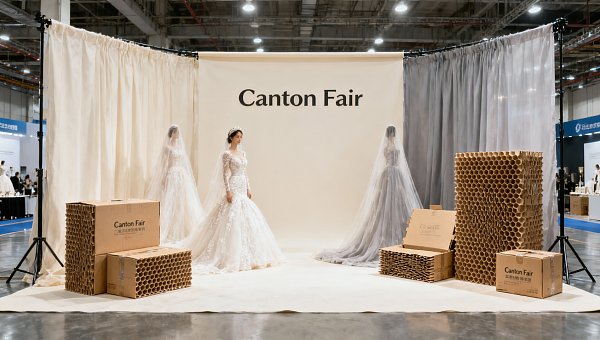
 Eco PackagingCanton Fair Wedding Photo Props Zone Sees 37% YoY GrowthWedding photo props at Canton Fair surge 37% YoY—biodegradable packaging & magnetic modular backdrops lead global demand. Discover key trends now!Packaging Supply ExpertApr 24, 2026
 Export UpdatesChina Customs Launches Beta 'Wedding Photo Props Export Compliance Self-Check Platform'Wedding photo props exporters: Use China Customs’ new beta Self-Check Platform for real-time export compliance guidance on HS codes like 9405.40, 4202.92 & 6307.90 — avoid delays in US, EU, ASEAN & Middle East markets.Apr 24, 2026
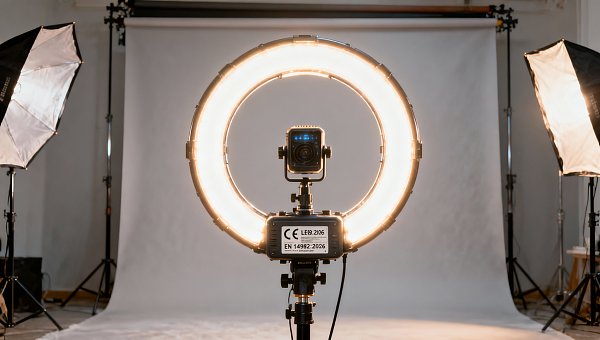
 Commercial LEDEN 14982:2026 Effective: LED Softlight Devices for Wedding Photography Must Pass Enhanced EMC Immunity TestsLED softlight devices for wedding photography must now pass enhanced EMC immunity tests per EN 14982:2026 — ensure CE compliance before EU market entry!Commercial Tech EditorApr 24, 2026
 Carton & PlasticsUS CPSC Recalls 7 Chinese Wedding Backdrop Makers for FormaldehydeUS CPSC recalls 7 Chinese wedding backdrop makers for formaldehyde—critical alert for婚纱摄影 exporters, MDF suppliers & US importers. Act now to avoid detention & liability.Packaging Supply ExpertApr 24, 2026