Industry News
Curation by industry experts
Hot Articles
Popular Tags
CPSC Adds Photo Backdrops to Formaldehyde Screening List
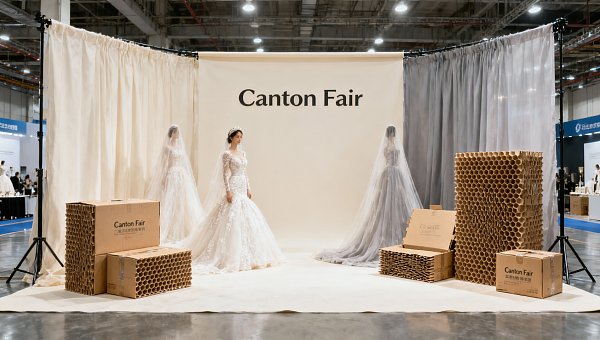
On April 25, 2026, the U.S. Consumer Product Safety Commission (CPSC) updated its Section 104 Toxic Substances Screening List, for the first time classifying fiberboard, particleboard, and plywood photo backdrops—used in portrait and wedding photography setups—as ‘high-risk home-derived photographic props’ due to formaldehyde emissions. This development directly affects exporters, importers, and manufacturers of decorative staging materials, particularly those based in Guangdong and Zhejiang provinces, where initial customs detentions have already occurred.
Event Overview
On April 25, 2026, the CPSC formally amended the Section 104 Toxic Substances Screening List. The update explicitly includes ‘fiberboard, particleboard, and multi-ply plywood photo backdrops used for portrait or wedding photography scene construction’ under the newly defined category of ‘Home-Derived Photographic Props’ with high formaldehyde release risk. Effective immediately, all importers must submit third-party test reports conforming to ASTM D6007 or EN 717-1. Failure to provide valid documentation triggers full-container rejection under Section 21 of the Consumer Product Safety Improvement Act (CPSIA). Verified cases of inspection hold and detention have been reported among export shipments originating from Guangdong and Zhejiang.
Which Subsectors Are Affected
Direct Trading Enterprises (Exporters & Importers)
These entities face immediate compliance pressure: formaldehyde testing is now mandatory prior to U.S. entry. Without valid ASTM D6007 or EN 717-1 reports, shipments risk detention or refusal at U.S. ports. The first documented interception cases—originating from China’s key export clusters—confirm enforcement has commenced.
Manufacturing Enterprises (Backdrop Producers)
Producers supplying photo backdrops to international trade channels must now ensure raw material sourcing and lamination processes meet formaldehyde emission thresholds. Since the CPSC’s classification applies to finished products used in domestic-style settings (e.g., studio backdrops mimicking home interiors), manufacturing specifications—not just labeling or end-use marketing—determine regulatory exposure.
Supply Chain Service Providers (Testing Labs, Customs Agents, Logistics Coordinators)
Third-party testing labs are seeing increased demand for ASTM D6007/EN 717-1 services; customs brokers must now verify test report validity before filing entry documents; and freight forwarders may need to adjust documentation workflows to accommodate pre-clearance verification requirements.
What Relevant Companies or Practitioners Should Focus On — And How to Respond
Monitor official CPSC guidance and potential subcategory clarifications
The term ‘Home-Derived Photographic Props’ is newly introduced and not yet defined in regulation text beyond the listed substrate types. Analysis来看, further interpretive guidance—such as whether PVC-coated or painted backdrops fall under scope, or whether temporary rental units are included—may follow. Stakeholders should track CPSC’s Federal Register notices and public dockets.
Prioritize verification for high-volume, high-risk SKUs shipped to the U.S.
From industry角度看, density board and low-cost fiberboard backdrops—common in mass-produced studio kits—are most likely to exceed formaldehyde thresholds due to urea-formaldehyde resin content. Exporters should identify these SKUs and initiate testing before next shipment cycle, rather than waiting for port-level intervention.
Distinguish between policy signal and operational impact
Current enforcement focuses on documentary compliance (test report submission) rather than routine on-site emission measurement. Observation shows that non-compliant containers are being rejected based on missing or invalid reports—not analytical retesting at the border. This means preparation hinges on paperwork integrity and lab accreditation—not real-time air monitoring.
Update supplier agreements and internal QC protocols
Importers should revise purchase terms to require formaldehyde test reports from backdrop suppliers—and specify acceptable standards (ASTM D6007 or EN 717-1), test date windows (e.g., within 90 days of shipment), and lab accreditation status (e.g., CPSC-accepted or ISO/IEC 17025 certified). Manufacturers should integrate formaldehyde screening into incoming material inspection routines, especially for adhesives and core boards.
Editorial Perspective / Industry Observation
This update is better understood as a targeted regulatory expansion—not a broad-based reform. Analysis来看, the CPSC is extending existing formaldehyde oversight (traditionally applied to children’s furniture and composite wood products) to adjacent categories where consumer exposure pathways resemble those in residential settings—e.g., prolonged proximity during photo sessions, indoor use, and potential off-gassing in enclosed studios. It signals growing scrutiny of ‘non-traditional’ household-adjacent items entering U.S. commerce. From industry角度看, this reflects an incremental shift toward lifecycle-aware regulation, where product function and usage context—not just physical form—drive compliance obligations. Continuous monitoring is warranted, as similar categorizations could extend to other studio or event-decoration items in future updates.

Conclusion
The CPSC’s April 2026 listing of photo backdrops marks a concrete, enforceable change—not merely a warning or proposal. Its significance lies in the direct linkage between product application (photography staging), material composition (composite wood panels), and regulatory consequence (mandatory testing + shipment rejection). For affected stakeholders, this is best interpreted as an operational compliance checkpoint requiring documentation readiness, supplier alignment, and selective product reassessment—not a strategic pivot, but a necessary procedural adjustment aligned with current U.S. import controls.
Source Attribution
Main source: U.S. Consumer Product Safety Commission (CPSC), Section 104 Toxic Substances Screening List update dated April 25, 2026. Confirmed interception cases reported by Guangdong and Zhejiang customs clearance agents (publicly acknowledged in regional trade advisory bulletins, April 2026). Ongoing developments—including possible scope clarifications or enforcement pattern shifts—remain subject to observation.
Recommended News
 Eco PackagingCanton Fair Wedding Photo Props Zone Sees 37% YoY GrowthWedding photo props at Canton Fair surge 37% YoY—biodegradable packaging & magnetic modular backdrops lead global demand. Discover key trends now!Packaging Supply ExpertApr 24, 2026
 Export UpdatesChina Customs Launches Beta 'Wedding Photo Props Export Compliance Self-Check Platform'Wedding photo props exporters: Use China Customs’ new beta Self-Check Platform for real-time export compliance guidance on HS codes like 9405.40, 4202.92 & 6307.90 — avoid delays in US, EU, ASEAN & Middle East markets.Apr 24, 2026
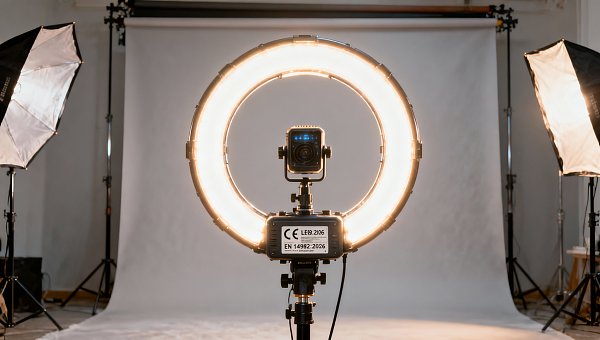
 Commercial LEDEN 14982:2026 Effective: LED Softlight Devices for Wedding Photography Must Pass Enhanced EMC Immunity TestsLED softlight devices for wedding photography must now pass enhanced EMC immunity tests per EN 14982:2026 — ensure CE compliance before EU market entry!Commercial Tech EditorApr 24, 2026
 Carton & PlasticsUS CPSC Recalls 7 Chinese Wedding Backdrop Makers for FormaldehydeUS CPSC recalls 7 Chinese wedding backdrop makers for formaldehyde—critical alert for婚纱摄影 exporters, MDF suppliers & US importers. Act now to avoid detention & liability.Packaging Supply ExpertApr 24, 2026