Industry News
Curation by industry experts
Hot Articles
Popular Tags
Why hardware suppliers are changing MOQ terms in 2026
In 2026, hardware suppliers are rethinking MOQ terms as buyers demand more flexibility, faster replenishment, and lower inventory risk. For procurement teams sourcing from a furniture factory, custom furniture programs, or adjacent categories like Packaging Materials and cordless power tools, these shifts can directly affect cost, lead time, and supplier strategy. Understanding why MOQ rules are changing is now essential for smarter commercial decisions.
Why are MOQ terms changing so quickly in furniture and decor supply chains?
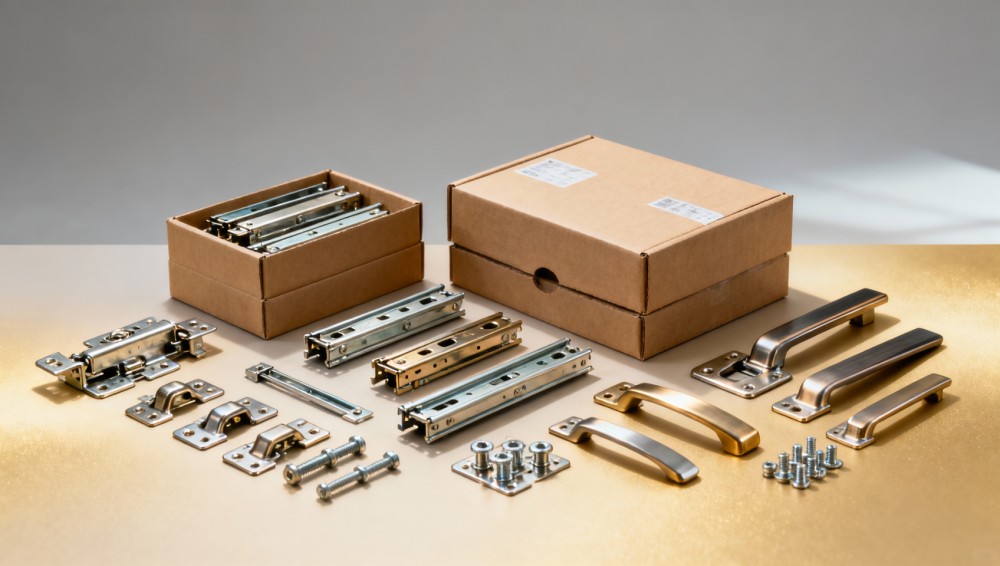
Minimum order quantity has long been a basic control tool for hardware suppliers. In furniture and decor, it helps factories manage plating runs, machining batches, packaging setup, and warehouse space across items such as hinges, drawer slides, handles, brackets, fasteners, and leveling feet. In 2026, however, the old logic of pushing buyers toward one large consolidated order is under pressure from shorter product cycles and more fragmented demand.
A furniture buyer today may manage 20–50 active SKUs within one project and still need mixed replenishment every 2–4 weeks instead of one quarterly purchase. That is especially true for importers serving e-commerce channels, custom furniture workshops, and distributors carrying varied finishes such as black, brushed nickel, brass tone, and matte white. When sell-through becomes less predictable, high MOQ requirements translate directly into excess stock, slow-moving inventory, and cash tied up for 60–120 days.
Suppliers are also changing. Many hardware manufacturers have invested in more flexible production scheduling, smaller packaging runs, barcode-based warehouse picking, and modular tooling. These operational upgrades make it easier to offer lower MOQ on selected items while preserving higher thresholds for parts that still require special molds, custom die-casting, or dedicated surface treatment lines. The result is not a universal reduction, but a more segmented MOQ strategy.
For sourcing teams, this means MOQ is no longer a simple price gate. It has become a commercial signal that reflects process capability, factory load, SKU complexity, and the supplier’s willingness to support program-based purchasing. GSR tracks these shifts across Hardware & Fasteners and Furniture & Decor so buyers can compare not only unit cost, but also batch flexibility, replenishment rhythm, and supply continuity.
The 4 main drivers behind MOQ changes
- Demand volatility: furniture launches now move faster, with more frequent style refreshes every 6–12 months rather than long stable programs.
- Inventory risk control: buyers want to reduce exposure on decorative hardware finishes that may become obsolete before the next container cycle.
- Production flexibility: some suppliers can now run smaller batches through improved planning, semi-automation, and mixed-carton packing.
- Competitive pressure: exporters seeking long-term furniture accounts are using flexible MOQ terms as a negotiating tool to win recurring business.
These drivers matter most when hardware is not a standalone purchase but part of a broader sourcing package. A buyer selecting cabinet hardware, knock-down fittings, and protective Packaging Materials at the same time often values synchronized delivery more than the lowest nominal unit price. That is why MOQ discussions increasingly sit inside a wider negotiation covering lead time, assortment mix, carton labeling, and after-sales replenishment.
How do new MOQ models affect procurement cost, lead time, and risk?
The practical question is not whether low MOQ is good or bad. The real issue is what trade-offs sit behind each model. In furniture and decor hardware, a lower MOQ may reduce inventory burden but raise per-unit processing cost, especially when suppliers must split packaging, run extra quality checks, or hold semi-finished stock. A higher MOQ may improve price, yet increase aged inventory and markdown risk if the finish or dimension underperforms.
Procurement teams should separate three cost layers: unit price, landed cost, and stockholding cost. For example, a handle with a 3% lower factory price may become less attractive if the order volume exceeds 90 days of realistic demand. On the other hand, a modestly higher unit price may be acceptable if the supplier can support 2–3 release shipments from one production lot, helping the buyer spread cash flow and reduce warehouse congestion.
Lead time is changing too. Lower MOQ does not always mean faster supply. Standard zinc alloy pulls or common-size ball bearing slides may replenish in 15–30 days, while custom drilling patterns, branded packaging, or non-standard finishes can still require 30–45 days or longer. The key is whether the supplier operates a stock-assisted model, a make-to-order model, or a hybrid model with semi-finished inventory.
The table below helps buyers compare typical MOQ structures used by hardware suppliers serving furniture factory and distribution channels in 2026.
For many buyers, the best option is not the lowest MOQ but the most transparent one. When a supplier clearly states MOQ by finish, carton quantity, tooling status, and packaging format, the sourcing team can model cash flow and replenishment more accurately. That is often more valuable than a nominally flexible offer with unclear conditions.
What should commercial teams calculate before accepting a new MOQ?
Three numbers that matter most
- Expected sell-through window: can the ordered quantity move within 45–90 days under normal sales conditions?
- Reorder trigger point: will there still be enough time to reorder when stock reaches 25%–35% of remaining inventory?
- Packaging efficiency: does the MOQ align with inner box, master carton, and pallet patterns to avoid hidden repacking cost?
These calculations are especially important when sourcing decorative hardware with multiple finish codes or when bundling accessories into flat-pack furniture programs. The commercial gain from a lower MOQ can disappear quickly if mixed packaging raises picking errors or if partial lots create finish inconsistency between orders.
Which MOQ strategy works best for furniture factories, distributors, and custom programs?
Different buyer types should not use the same MOQ benchmark. A furniture factory running stable monthly output often benefits from a structured annual commitment with scheduled call-offs. A distributor serving 100–300 downstream accounts usually needs mixed-SKU MOQ flexibility. A custom furniture workshop, by contrast, may prioritize smaller lot access and finish variety over the lowest price. Matching MOQ terms to channel logic is the real sourcing advantage.
For factory procurement, consistency across hardware lots matters more than headline flexibility. If hinges, fasteners, and drawer slides arrive on a synchronized 3–5 week cycle, assembly planning is easier and line stoppage risk falls. For distribution models, assortment density matters. Dealers need enough variety to cover modern, classic, and project-grade demand without locking too much capital in slow movers. Custom programs sit in the middle: they need design freedom, but repeatability for replenishment.
The next table compares how MOQ priorities typically differ by buyer profile in furniture and decor sourcing.
This comparison shows why MOQ should be negotiated as a supply model, not only as a quantity figure. When suppliers understand whether your business depends on line feeding, dealer replenishment, or project installation windows, they can often redesign packaging, batch planning, or shipping schedules to fit. GSR helps buyers frame these conversations using category-specific sourcing logic rather than generic price pressure.
Application scenarios buyers should assess
- New collection launch: use low initial MOQ for 3–5 hero SKUs, then expand only after confirmed reorder signals.
- Export container consolidation: align hardware MOQ with packaging and furniture shipment windows to avoid partial storage charges.
- Replacement parts program: keep smaller replenishment MOQ for after-sales service items such as handles, glides, and mounting kits.
- Dealer assortment build-out: negotiate family MOQ so multiple finishes or lengths can be ordered within one commercial threshold.
A practical sourcing plan may combine more than one MOQ model. For instance, standard concealed hinges can move on annual forecast terms, while specialty handles and branded packaging inserts remain on project or launch-based terms. This layered approach is often more effective than trying to force every hardware line into one MOQ rule.
What should buyers check before approving hardware MOQ terms in 2026?
Before signing off on any MOQ arrangement, buyers should test whether the quote is technically aligned with the product and commercially aligned with the business model. In furniture and decor hardware, small details such as hole spacing tolerance, finish matching, corrosion expectations, and carton count can materially affect whether a “flexible MOQ” is truly workable. A lower entry quantity is useful only if execution remains stable across repeats.
Buyers should also review how MOQ interacts with specification control. If a product has custom drilling, laser logo, unique plating color, or retail-ready packaging, the supplier may need separate thresholds for tooling, production, and printed materials. These should be stated separately. Merging them into one vague MOQ figure often creates disputes later, especially during repeat orders or design adjustments.
For cross-border sourcing, documentation matters. The supplier should clarify lead time assumptions, sample approval sequence, packaging specifications, and any applicable material or surface testing expectations. Furniture hardware may also require consistency with buyer-specific requirements on corrosion resistance, dimensional tolerance, and packaging drop performance. Even when exact standards differ by market, the approval workflow should be documented in 3–4 clear stages.
A practical 5-point procurement checklist
- Confirm whether MOQ applies per SKU, per finish, per size, or per product family. This is the most common source of misunderstanding.
- Ask for the standard lead time range for sample, first order, and replenishment order. Typical ranges may differ by 7–15 days.
- Check if the supplier offers step pricing at 3 quantity tiers. This reveals the real cost curve behind the MOQ.
- Verify carton rules, label format, and barcoding if you sell through dealers, retail, or e-commerce fulfillment channels.
- Request a repeat-order control plan covering finish consistency, critical dimensions, and replacement stock availability.
This checklist is especially useful for sourcing managers comparing multiple hardware suppliers at once. It creates a common evaluation base and helps commercial teams avoid choosing a low-MOQ offer that later proves difficult to scale. On GSR, buyers use this type of framework to compare exporters across capacity logic, operational transparency, and category fit.
Common misconceptions to avoid
One frequent misconception is that lower MOQ always signals a stronger supplier. In reality, very low MOQ may come from a trader model, off-the-shelf inventory, or a factory willing to absorb setup cost for strategic reasons. That can be positive, but it must be understood. Another misconception is that higher MOQ automatically means rigidity. Some manufacturers set higher nominal MOQ yet allow scheduled releases over 60–90 days, which may actually reduce buyer risk.
Another mistake is evaluating MOQ without considering adjacent sourcing categories. If a buyer is also negotiating Packaging Materials, assembly accessories, or cordless power tools for installation support, the logistics plan may justify a different hardware MOQ decision. Consolidation opportunities can offset some of the cost pressure created by smaller hardware batches.
FAQ: what do sourcing teams ask most about hardware MOQ changes?
How low can MOQ realistically go for furniture hardware?
It depends on whether the item is standard, customized, or packaging-dependent. For stock-supported standard hardware, suppliers may allow smaller trial quantities. For custom finishes, branded packs, or tooling-based parts, MOQ usually rises because setup and material planning costs must be absorbed. Buyers should ask for MOQ in layers: product, finish, packaging, and printing. That gives a realistic picture of flexibility.
Is it better to negotiate lower MOQ or better replenishment terms?
In many B2B furniture programs, better replenishment terms are more valuable. If a supplier can support repeat orders within 15–30 days, hold semi-finished stock, or split deliveries across 2–3 releases, the buyer may accept a moderate MOQ. The outcome is often better inventory control without sacrificing price stability. The right answer depends on your turnover speed and SKU complexity.
What if a supplier offers low MOQ but the price gap is large?
Then the buyer should model total commercial impact, not just compare piece price. Estimate how much capital is saved by ordering less, how quickly the item can be reordered, and whether packaging or freight inefficiency will offset the benefit. A price gap may be acceptable for launch-stage SKUs, dealer testing, or custom furniture validation, but less acceptable for stable production items with predictable consumption.
How should distributors negotiate MOQ across multiple finishes?
The most workable approach is usually a family MOQ. Instead of ordering one finish in a large batch, distributors can ask to combine several finishes or lengths within one product series. This suits handles, knobs, hooks, and decorative fittings where channel demand is fragmented. The supplier may still require a minimum by plating run or carton multiple, so buyers should confirm that point early.
Why work with GSR when evaluating MOQ shifts and supplier strategy?
MOQ changes in 2026 are not just procurement details. They reveal how a hardware supplier thinks about production flexibility, customer segmentation, and long-term account development. For buyers in Furniture & Decor, that insight is essential when comparing factories, traders, and integrated sourcing partners across multiple product categories. GSR helps transform scattered supplier quotes into structured sourcing intelligence.
Our focus spans Hardware & Fasteners, Furniture & Decor, Packaging & Printing, and adjacent light manufacturing categories that often intersect in real purchasing programs. That means procurement directors, sourcing managers, commercial evaluators, and distributors can assess MOQ terms in the context of broader supply chain design rather than in isolation. This is especially useful when balancing catalog breadth, inventory exposure, and launch speed across international supply bases.
If you are reviewing hardware suppliers for a furniture factory, custom furniture line, dealer assortment, or project tender, GSR can support the decision process with category-specific comparison logic. You can consult on MOQ structure, supplier screening, product selection, lead time assumptions, packaging coordination, sample planning, and quotation alignment. We also help teams clarify which terms belong in commercial negotiation and which should be locked into specification control.
Contact GSR when you need practical input on parameter confirmation, hardware selection, mixed-SKU MOQ planning, delivery cycle evaluation, customization feasibility, sample support, packaging integration, or cross-category sourcing strategy. For teams managing cost pressure and supply uncertainty at the same time, a sharper MOQ framework can improve both negotiation quality and execution reliability.
Recommended News
 Expert AnalysisIWA Launches Green Studio Certification for Chinese Photo Studio SuppliersGreen Studio Certification for Chinese photo studio suppliers — IWA's GGSC opens to LED lighting, eco-backdrops, biodegradable props & retouching software. Apply by May 31!Apr 17, 2026
 Fabrics & YarnsTurkey TSE New Standard for Linen-Blend Backdrop FabricsTurkey TSE new standard for linen-blend backdrop fabrics: mandatory antibacterial & stability tests by Aug 2026—secure compliance now to keep supplying Istanbul wedding studios.Textile Industry AnalystApr 17, 2026
 Supply Chain InsightsWedding Photography Prop Freight Rates Surge 23% on Red Sea DisruptionWedding photography prop freight rates surge 23% amid Red Sea disruption—impact on lead times, air costs & supply chain strategy revealed.Apr 17, 2026
 Garment MfgBrazil ANVISA Proposes Child Textile Rules for Bridesmaid AttireBrazil ANVISA’s new child textile rules for bridesmaid attire—lace veils, satin ribbons, silk bouquets—demand ISO flammability & safety testing. Act now!Textile Industry AnalystApr 17, 2026