Industry News
Curation by industry experts
Hot Articles
Popular Tags
Hardware suppliers with fast samples can still miss key specs
Fast samples can impress buyers, but they do not guarantee production-ready performance. In furniture factory sourcing, experienced hardware suppliers may still overlook key tolerances, finishes, or load-bearing specs that affect custom furniture quality, packaging materials compatibility, and long-term reliability. For procurement teams and business evaluators, this article explains how to assess samples beyond speed and reduce sourcing risk.
Why fast sample delivery can hide real furniture hardware sourcing risks
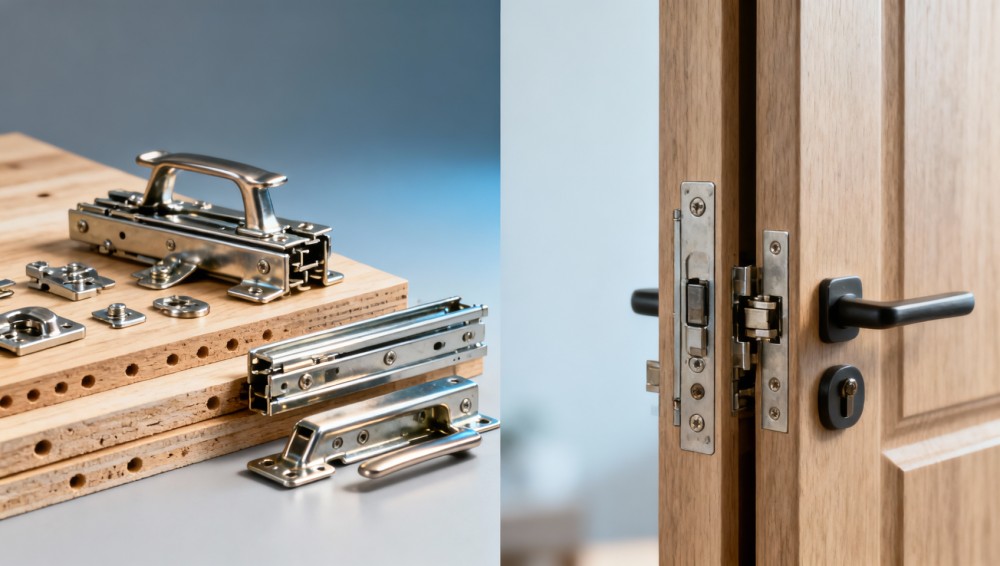
In furniture and decor procurement, a supplier that ships a hinge, slide, bracket, handle, connector, or knock-down fitting sample within 3–7 days often creates a strong first impression. Speed suggests responsiveness. It may also help a buyer hit a short product development calendar. However, fast sample delivery and stable mass production are two different capabilities. A hardware supplier may be efficient in sample preparation yet still miss dimensional control, surface consistency, assembly fit, corrosion resistance, or carton protection requirements.
This gap becomes more serious in custom furniture programs, where a part is rarely judged in isolation. A cabinet hinge affects door reveal and soft-close feel. A table leg connector affects wobble at full load. A bed fitting affects repeated assembly cycles. Even a simple decorative pull can create packaging abrasion or finish mismatch if its profile, plating thickness, or edge radius is not validated early. In many projects, the hidden cost does not appear during sampling. It appears 2–4 weeks later during pilot assembly or first container loading.
For information researchers, procurement managers, commercial evaluators, and channel partners, the practical question is not whether a supplier can send a sample quickly. The question is whether the supplier can convert a sample into repeatable production under realistic furniture factory conditions. That means checking tolerance bands such as ±0.2 mm to ±0.5 mm where relevant, coating consistency, mating-part compatibility, packaging suitability, and acceptable defect thresholds before issuing a larger purchase order.
At Global Supply Review, we see this pattern across furniture hardware sourcing: buyers focus first on lead time, then discover late-stage issues in fit, finish, documentation, or logistics. A more reliable approach is to evaluate suppliers through a structured sample review process that connects technical performance, production readiness, and supply chain execution. That framework reduces rework, protects margin, and improves decision quality when multiple hardware suppliers appear equally responsive at first contact.
What often gets missed during early sample approval
- Critical dimensions are measured on one sample only, not across 5–10 units from different cavities, shifts, or finishing batches.
- Surface evaluation is done visually under casual office lighting instead of controlled comparison against the target finish and furniture substrate.
- Functional parts are tested once, but not through repeated opening, closing, loading, or assembly cycles that better reflect real use.
- Packaging compatibility is ignored, even though sharp edges, protruding screws, or heavy components may damage panels, veneer, glass, or cartons in transit.
Which key specs matter most for furniture hardware samples?
When buyers assess furniture hardware samples, they should review at least 5 core categories: dimensions, material and finish, function under load, assembly interface, and packaging fit. Different products emphasize different risks. For example, drawer slides depend heavily on smooth travel and extension stability, while decorative handles depend more on finish consistency, tactile quality, and carton protection. In sourcing, the right sample review sheet should be tied to the actual furniture application, not a generic “approved sample” label.
Dimensional control is usually the first checkpoint. In furniture production, even a small mismatch can affect drilling alignment, reveal gaps, and assembly time. A bracket hole position that shifts by 0.5 mm may still look acceptable on a loose sample, yet create installation stress on a production line. Buyers should compare drawing dimensions, production tolerances, mating-part dimensions, and installation instructions together. If the supplier cannot clearly state the tolerance range for critical features, fast samples should not be mistaken for engineering readiness.
Finish quality deserves equal attention. In furniture and decor, visible hardware must align with wood grain, lacquer tone, powder-coated frames, fabric accents, or glass fixtures. Satin nickel, matte black, brushed brass, and chrome are not interchangeable from a merchandising perspective. A finish may look acceptable on one sample but vary between batches due to plating parameters, pretreatment, or base metal differences. Buyers should ask how the finish is controlled, how color or gloss variation is reviewed, and what protection method is used during packing and storage.
Functional performance should also be checked under realistic conditions. A hinge should be evaluated for movement, closing force, installation repeatability, and noise. A furniture connector should be checked for thread engagement and repeated tightening cycles. A leg or support bracket should be checked at the expected load range, not only under hand pressure. In many furniture programs, a basic 3-stage review works well: visual check, dimensional check, and trial assembly or load simulation before sample sign-off.
Sample evaluation table for furniture hardware procurement
The table below helps procurement teams compare sample readiness beyond appearance and speed. It is especially useful when reviewing hardware suppliers for cabinets, upholstered furniture, flat-pack products, tables, and decorative storage units.
A sample can pass one or two of these categories and still fail as a sourcing option. That is why a structured hardware sample review should combine engineering checks with factory-use conditions. The more customized the furniture product, the more important this cross-check becomes before confirming mass production.
Questions buyers should ask before approving a sample
- Was the sample made from production tooling, pilot tooling, or hand-adjusted preparation?
- Can the supplier provide dimensional records across multiple pieces, not just one approved unit?
- What finish protection method is used during internal packing and export carton loading?
- Has the sample been assembled with the actual furniture material, such as MDF, plywood, solid wood, metal frame, or glass support?
How to compare fast sample suppliers with production-ready suppliers
Many buying teams compare hardware suppliers on response speed, MOQ, and unit price first. Those points matter, but they do not fully predict sourcing success in furniture manufacturing. A production-ready supplier usually performs better in four areas: process consistency, technical communication, documentation discipline, and issue handling during pilot and bulk orders. These capabilities can be harder to see in the first 7 days, but they strongly affect whether the project runs smoothly over the next 30–90 days.
Fast sample suppliers often work well for concept validation or showroom mockups. Problems arise when buyers assume that a quick sample equals a mature manufacturing system. For example, a decorative metal knob may arrive quickly and look excellent, but the thread depth may vary in production. A soft-close hinge may feel acceptable in one set, but become inconsistent if internal damping components change batch to batch. In furniture hardware sourcing, repeatability is more valuable than first-sample speed once the project enters commercial evaluation.
This is especially relevant for distributors, agents, and importers managing multiple SKUs. They need stable replenishment, lower complaint rates, and fewer finish disputes. In these cases, supplier comparison should include lead time realism, sample-to-bulk consistency, packaging discipline, and engineering responsiveness to drawing revisions. A supplier that needs 10–12 days for a controlled sample may be a safer long-term partner than one that ships in 4 days without full technical validation.
Below is a practical comparison framework for commercial review. It helps buyers separate “quick to send” from “ready to scale,” especially when sourcing furniture fittings, decorative hardware, support systems, and metal accessories for export programs.
Comparison table: fast response versus production readiness
Use this table during supplier shortlisting, RFQ evaluation, or sample approval meetings. It can help procurement teams score suppliers across the factors that most often affect furniture hardware performance after order confirmation.
The goal is not to reject suppliers with fast sample capability. It is to place that capability in context. In sourcing, the best supplier is the one that can move from sample to stable production with fewer surprises, fewer claims, and better alignment with your furniture design, packaging, and channel expectations.
What procurement teams should verify before placing a furniture hardware order
Before issuing a purchase order, procurement teams should confirm at least 6 practical checkpoints. These are not theoretical engineering details. They directly affect assembly efficiency, on-time shipment, and after-sales risk. In furniture and decor programs, late clarification on hardware often creates delays because the part sits between product design, material planning, packaging, and installation instructions.
First, confirm whether the approved sample represents the actual production method. If the supplier used different material thickness, a substitute finish, or hand-polished edges to accelerate the sample, the buyer should request an updated production-reference sample. Second, confirm the intended installation environment. Indoor decorative furniture, commercial fixtures, kitchen cabinetry, and export flat-pack products do not have the same wear profile. Usage conditions influence coating choice, hardware movement, and packing method.
Third, review packaging as part of hardware sourcing, not as a separate afterthought. A well-made fitting can still fail commercially if it scratches melamine panels, punctures cartons, or causes missing small parts during transit. Fourth, confirm the inspection plan. For higher-risk items, a buyer may request checks at sample stage, pre-production stage, and pre-shipment stage. That 3-point control logic is often more effective than relying on one early approval email.
Fifth, align communication records. Drawings, finish references, revision history, carton requirements, accessory counts, and labeling details should be easy to trace. Sixth, confirm realistic lead times for both replenishment and corrective action. If a supplier can deliver standard items in 20–35 days but needs 2–3 more weeks for revised finish or tooling adjustment, buyers should plan that into the sourcing schedule rather than assume sample speed will continue at bulk order stage.
A practical 6-point pre-order checklist
- Confirm key dimensions, mating-part fit, and tolerance notes against the latest approved drawing revision.
- Review finish samples under realistic lighting and compare them with the actual furniture material set.
- Test function through repeated use cycles where relevant, especially for moving hardware and threaded connectors.
- Validate unit packing, inner bagging, separator method, and export carton interaction with furniture surfaces.
- Agree on inspection timing, sample retention, and action steps if pilot assembly reveals deviations.
- Clarify replenishment lead time, MOQ logic, and whether custom finish or custom tooling changes the delivery window.
Where GSR adds value during supplier evaluation
Global Supply Review supports buyers by connecting sourcing decisions with technical interpretation, category context, and cross-sector supply chain insight. In furniture hardware procurement, that means helping teams compare supplier responses beyond price lists and couriered samples. Buyers often need a clearer view of whether a supplier’s offering fits a custom furniture line, a distribution model, or a private-label export program.
Because furniture and decor sourcing often overlaps with packaging, surface treatment, logistics handling, and light manufacturing disciplines, GSR’s broader industry lens is useful in commercial evaluation. A hardware issue is rarely just a hardware issue. It may affect carton design, installation kits, showroom finish appearance, or downstream claim rates. Better intelligence early in the process helps buyers reduce costly adjustments later.
FAQ: common questions about hardware suppliers, samples, and missing specs
Search intent around furniture hardware sourcing is often practical and urgent. Buyers want to know how to avoid wrong approvals, what to ask suppliers, and how long proper validation should take. The questions below address common decision points for researchers, sourcing teams, and distribution partners.
How fast should a reliable furniture hardware sample take?
For standard items, 3–7 days may be possible. For customized hardware involving new finish confirmation, drawing review, or packaging adaptation, 7–15 days is often a more realistic range. The right timing depends on whether the sample reflects production conditions. If a supplier promises very fast delivery, buyers should ask what has been simplified to achieve that speed.
What specs are most often missed in furniture hardware samples?
The most commonly missed areas are hole positioning, tolerance stack-up, plating or coating consistency, thread quality, load-bearing behavior, and internal packing protection. In furniture and decor products, visual harmony also matters. A minor finish deviation can create a mismatch with wood stain, powder-coated frames, or decorative accents, even if the part remains functional.
Is one approved sample enough before bulk ordering?
Usually no, especially for customized or visible hardware. A stronger approach is to review multiple units, conduct trial assembly, and check packaging interaction before bulk release. For higher-risk programs, buyers often use a staged process with sample approval, pilot run confirmation, and pre-shipment verification. That sequence reduces the chance of discovering the same issue after container loading has already begun.
How can distributors and agents reduce claims from hardware inconsistency?
They should prioritize repeatability over first-sample speed, document approved finishes and packing methods, and request clearer control points from the supplier. For replenishment business, consistency across batches is often more important than saving a few days in the sampling stage. A stable supplier with fewer finish complaints and better carton discipline usually protects distributor margin more effectively over a 6–12 month sales cycle.
Why work with GSR when evaluating furniture hardware suppliers
If your team is comparing hardware suppliers with fast samples but uncertain production readiness, GSR can help you narrow the evaluation criteria and ask better commercial questions. We focus on actionable sourcing intelligence for foundational manufacturing sectors, including Furniture & Decor and Hardware & Fasteners. That makes our perspective especially relevant when a sample looks promising but key specifications, finish controls, or packaging risks remain unclear.
You can use GSR to support several decision points: parameter confirmation for custom furniture hardware, comparison of supplier responses, review of sample-to-production risk, assessment of packaging compatibility, and clarification of lead time assumptions for standard versus customized parts. This is useful for procurement teams, business evaluators, importers, and distribution partners that need better confidence before committing to trial orders or scaled sourcing.
If you are planning a furniture hardware sourcing project, contact GSR to discuss sample evaluation criteria, product selection logic, delivery timing, custom solution needs, common compliance considerations, sample support expectations, and quotation communication structure. A more disciplined review at the sample stage can reduce rework, improve supplier alignment, and protect commercial outcomes before the first bulk order moves into production.
For teams under time pressure, the most effective next step is not simply requesting another fast sample. It is defining which 5–6 specs must be confirmed before approval, which packaging and assembly tests matter most, and which supplier signals indicate long-term reliability. That is where better sourcing intelligence creates measurable value.
Recommended News
 Expert AnalysisIWA Launches Green Studio Certification for Chinese Photo Studio SuppliersGreen Studio Certification for Chinese photo studio suppliers — IWA's GGSC opens to LED lighting, eco-backdrops, biodegradable props & retouching software. Apply by May 31!Apr 17, 2026
 Fabrics & YarnsTurkey TSE New Standard for Linen-Blend Backdrop FabricsTurkey TSE new standard for linen-blend backdrop fabrics: mandatory antibacterial & stability tests by Aug 2026—secure compliance now to keep supplying Istanbul wedding studios.Textile Industry AnalystApr 17, 2026
 Supply Chain InsightsWedding Photography Prop Freight Rates Surge 23% on Red Sea DisruptionWedding photography prop freight rates surge 23% amid Red Sea disruption—impact on lead times, air costs & supply chain strategy revealed.Apr 17, 2026
 Garment MfgBrazil ANVISA Proposes Child Textile Rules for Bridesmaid AttireBrazil ANVISA’s new child textile rules for bridesmaid attire—lace veils, satin ribbons, silk bouquets—demand ISO flammability & safety testing. Act now!Textile Industry AnalystApr 17, 2026