Industry News
Curation by industry experts
Hot Articles
Popular Tags
How long should memory foam mattresses keep their shape?
Memory foam mattresses should maintain their shape and support for years, but lifespan depends on material density, construction quality, and usage conditions. For buyers, sourcing teams, and distributors evaluating custom furniture or a reliable furniture factory, understanding durability benchmarks is essential. This guide explains how long memory foam mattresses typically last, what causes sagging, and how to assess long-term value in today’s competitive furniture and decor market.
How long should a memory foam mattress keep its shape in real buying conditions?
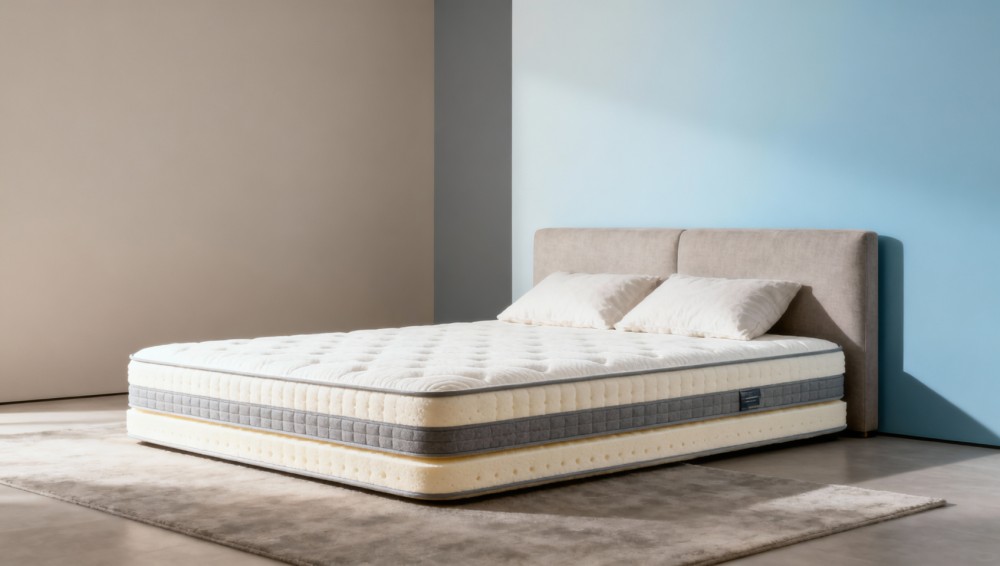
In most mainstream furniture and decor supply chains, a well-made memory foam mattress is expected to keep its usable shape for around 7 to 10 years. In hospitality, student housing, rental, or high-turnover commercial projects, the practical replacement cycle may shorten to 5 to 8 years because nightly loading, humidity swings, and handling frequency increase stress on the foam core.
For procurement teams, “keeping shape” does not simply mean the mattress still looks flat from a distance. It means the comfort layers recover after compression, the surface remains reasonably level, and support under the hips and shoulders does not collapse prematurely. In sourcing reviews, visible body impressions above common tolerance expectations are often a stronger warning sign than fabric wear alone.
Material density matters. Higher-density memory foam and stronger base foam generally resist softening better over repeated cycles. Construction also matters. A mattress using 2 to 4 internal layers with a stable support core often performs more consistently than a low-cost build that relies on a thin comfort layer over weak foundation foam.
For distributors and business evaluators, the key question is not only how many years a mattress can survive, but how many years it can maintain saleable comfort and acceptable warranty risk. That distinction is critical when comparing a budget offer from one furniture factory against a better-engineered private-label program from another.
What buyers should treat as normal lifespan versus early failure
A normal lifespan usually includes minor softening in the first 12 to 24 months, especially during the break-in period. That is different from rapid sagging, uneven settlement, edge collapse, or long-lasting body impressions that interfere with sleep posture. Early failure often appears first in the center-third load zone, where the body’s heaviest pressure is concentrated.
In contract supply, it is useful to separate three stages of performance: initial recovery in the first 3 to 6 months, stable support through years 1 to 5, and gradual comfort decline after year 5 or later. This framework helps procurement managers judge whether a quoted mattress is suitable for retail, hospitality, or institutional use.
- Expected service life for better residential models: around 7 to 10 years.
- Typical commercial replacement planning: around 5 to 8 years, depending on occupancy and rotation.
- High-risk warning window for low-density builds: visible loss of support can begin within 2 to 4 years.
What causes memory foam mattresses to lose shape faster?
Premature shape loss usually comes from a combination of foam formulation, layer thickness, user weight distribution, and environmental exposure. Low-density memory foam can feel comfortable in a showroom but may soften too quickly once placed into regular use. If the support core underneath is weak, the mattress may develop impressions even when the top layer still looks intact.
Heat and humidity are also important in furniture and decor markets that ship globally. Foam responds to temperature. In warm and humid regions, materials may feel softer and recover more slowly. In cold environments, the same mattress may feel firmer at first. For export sourcing, buyers should ask suppliers how the mattress performs across a practical room range such as 15°C to 30°C.
Foundation design is another common blind spot. A memory foam mattress placed on an uneven slatted base, weak platform, or poor carton-storage surface can deform faster even if the foam specification is acceptable. This is especially relevant for e-commerce programs, where products may spend weeks in storage and then be used on unknown bed bases.
Handling and compression time matter as well. Bed-in-a-box formats improve logistics efficiency, but long compression periods can increase recovery risk in lower-grade constructions. Many buyers therefore review not only the mattress bill of materials, but also carton size, compression duration, warehouse dwell time, and first-use expansion behavior within 24 to 72 hours after unpacking.
Four failure drivers procurement teams often underestimate
1. Low support-core resilience
Even when the comfort foam is acceptable, the mattress can still sag if the base foam compresses too easily under repeated loading. This is one of the most common reasons two visually similar products perform very differently after 18 to 36 months.
2. Excessively soft comfort design
An ultra-plush feel may attract first impressions in retail displays, but it can accelerate body impressions in daily use. Buyers serving hotels, furnished apartments, and distributors should balance comfort appeal with durability targets.
3. Poor edge reinforcement
Frequent sitting on the edge during dressing or housekeeping can break down perimeter areas earlier than the center. Edge weakness is especially relevant in hospitality and elderly-use settings.
4. Inadequate quality control during production
Variation in foam pouring, curing, adhesive application, or layer bonding can lead to inconsistent rebound and shape retention between batches. This is why reliable furniture factory audits remain important before scaling orders.
How to compare mattress constructions before sourcing at scale
When evaluating memory foam mattresses, decision-makers should compare structure, intended use cycle, and replacement economics rather than headline thickness alone. A 25 cm mattress is not automatically more durable than a 20 cm model. Layer balance, foam density, and the support base determine how long the mattress will hold its shape under actual demand.
The table below helps buyers compare common construction types used in furniture and decor sourcing. It is designed for retail planners, private-label brands, and distributors that need a quick screening framework before requesting samples, quotations, and lab or factory documentation.
This comparison shows why procurement should not rely on a single claim such as “memory foam mattress” without reviewing the full layer map. In many tenders, the real cost driver is not initial unit price, but whether the mattress maintains acceptable support through the intended service window of 3, 5, or 8 years.
Key selection dimensions for sourcing managers
A practical review usually covers at least five checkpoints: comfort layer density, base foam resilience, edge performance, cover fabric durability, and packaging method. If one of these is weak, the entire mattress may underperform. This is especially true when the product will be shipped internationally, stacked in warehouses, or sold through dealer networks with limited after-sales tolerance.
- Check whether the comfort design matches the target user profile, such as light residential use, medium family use, or heavy-use guest turnover.
- Ask for the full layer specification instead of total height only. Thickness without density data is not enough for commercial evaluation.
- Confirm recommended foundation types and spacing limits for slats or platform support.
- Review storage and compression limits, especially if shipping lead time plus warehouse time may exceed several weeks.
What should buyers ask a furniture factory before placing an order?
For information researchers and commercial evaluators, the fastest way to reduce sourcing risk is to ask structured questions before sample approval. Shape retention depends on technical details that are not always obvious in catalogs. A vendor may present an attractive mattress profile, but if the support core, edge stability, or packaging process is weak, claims about lifespan become hard to defend.
The next table summarizes a practical B2B screening checklist. It is useful for importers, distributors, and sourcing teams comparing multiple furniture factory options across private-label, wholesale, or project-based procurement. The goal is not to overcomplicate selection, but to identify which suppliers can provide consistent long-term value.
A clear supplier response to these points often tells buyers more than a sales brochure can. Reliable manufacturers usually provide a layer breakdown, packaging guidance, and usage recommendations within a defined project workflow of sample confirmation, pilot order, and bulk production.
A simple 4-step procurement workflow
- Define the target application: retail home use, hotel, apartment furnishing, or institutional tender.
- Request technical data and confirm key constraints such as thickness range, firmness goal, packaging format, and lead time.
- Test samples over a realistic observation period, often 2 to 4 weeks, including recovery, feel stability, and edge use.
- Move to pilot volume only after approval of specification, carton plan, labeling, and expected replacement cycle.
This process is particularly useful for distributors launching a new mattress program. It reduces the risk of choosing a product that sells well initially but generates complaints within the first year of market exposure.
Common misconceptions, FAQ, and practical replacement signals
Many buyers assume all memory foam mattresses are similar if they share the same height and outer fabric. That is rarely true. Foam chemistry, support-core design, and production consistency strongly influence how long the mattress keeps its shape. Another misconception is that softness equals luxury. In commercial programs, excessive softness can increase return rates and shorten replacement intervals.
A second misunderstanding is that visible sagging is the only replacement trigger. In practice, support loss can appear before dramatic visual change. If users report pressure discomfort, rolling toward the center, or persistent low-back fatigue, the mattress may already be underperforming even when the cover still looks acceptable.
For procurement teams, practical replacement planning usually works better than waiting for total failure. In moderate residential programs, review performance after year 5. In hospitality or serviced apartments, annual checks and planned replacement within 5 to 8 years can control complaint costs more effectively than reactive replacement.
How can I tell whether a memory foam mattress is losing shape too early?
Watch for three common signs: persistent body impressions that do not recover after several hours, reduced support in the hip zone, and edge areas that collapse during sitting. If these issues appear within the first 2 to 3 years under normal residential use, the construction may be too weak for the promised service life.
Are thicker memory foam mattresses always more durable?
No. Thickness alone does not guarantee better shape retention. A thinner mattress with a stronger support core can outlast a taller mattress built with weaker foam. Buyers should compare layer composition, support design, and intended use cycle rather than relying on height as the main selection metric.
Is a memory foam mattress suitable for hotels or rental projects?
It can be, but the build must match the use intensity. For hospitality and rental environments, buyers often prefer constructions that balance contour comfort with stronger support and better edge stability. Replacement planning, foundation quality, and housekeeping handling are just as important as the foam brand story.
What delivery and sourcing details should distributors confirm?
Confirm at least six points: product dimensions, layer map, carton specifications, compression duration limits, bed-base recommendations, and sample-to-bulk consistency. Also ask about lead times for sampling and production, which commonly vary from 2 to 6 weeks depending on customization level and order volume.
Why work with GSR when evaluating memory foam mattress suppliers?
For global buyers in furniture and decor, the challenge is rarely finding a factory that can produce a mattress. The harder task is identifying which supplier can support long-term procurement goals across specification clarity, quality consistency, logistics practicality, and market positioning. That is where GSR adds value as a focused sourcing intelligence partner rather than a simple listing platform.
GSR helps procurement directors, sourcing managers, distributors, and business evaluators compare supplier capabilities through commercially relevant criteria. Instead of reviewing mattress claims in isolation, buyers can assess how product structure, export readiness, and manufacturing discipline align with target channels such as wholesale, private label, retail expansion, or project furnishing.
If your team is evaluating how long a memory foam mattress should keep its shape, GSR can help you move from general product research to actionable sourcing decisions. Typical consultation topics include parameter confirmation, product selection by market segment, expected lead time, compressed-pack considerations, sample support, customization feasibility, and quotation comparison across multiple furniture factory options.
Contact GSR if you need a clearer shortlist for memory foam mattress sourcing, a more structured supplier assessment, or guidance on matching mattress durability expectations with your target budget and channel strategy. This is especially useful when you need to balance lifespan, comfort positioning, commercial risk, and delivery execution in one procurement decision.
Recommended News
 Expert AnalysisIWA Launches Green Studio Certification for Chinese Photo Studio SuppliersGreen Studio Certification for Chinese photo studio suppliers — IWA's GGSC opens to LED lighting, eco-backdrops, biodegradable props & retouching software. Apply by May 31!Apr 17, 2026
 Fabrics & YarnsTurkey TSE New Standard for Linen-Blend Backdrop FabricsTurkey TSE new standard for linen-blend backdrop fabrics: mandatory antibacterial & stability tests by Aug 2026—secure compliance now to keep supplying Istanbul wedding studios.Textile Industry AnalystApr 17, 2026
 Supply Chain InsightsWedding Photography Prop Freight Rates Surge 23% on Red Sea DisruptionWedding photography prop freight rates surge 23% amid Red Sea disruption—impact on lead times, air costs & supply chain strategy revealed.Apr 17, 2026
 Garment MfgBrazil ANVISA Proposes Child Textile Rules for Bridesmaid AttireBrazil ANVISA’s new child textile rules for bridesmaid attire—lace veils, satin ribbons, silk bouquets—demand ISO flammability & safety testing. Act now!Textile Industry AnalystApr 17, 2026