Industry News
Curation by industry experts
Hot Articles
Popular Tags
Memory foam mattresses that feel soft but sleep too hot
Memory foam mattresses are prized for pressure relief and a soft, contouring feel, but many models trap heat and reduce sleep comfort. For sourcing teams, distributors, and business evaluators in custom furniture and furniture factory networks, understanding cooling materials, fabric wholesale options, and supplier capabilities is essential when assessing memory foam mattresses for competitive product selection and market fit.
Why do soft memory foam mattresses often sleep too hot?
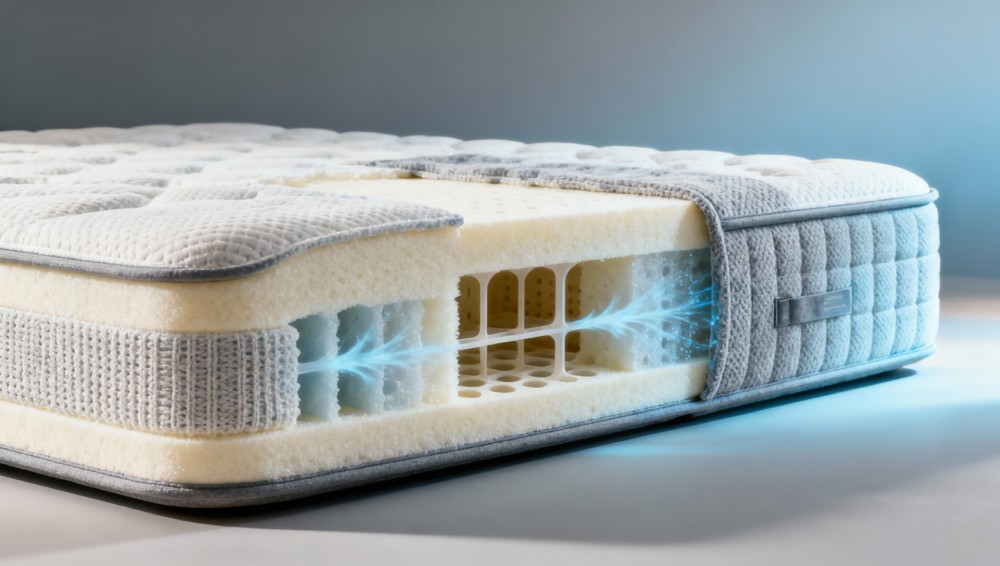
For buyers in furniture and decor, the issue is rarely the “soft feel” alone. The real problem is the combination of high-conforming foam, low airflow cover fabrics, and limited heat dissipation through the mattress core. In many entry-level and mid-range memory foam mattresses, the same features that improve body contouring can also reduce ventilation during 6–8 hours of overnight use.
Traditional viscoelastic foam reacts to body heat and pressure. That reaction helps the sleeper sink in, but it can also create a warmer microclimate around the shoulders, hips, and back. When foam density is high and the comfort layer is thick, often in the 3–8 cm range, heat release becomes slower. This is especially important in warm climates, hospitality projects, and online retail categories where sleep temperature complaints can quickly affect repeat orders.
For importers, wholesalers, and sourcing managers, overheating is not just a comfort issue. It is a product positioning issue. A mattress that tests well on showroom softness but creates customer dissatisfaction after 2–3 weeks of real use can lead to returns, channel friction, and pricing pressure. This is why procurement reviews should examine foam structure, ticking fabric, quilting design, and the total sleep system rather than relying on top-layer softness claims.
Global Supply Review supports B2B decision-makers by focusing on the supply-side details behind product performance. In furniture factory sourcing, that means comparing material architecture, production consistency, customization options, and compliance readiness, not just marketing language such as “cooling” or “breathable.”
- High-density memory foam can improve contouring, but it may reduce airflow if cell structure is too closed.
- Soft comfort layers above 5 cm often increase body immersion and heat retention in warm environments.
- Polyester-heavy cover fabrics can feel smooth at first touch but may not manage moisture as well as engineered cooling knits.
- A mattress core without channels, perforation, or coil-assisted airflow may worsen heat buildup across the full sleep surface.
Which technical features matter most when evaluating cooling performance?
Cooling performance in a memory foam mattress should be evaluated as a layered system. Buyers should not treat gel infusion, copper particles, graphite additives, phase-change fabric, and open-cell foam as interchangeable. Each feature addresses heat in a different way, and some only improve initial surface feel for the first 15–30 minutes rather than sustaining comfort through the whole night.
A practical technical review usually starts with 4 core areas: cover fabric, comfort layer, transition layer, and support core. In furniture factory development, the most balanced products often combine at least 2 cooling strategies rather than depending on a single material claim. For example, an open-cell memory foam comfort layer paired with a breathable knit cover and pocket spring support core typically performs differently from a full-foam block with a standard quilted cover.
Procurement teams should also distinguish between cooling sensation and heat management. A cool-touch fabric may help at contact, but if the underlying foam traps heat after 1–2 hours, the sleeper still experiences overheating. Likewise, perforation can help ventilation, but it does not replace the need for suitable density, resilient recovery, and balanced compression response.
The table below summarizes common mattress cooling features and how they should be interpreted in B2B sourcing and product selection.
This comparison shows why mattress sourcing should move beyond a single “cooling” label. The same claim can mean different material constructions, lead times, and cost structures. A distributor targeting e-commerce may prioritize return-rate reduction, while a hospitality buyer may focus on durability across repeated nightly use and wider sleeper profiles.
How fabric and outer construction affect mattress heat retention
In the furniture and decor supply chain, cover fabric is often undervalued during early product review. Yet the ticking material directly affects touch temperature, moisture handling, and brand perception. Knitted covers with engineered yarn blends, breathable quilting patterns, and lower heat-locking finishes can improve user experience more than many buyers expect.
Fabric wholesale selection should consider GSM, yarn composition, stretch recovery, and lamination method. A thicker laminated cover may feel premium in a showroom but can restrict airflow. By contrast, a lighter technical knit may support better thermal regulation, especially when paired with an airflow-friendly quilting layout and side border ventilation.
For custom mattress development, asking for 2–3 cover options during sampling is often more useful than changing foam chemistry too early. This approach can reduce sample iteration cycles and help the sourcing team isolate whether the heat complaint comes from the surface textile, the internal foam stack, or both.
Minimum technical questions to ask a supplier
- What is the thickness range of the memory foam comfort layer, and is it open-cell or conventional viscoelastic foam?
- What fabric composition is used in the top panel, and is any cooling yarn or phase-change treatment applied?
- Is the support core all-foam, pocket spring, or hybrid, and how does it affect airflow?
- Can the factory provide sample variants within 7–15 days for side-by-side comfort and heat comparison?
How should buyers compare memory foam, hybrid, and alternative mattress constructions?
Not every market needs the same mattress architecture. A pure memory foam mattress may still be commercially viable if the target region values cushioning and indoor temperatures are moderate. However, when end-users frequently report overheating, hybrid or latex-enhanced alternatives deserve review. The goal is not to eliminate memory foam, but to identify a better comfort-temperature balance for the intended sales channel.
For distributors and private-label buyers, comparison should include 5 decision dimensions: pressure relief, thermal behavior, motion control, logistics profile, and cost positioning. Hybrid designs often perform better on airflow because pocket springs create internal ventilation space. Latex or high-resilience foams may feel less contouring than viscoelastic foam, but they often recover faster and retain less heat during continuous use.
A common mistake is comparing only softness level. Two mattresses can both feel “soft” in the showroom while behaving very differently after 3–4 hours of body contact. Sourcing teams should therefore request layered specifications, not just comfort descriptions. That includes the thickness of each layer, support type, foam category, and outer fabric construction.
The table below is useful for product line planning, distributor selection, and regional assortment strategies.
For many B2B buyers, a hybrid solution is the most practical response when the market wants a soft memory foam mattress that does not sleep too hot. It allows a familiar pressure-relief story while reducing the thermal risks linked to thick all-foam constructions. Still, freight profile, packaging method, and target price band must be reviewed before shifting categories.
Cost and assortment implications
Cost differences usually come from material stack, spring integration, cover upgrades, and process complexity. Buyers should model at least 3 pricing scenarios: an optimized all-foam version, a cooling-upgraded all-foam version, and a hybrid version. This makes it easier to match SKU architecture to different channels such as e-commerce, retail showroom, and project business.
Lead time also matters. A basic all-foam mattress may be easier to scale in 2–4 weeks, while hybrid models or custom cooling fabrics may require longer sourcing coordination. This does not mean the simpler product is always the better choice; it means the supply plan should match launch timing, reorder rhythm, and return-risk tolerance.
What should procurement teams check before approving a supplier?
In furniture factory sourcing, product claims are only one side of the evaluation. The other side is supplier capability. A vendor may offer a cooling memory foam mattress concept, but procurement teams still need to confirm sample accuracy, production repeatability, fabric sourcing stability, packaging method, and complaint-response process. These factors directly affect dealer satisfaction and long-term account performance.
A useful review framework includes 6 checkpoints: layer specification transparency, sample consistency, fabric and foam traceability, compliance readiness, packaging test alignment, and after-sales response speed. For cross-border sourcing, it is also wise to verify whether the supplier can support carton marks, private label requirements, language-specific care labels, and batch-based documentation during regular shipments.
Business evaluators should request clear parameter sheets rather than generic brochures. Even if the final mattress is positioned as “soft and cooling,” the specification should explain layer sequence, nominal thickness, support core type, and any optional material substitutions. Without this, product quality drift can appear between first sample and repeat order, especially over a 2–3 quarter sales cycle.
The table below helps procurement teams turn broad comfort discussions into a practical supplier assessment list.
A disciplined sourcing process often reveals whether a supplier truly understands the mattress category. Reliable vendors can discuss not only softness and cooling, but also compression recovery, fabric substitution impacts, and expected lead-time changes when switching from standard foam to more specialized materials.
Common procurement mistakes in soft memory foam mattress programs
The most common mistake is approving a product based on showroom feel alone. The second is relying on a single cooling claim without checking the full layer design. The third is ignoring channel-specific return data. In B2B mattress sourcing, these three gaps can undermine an otherwise attractive product line.
A practical pre-order checklist
- Review at least 3 technical documents: layer spec, cover spec, and packaging spec.
- Compare 2 sample variants with different fabric or comfort-layer options.
- Confirm typical production timing, such as 2–4 weeks for standard programs or longer for customized builds.
- Check whether the supplier can adapt labels, carton marks, and compliance files for each destination market.
- Ask how complaints about sleeping hot are usually addressed in later production runs.
FAQ: how to reduce risk when sourcing soft memory foam mattresses
How can I tell if a memory foam mattress will sleep too hot before placing an order?
Start with the layer build, not the label. Review whether the mattress uses thick conventional viscoelastic foam, low-breathability quilting, and an all-foam core. If two or more of those features appear together, heat retention risk is higher. Ask for at least 2 sample variations and compare comfort after extended contact, not just first-touch feel.
What mattress construction is usually better for hot sleepers in retail or hospitality channels?
A hybrid memory foam mattress is often a safer choice because pocket springs improve airflow through the support core. For warm regions, a breathable knit cover plus an open-cell or perforated comfort layer can also help. In hospitality, where occupancy is repeated and guest expectations vary, balanced airflow is often more commercially important than deep body-hugging softness.
Are gel memory foam mattresses always cooler?
No. Gel infusion can support heat transfer, but it does not automatically solve overheating. Performance depends on gel format, foam density, thickness, and the surrounding materials. A gel-infused layer under a heat-retentive cover may still create complaints. Buyers should treat gel as one component in a broader cooling design.
What lead time should distributors expect for custom cooling mattress programs?
For standard constructions, sample development may take around 7–15 days, while regular production often falls in the 2–4 week range after approval. If the program includes custom ticking fabric, hybrid internal structures, or new packaging validation, timelines can extend further. Early parameter confirmation reduces delays later in the cycle.
Why work with Global Supply Review for mattress sourcing decisions?
Global Supply Review helps procurement teams, distributors, and business evaluators make stronger decisions in furniture and decor by connecting product analysis with real sourcing priorities. Instead of focusing only on consumer-facing claims, GSR looks at what matters in actual supply chains: materials, manufacturability, compliance pathways, supplier readiness, and product-market fit.
For companies comparing soft memory foam mattresses that may sleep too hot, GSR can support a more structured evaluation process. That includes reviewing cooling material options, comparing all-foam and hybrid constructions, assessing fabric wholesale choices, and identifying the supplier questions that reduce return risk and improve assortment planning.
If you are developing a private-label line, refining a distributor portfolio, or assessing a furniture factory for long-term cooperation, the next step should be specific. Prepare the layer specification you have, list your target price band, define your preferred lead time, and clarify your destination market requirements. With that information, discussions around samples, customization, packaging, and compliance become faster and more commercially useful.
Contact Global Supply Review to discuss parameter confirmation, product selection, cooling material alternatives, sample support, delivery cycle planning, certification-related questions, and quotation alignment. For B2B mattress sourcing, clarity at the beginning often saves far more than it costs later.
Recommended News
 Expert AnalysisIWA Launches Green Studio Certification for Chinese Photo Studio SuppliersGreen Studio Certification for Chinese photo studio suppliers — IWA's GGSC opens to LED lighting, eco-backdrops, biodegradable props & retouching software. Apply by May 31!Apr 17, 2026
 Fabrics & YarnsTurkey TSE New Standard for Linen-Blend Backdrop FabricsTurkey TSE new standard for linen-blend backdrop fabrics: mandatory antibacterial & stability tests by Aug 2026—secure compliance now to keep supplying Istanbul wedding studios.Textile Industry AnalystApr 17, 2026
 Supply Chain InsightsWedding Photography Prop Freight Rates Surge 23% on Red Sea DisruptionWedding photography prop freight rates surge 23% amid Red Sea disruption—impact on lead times, air costs & supply chain strategy revealed.Apr 17, 2026
 Garment MfgBrazil ANVISA Proposes Child Textile Rules for Bridesmaid AttireBrazil ANVISA’s new child textile rules for bridesmaid attire—lace veils, satin ribbons, silk bouquets—demand ISO flammability & safety testing. Act now!Textile Industry AnalystApr 17, 2026