Industry News
Curation by industry experts
Hot Articles
Popular Tags
Vietnam Tightens Import Controls on Wedding Photo Props
On April 27, 2026, Vietnam’s Ministry of Industry and Trade (Bộ Công Thương) announced stricter import inspection requirements for wedding photography props—including backdrop fabrics, foam-padded decorative items, and artificial floral arrangements—effective June 1, 2026. This development directly affects exporters and supply chain actors in the wedding prop manufacturing and trade sector, particularly those serving the Vietnamese market from China and other sourcing hubs.
Event Overview
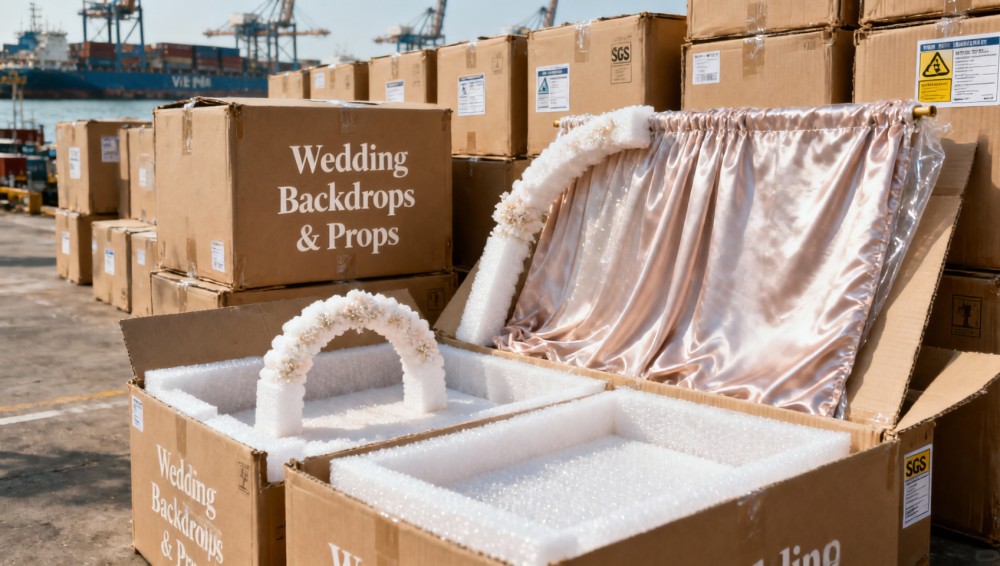
On April 27, 2026, Vietnam’s Ministry of Industry and Trade issued an urgent notice mandating that, starting June 1, 2026, all imported wedding photography props—including backdrop fabrics, sponge-padded decorative props, and artificial flower bouquets—must undergo on-site formaldehyde emission rapid screening at Ho Chi Minh City and Hai Phong ports. Testing follows TCVN 7623:2023. Shipments failing the test will be rejected in full container lots. The measure targets opacity in environmental compliance among small- and medium-sized Chinese suppliers and encourages exporters to submit pre-shipment SGS formaldehyde test reports.
Which Subsectors Are Affected
Direct Export Trading Companies
These firms face immediate operational risk: non-compliant shipments arriving after June 1, 2026, will be detained and returned at origin’s cost. Impact includes delayed revenue recognition, increased demurrage and re-export logistics costs, and potential contract penalties with Vietnamese buyers.
Manufacturing & Assembly Factories
Factories producing foam-padded props or fabric backdrops using adhesives, laminates, or synthetic dyes may lack internal formaldehyde emission controls. Unlike consumer textiles or furniture, formaldehyde testing has not been routine for this niche category—making process validation and material traceability newly critical.
Raw Material Suppliers
Suppliers of polyurethane foam, PVC-coated fabrics, or hot-melt adhesives used in prop assembly are indirectly affected. Buyers may now require formaldehyde test certificates for base materials—not just finished goods—shifting upstream quality accountability.
Logistics & Customs Compliance Service Providers
Freight forwarders and customs brokers handling wedding prop consignments into Ho Chi Minh City or Hai Phong must now verify pre-shipment SGS formaldehyde reports before filing. Absence of such documentation may trigger port-side delays or automatic referral for on-site screening.
What Relevant Companies or Practitioners Should Focus On Now
Monitor official implementation guidance from Vietnam Customs and Bộ Công Thương
The April 27 notice is an urgent announcement—not yet accompanied by a formal circular or technical annex. Firms should track whether supplementary documents clarify acceptable test report formats, sampling protocols, or thresholds beyond TCVN 7623:2023’s scope.
Prioritize formaldehyde screening for high-risk categories
Focus first on foam-padded items (e.g., curved backdrops, cushioned arches) and fabric-based props treated with flame retardants or bonding agents—these carry higher inherent formaldehyde risk than untreated silk flowers or wooden frames.
Distinguish between policy signal and enforceable requirement
While the notice mandates on-site screening, actual enforcement capacity at Vietnamese ports remains variable. However, the explicit linkage to TCVN 7623:2023—and the stated intent to address supplier opacity—suggests this is more than a pilot. Treat it as operational baseline from June 1, 2026.
Prepare documentation and communication workflows now
Exporters should align internal QA teams with third-party labs (e.g., SGS) to issue formaldehyde test reports referencing TCVN 7623:2023, including batch numbers and material composition notes. Share these proactively with forwarders and Vietnamese importers—not only upon request.
Editorial Perspective / Industry Observation
Observably, this measure signals a shift in Vietnam’s import control strategy—from post-entry conformity verification toward preventive, port-side risk mitigation for low-value, high-volume decorative goods. Analysis shows it reflects growing regulatory attention to indoor air quality risks from informal manufacturing inputs, especially where supply chain transparency is limited. It is better understood as an early-stage enforcement signal rather than a fully matured regulatory regime; however, its specificity (targeting defined product types, ports, and standards) indicates high implementation intent. Continued monitoring is warranted—not just for amendments, but for patterns in port-level enforcement frequency and rejection rates over Q3 2026.
In summary, this update marks a tangible tightening of market access conditions for wedding photography props entering Vietnam—not a broad-based trade restriction, but a targeted quality gate with clear technical criteria. It underscores how environmental compliance expectations are expanding beyond traditional categories (e.g., children’s products or furniture) into adjacent decorative and event-support segments. Current interpretation should emphasize preparedness over panic: the requirement is specific, testable, and actionable with existing lab infrastructure—provided stakeholders act before June 1, 2026.
Source: Official notice issued by Vietnam’s Ministry of Industry and Trade (Bộ Công Thương), dated April 27, 2026. Implementation status and enforcement details remain subject to ongoing observation through Vietnam Customs bulletins and port authority advisories.
Recommended News
 Eco PackagingCanton Fair Wedding Photo Props Zone Sees 37% YoY GrowthWedding photo props at Canton Fair surge 37% YoY—biodegradable packaging & magnetic modular backdrops lead global demand. Discover key trends now!Packaging Supply ExpertApr 24, 2026
 Export UpdatesChina Customs Launches Beta 'Wedding Photo Props Export Compliance Self-Check Platform'Wedding photo props exporters: Use China Customs’ new beta Self-Check Platform for real-time export compliance guidance on HS codes like 9405.40, 4202.92 & 6307.90 — avoid delays in US, EU, ASEAN & Middle East markets.Apr 24, 2026
 Commercial LEDEN 14982:2026 Effective: LED Softlight Devices for Wedding Photography Must Pass Enhanced EMC Immunity TestsLED softlight devices for wedding photography must now pass enhanced EMC immunity tests per EN 14982:2026 — ensure CE compliance before EU market entry!Commercial Tech EditorApr 24, 2026
 Carton & PlasticsUS CPSC Recalls 7 Chinese Wedding Backdrop Makers for FormaldehydeUS CPSC recalls 7 Chinese wedding backdrop makers for formaldehyde—critical alert for婚纱摄影 exporters, MDF suppliers & US importers. Act now to avoid detention & liability.Packaging Supply ExpertApr 24, 2026