Industry News
Curation by industry experts
Hot Articles
Popular Tags
Custom furniture quotes vary widely. What changes the price?
Custom furniture quotes can shift dramatically based on design complexity, materials, order volume, and production capability at each furniture factory. For buyers comparing custom furniture suppliers, understanding what truly drives price is essential for smarter sourcing, better negotiation, and long-term value. This guide breaks down the key cost factors procurement teams, distributors, and business evaluators should examine before requesting or comparing quotations.
Why do custom furniture quotes differ so much between suppliers?
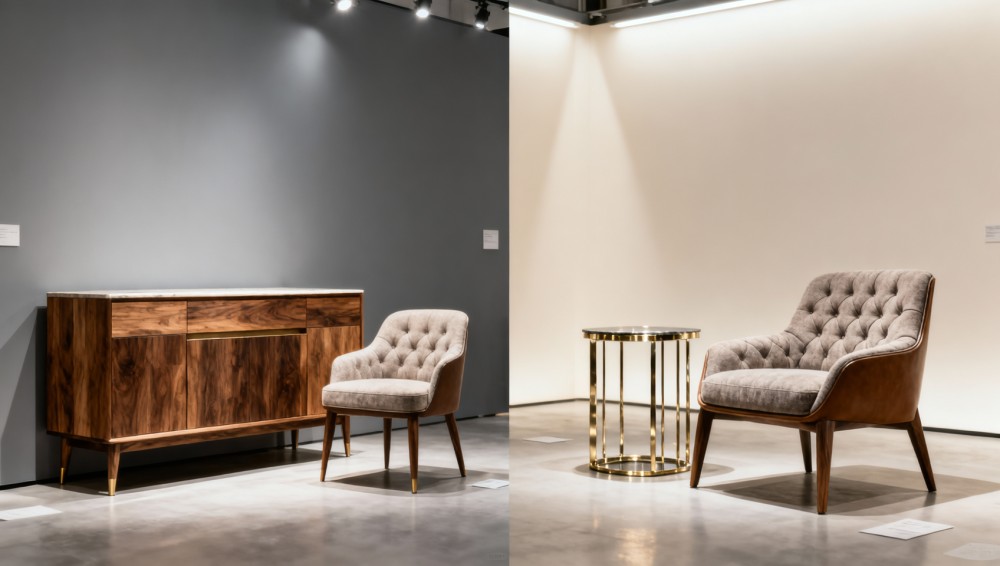
In furniture and decor sourcing, a quote is never just a number. It is a compressed summary of engineering effort, material grade, manufacturing difficulty, quality risk, packaging method, and delivery commitment. Two factories may receive the same drawing and still return prices that differ by 15%–40%, especially when the project involves mixed materials, hospitality-grade durability, or custom finishes.
For information researchers and procurement teams, the biggest mistake is comparing only the unit price. A lower custom furniture quote may exclude mockup charges, tooling, hardware upgrades, export packaging, or compliance testing. A higher quote may include design refinement, tighter tolerance control, or better yield management. Without normalizing the scope, quote comparison becomes misleading.
This matters even more for distributors, agents, and business evaluation teams that must protect margin while avoiding supply disruption. In practice, the final landed cost depends on at least 5 core variables: specification clarity, bill of materials, order quantity, production process, and supplier operating model. Lead times also affect cost. A 2–4 week urgent schedule usually prices differently from a 6–10 week standard production window.
At Global Supply Review, buyers use structured sourcing intelligence to interpret these quote gaps before entering negotiation. That means assessing not only what a furniture factory charges, but also why it charges that amount, what risks are built into the offer, and which quote is more sustainable across repeat orders.
The 5 quote components buyers should isolate first
- Material package: solid wood species, panel substrate, veneer thickness, foam density, upholstery grade, hardware brand, and finish chemistry all move the baseline cost.
- Manufacturing complexity: curved edges, hand-applied finishes, hidden joints, carved details, and mixed-material construction increase labor hours and rejection risk.
- Quantity structure: prototypes, small-batch runs, and container-level orders are priced differently because setup cost is spread across different volumes.
- Quality and compliance scope: hospitality, office, and public-space projects may require stricter durability, emissions, or fire-related material controls.
- Packaging and logistics assumptions: KD packing, assembled packing, carton strength, corner protection, and palletization all change export cost.
Which cost drivers usually change a custom furniture quote the most?
The largest price shifts usually come from materials and process choices rather than from supplier mood or location alone. In wood furniture, the difference between engineered panels and solid hardwood can be substantial, but even within one category there are layers of cost. Moisture control, core consistency, veneer matching, and surface repair rates all influence yield and labor. In upholstered products, fabric composition, rub count requirements, foam resilience, and stitching method can quickly move the quotation.
Finishing is another major factor. A simple matte lacquer on flat surfaces is not priced the same as an open-pore stained finish, metallic effect, distressed texture, or multi-step color matching process. Each additional finish step adds labor time, curing time, inspection effort, and sometimes higher defect exposure. For premium decorative furniture, finish-related labor can become one of the top 3 cost contributors.
Construction method also matters. Knock-down structures may reduce freight cost but require more hardware engineering and fit testing. Fully assembled units may lower installation effort for the buyer but raise packaging volume and shipping cost. Tolerances around drawer slides, doors, glass integration, or stone tops can add hidden manufacturing complexity, especially when dimensional consistency must stay within practical ranges such as ±1 mm to ±2 mm for visible fit-sensitive components.
Finally, supplier capability changes price because experienced factories price risk differently. A manufacturer with mature sampling, CNC programming, and finishing control may not always be the cheapest, but it may deliver better repeatability across 3 production phases: sample approval, pilot batch, and mass production. That stability often matters more than a short-term price drop.
Typical cost drivers and their pricing impact
The table below helps buyers compare the most common variables behind custom furniture quotes across furniture factory proposals. It is especially useful when reviewing multiple RFQs from custom furniture suppliers with different assumptions.
When this structure is used early, buyers can see whether a custom furniture quote is genuinely competitive or simply incomplete. It also makes supplier negotiation more efficient because pricing discussions move from broad pressure to specific variables that can actually be adjusted.
What often gets missed in RFQ discussions?
Development and sampling cost
For new designs, sample development may take 7–21 days depending on complexity, material availability, and finish trials. Some suppliers amortize this into production pricing. Others separate sample fees, mold fees, and engineering revisions. If this is not clarified, quote comparisons become distorted from the start.
Quality risk pricing
Factories that expect a high rejection rate due to difficult finishing, unstable raw materials, or aggressive tolerances will quietly add risk cost. This is common in premium veneer matching, stone-to-metal assemblies, and hospitality furniture with strict consistency demands across many rooms or sites.
How should buyers compare quotes from different custom furniture suppliers?
A strong procurement process compares like for like. If one factory quotes MDF with veneer, another quotes plywood with veneer, and a third quotes solid ash with stain, then the price gap says little about competitiveness. The first step is quote normalization. Buyers should use the same drawing version, finish code, hardware requirement, packaging method, trade term, and inspection expectation across every supplier bid.
The second step is to separate fixed cost from scalable cost. Tooling, sample making, and engineering setup are mostly front-loaded. Material consumption, labor, and packaging scale more directly with quantity. This matters for distributors and project buyers deciding between an initial 30-unit pilot and a 300-unit rollout. A quote that looks expensive at low volume may become efficient at medium volume once setup costs are diluted.
The third step is evaluating operational fit. Can the supplier handle repeat orders every month or every quarter? Can it maintain the same finish batch after 60–90 days? Does it have experience with contract furniture, retail fixtures, office systems, or residential decor? A furniture factory that fits the product category usually produces more reliable costing because it understands defect patterns and packaging realities.
GSR supports this comparison approach by helping procurement teams frame supplier evaluation around verifiable sourcing criteria rather than headline price. That is especially useful when the target is not just one shipment, but a stable vendor relationship that supports regional expansion, dealership supply, or branded furniture programs.
A practical quote comparison matrix
Use the following framework when comparing custom furniture quotes from two or more suppliers. It reduces the chance of choosing a low quote that later grows through revisions, claims, or freight inefficiency.
The key lesson is simple: the best custom furniture supplier is rarely the one with the lowest first quote. It is the supplier whose quote is complete, transparent, scalable, and suitable for the intended market channel.
3 procurement checks before accepting a quote
- Ask for the exact material and hardware breakdown, not just a product photo and size list.
- Confirm whether testing, export packaging, labeling, and spare parts are included in the commercial offer.
- Request a sample or pre-production confirmation process with 2–3 approval checkpoints before mass production.
What procurement teams should ask about compliance, durability, and hidden risk
In B2B furniture sourcing, cost control fails when compliance and durability are treated as secondary issues. The quote may look acceptable, but if the furniture enters hospitality, office, education, or commercial interiors, buyers often need to validate surface durability, structural reliability, emissions expectations, and packaging performance. Even when exact certifications vary by market, the supplier should still be able to explain material origin, finishing system, and quality control checkpoints.
This is also where hidden risk enters the quotation. For example, a supplier may price standard domestic hardware while the project requires higher cycle performance for drawers, hinges, or adjustable mechanisms. A distributor may discover too late that replacement parts are unavailable after 6 months. An agent may win an order on price but lose margin through post-delivery claims. These are not minor details. They shape the true cost of a custom furniture program.
A disciplined sourcing review usually covers 4 areas: product durability, material compliance, packaging suitability, and claim response process. For repeat business, buyers should also ask how long finish references, fabric lots, and hardware specifications can be maintained. In custom programs, consistency over 2–3 reorder cycles is often more valuable than a single low introductory quote.
Because GSR focuses on structured sourcing intelligence, procurement and business evaluation teams can use its market insight approach to screen suppliers more effectively. That includes checking whether a factory’s capabilities align with the actual project category, whether commercial promises fit standard execution timelines, and whether the quote reflects a realistic production model.
A risk checklist for custom furniture sourcing
- Material substitution risk: confirm whether the quoted board, veneer, foam, fabric, or metal specification can be changed without written approval.
- Finish consistency risk: ask for retained color panels or finish swatches if the project may reorder after 30–180 days.
- Packaging damage risk: review corner protection, carton grade, and internal supports for fragile surfaces, glass, or stone elements.
- Installation risk: check whether assembly instructions, fitting marks, and accessory packs are suitable for dealers or site teams.
- Claim recovery risk: define how shortages, transit damage, and spare part requests are handled within agreed response windows.
Common quote misconceptions
“A higher MOQ always means a better unit price.”
Not necessarily. If the design uses unstable materials, heavy manual finishing, or costly packaging, the savings from higher volume may be modest. Buyers should ask where the major cost concentration sits before increasing order size.
“A detailed photo is enough for accurate quoting.”
It is not. Reliable custom furniture quotes need dimensions, materials, finish references, hardware expectations, packaging requirements, and target quantity. Without these, suppliers price assumptions, not actual products.
FAQ: what buyers, distributors, and evaluators ask most often
The questions below reflect common search intent around custom furniture suppliers, quotation review, and sourcing decisions in the furniture and decor sector. They are especially relevant for teams balancing budget, lead time, and channel quality requirements.
How can I reduce a custom furniture quote without lowering product value too much?
Start with the highest-impact variables: simplify geometry, reduce finish steps, standardize hardware, and optimize packaging. In many projects, changing from a complex hand-finished surface to a cleaner standardized finish can reduce labor pressure. Switching from fully assembled packing to KD packing may also lower freight cost if installation capability exists at destination. The best savings usually come from 3 areas: process simplification, material rationalization, and order consolidation.
What is a normal lead time for custom furniture production?
A common range is 3–8 weeks after final sample approval, but this varies with material sourcing, finish complexity, and order size. Sampling may take another 1–3 weeks. Buyers should separate development time from production time and also confirm whether the quoted lead time includes packaging, inspection, and booking readiness.
What should distributors focus on when choosing a custom furniture supplier?
Distributors should look beyond unit cost and focus on replacement parts support, packaging quality, finish consistency, and reorder stability. If a supplier cannot maintain the same product specification over quarterly replenishment cycles, channel margin and customer trust may suffer. Reliable after-sales handling often matters as much as the first quotation.
How many quote revisions are reasonable before final negotiation?
In many B2B furniture projects, 2–3 rounds are practical. The first round establishes baseline assumptions, the second aligns materials and structure, and the third finalizes commercial terms. More than that often signals poor specification clarity or unrealistic target pricing.
Why work with GSR when evaluating custom furniture suppliers?
For procurement directors, sourcing managers, distributors, and business evaluators, the challenge is not just finding a furniture factory. It is finding the right supplier profile for the product, market, risk level, and growth plan. GSR supports this by organizing high-value sourcing intelligence across furniture and decor supply chains, helping buyers read beyond headline pricing and identify practical decision factors.
This is particularly useful when your team is comparing custom furniture suppliers across regions, building a shortlist for strategic sourcing, or reviewing whether a factory can support long-term expansion. Instead of relying on fragmented quote emails, you can assess production fit, commercial clarity, and supply-side credibility in a more structured way. That reduces sourcing friction and improves negotiation quality.
If you are preparing a request for quotation, GSR can help you focus the discussion around the issues that matter most: material specification, finish expectations, MOQ and volume breaks, sample requirements, standard lead times, export packaging, and compliance-related concerns. That means fewer pricing surprises and stronger supplier conversations from the beginning.
Contact GSR if you want support with supplier screening, quote comparison, product selection logic, delivery cycle review, sample planning, or custom furniture sourcing strategy. Whether you are validating a new supplier, comparing multiple quotations, or defining a more efficient RFQ framework, the goal is the same: better decisions, lower hidden risk, and stronger long-term value.
Recommended News
 Expert AnalysisIWA Launches Green Studio Certification for Chinese Photo Studio SuppliersGreen Studio Certification for Chinese photo studio suppliers — IWA's GGSC opens to LED lighting, eco-backdrops, biodegradable props & retouching software. Apply by May 31!Apr 17, 2026
 Fabrics & YarnsTurkey TSE New Standard for Linen-Blend Backdrop FabricsTurkey TSE new standard for linen-blend backdrop fabrics: mandatory antibacterial & stability tests by Aug 2026—secure compliance now to keep supplying Istanbul wedding studios.Textile Industry AnalystApr 17, 2026
 Supply Chain InsightsWedding Photography Prop Freight Rates Surge 23% on Red Sea DisruptionWedding photography prop freight rates surge 23% amid Red Sea disruption—impact on lead times, air costs & supply chain strategy revealed.Apr 17, 2026
 Garment MfgBrazil ANVISA Proposes Child Textile Rules for Bridesmaid AttireBrazil ANVISA’s new child textile rules for bridesmaid attire—lace veils, satin ribbons, silk bouquets—demand ISO flammability & safety testing. Act now!Textile Industry AnalystApr 17, 2026