Industry News
Curation by industry experts
Hot Articles
Popular Tags
Why some custom furniture samples mislead final production
A polished sample can make custom furniture look production-ready, yet mass manufacturing often reveals hidden gaps in materials, finishes, tolerances, and process control. For buyers comparing a furniture factory, this issue affects cost, quality, and delivery risk. Understanding why samples differ from final output helps procurement teams, distributors, and business evaluators make more reliable sourcing decisions.
Why do custom furniture samples often look better than final production?
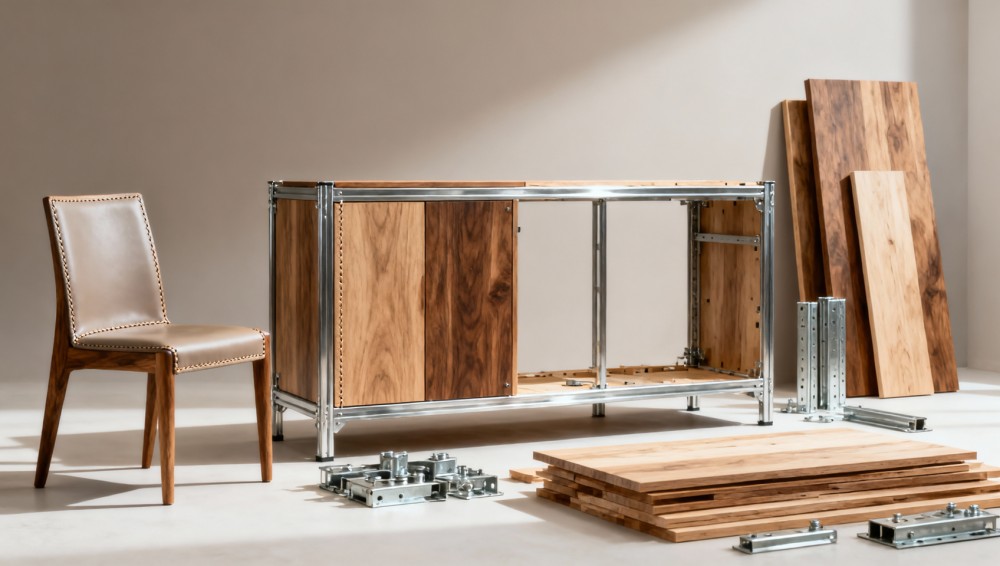
In furniture and decor sourcing, a sample is often built under controlled conditions. A skilled technician may spend extra hours on sanding, upholstery alignment, stain matching, or hardware adjustment. That level of attention is not always replicated when production moves from 1 unit to 100, 500, or 2,000 units. For procurement teams, this is the first reason a custom furniture sample can mislead final production.
The sample stage also uses a narrower material batch. A chair frame may be made from one carefully selected wood lot, while mass production may draw from several lots with natural color variation, moisture differences, or grain inconsistency. In painted furniture, a sample may be sprayed by a senior finisher in a single shift, but production may run across 2–4 weeks with changing humidity, operator variation, and batch-to-batch coating differences.
Another problem is that some sample furniture is made partly by hand, while the final line depends on jigs, CNC programming, edge banding lines, upholstery templates, and packaging stations. If the factory has not fully translated the approved sample into production documents, the approved look remains visual, not executable. Buyers then approve a concept, not a controlled manufacturing standard.
For information researchers and business evaluators, this distinction matters. A strong-looking prototype does not automatically prove stable factory capability. It only proves that the supplier can make one good sample. The real question is whether the supplier can hold the same specification across three core dimensions: repeatability, scalability, and delivery discipline.
The usual gap between sample logic and production logic
A sample is built to win approval. Production is built to meet target cost, target lead time, and acceptable yield. These goals are related, but not identical. When a factory is under pressure to hit a ship date in 30–45 days, it may substitute a slightly different veneer layout, simplify hidden joinery, or accept a wider tolerance range such as ±1.5 mm instead of a carefully corrected showroom result.
The issue becomes more visible in dining tables, cabinets, hotel furniture, sofas, and mixed-material pieces. These products combine wood, metal, fabric, foam, glass, stone-look surfaces, or lighting components. Each material behaves differently in machining, adhesion, expansion, and finishing. A sample can conceal these interactions because it is made slowly. Scaled production exposes them quickly.
- Sample approval often focuses on visible appearance, but mass production depends on hidden process controls such as moisture conditioning, fixture accuracy, curing time, and packaging resistance.
- A supplier may outsource one component during sample development, then switch to another subcontractor for volume production, creating hardware fit or finish differences.
- Commercial buyers may request value engineering after sample approval, which can change foam density, board grade, drawer runner type, or carton structure.
This is where a structured sourcing review becomes valuable. GSR supports buyers by turning isolated sample impressions into a broader factory assessment framework, helping teams compare not only aesthetics but also process maturity, documentation completeness, and production readiness before a purchase order is released.
Which production variables most often cause mismatch in furniture manufacturing?
When custom furniture samples mislead final production, the mismatch usually comes from a limited set of controllable variables. Buyers should not treat every defect as random. In most projects, the root causes can be grouped into 5 key categories: material variation, tolerance control, finish consistency, assembly execution, and packaging protection. Identifying which category matters most helps avoid vague quality disputes later.
Wood furniture is highly sensitive to moisture content and grain structure. Even when the species stays the same, panels from different lots can move differently after machining or finishing. Upholstered furniture faces a similar issue with fabric lot color, foam rebound, and sewing alignment. Metal-and-wood products often show mismatch at connection points, especially when powder-coated frames and predrilled wood panels are produced in separate workflows.
The table below gives a practical view of where sample-to-production gaps usually appear in furniture and decor sourcing. It is designed for procurement review, supplier comparison, and internal approval discussions.
The practical lesson is simple: furniture sampling should not stop at aesthetics. It should convert visual approval into measurable criteria. If the sample looks right but no tolerance table, material spec, finish standard, or assembly instruction exists, the project remains exposed to preventable variation.
What procurement teams should ask before approving bulk production
Before confirming a bulk order, buyers should ask for the production version of the sample package. This package should include at least 4 elements: approved bill of materials, dimension drawing, finish reference, and packaging method. If one of these is missing, the custom furniture sample may still be too conceptual for production approval.
A short factory readiness checklist
- Has the supplier frozen the material grade, such as plywood specification, veneer thickness, foam density, and hardware model, rather than giving only general descriptions?
- Has the factory run a pilot lot, often 5–20 units, to verify line stability before the full volume order?
- Has packaging been tested for the actual route, including export carton strength, corner protection, and container loading pattern?
- Has the buyer defined cosmetic acceptance levels for visible and hidden surfaces?
These checkpoints are especially important for distributors and agents who must protect resale consistency. A beautiful sample may help win a customer, but repeated claims from uneven production can quickly damage a channel relationship.
How can buyers compare a furniture factory beyond the sample itself?
A furniture factory comparison should move from object review to system review. In other words, the sample matters, but the production system matters more. For sourcing managers, the strongest suppliers are not always those with the most polished first sample. They are often the ones that can explain how the sample will be repeated across 3 stages: pre-production, in-line control, and final inspection.
This is particularly relevant in B2B furniture programs such as hospitality projects, retail fixtures, office furniture, and residential collections for importers. These projects require not only acceptable unit quality, but also consistent output across multiple SKUs, packaging formats, and shipment windows. A supplier that can manage 8 SKUs over 2 containers with stable hardware and finish control is usually more valuable than one that can only present an impressive showroom piece.
The next table is useful when evaluating a custom furniture supplier at quotation, sample, and pre-order stages. It helps decision-makers compare suppliers on repeatability rather than presentation alone.
For buyers working across countries, this structured comparison is more reliable than relying on factory claims. GSR adds value here by aggregating industry intelligence, procurement logic, and cross-category manufacturing knowledge. That wider sourcing lens is useful because furniture quality often depends on inputs from textiles, hardware, packaging, and surface treatment, not furniture assembly alone.
A practical 4-step review path
To reduce risk, many buyers follow a 4-step path. First, approve the concept sample. Second, lock the technical specification. Third, review the pilot lot or pre-production sample. Fourth, inspect final packed goods before shipment. Skipping step 2 or step 3 is where many custom furniture problems begin.
If lead time is tight, a compressed review still needs structure. Even in a 30-day schedule, buyers can request digital drawings within 3–5 days, pilot confirmation within 7–10 days, and final inspection in the last 3–5 days before loading. What matters is not perfect speed, but controlled decision points.
For distributors, this process also helps with resale planning. Stable factory performance improves forecast accuracy, lowers replacement claims, and reduces the hidden cost of customer service after arrival.
What standards, tolerances, and compliance points should be clarified early?
Many furniture sourcing disputes are not caused by obvious factory negligence. They happen because the buyer and supplier never translated the approved sample into a measurable acceptance standard. In custom furniture production, “same as sample” is too vague. The better approach is to define critical tolerances, material substitutions, finish expectations, and packaging rules before production starts.
For example, dimensional tolerance can vary by part type. Flat panels may require tighter control than decorative edge reveals. Upholstery seam alignment may need a visible reference range. Drawer gaps, door alignment, and rocking stability should be agreed as acceptance points rather than discussed only after delivery. In many cases, 6 inspection items are enough to prevent most recurring claims if they are defined early and checked consistently.
Compliance also matters, especially for importers, chain buyers, and commercial project teams. Depending on the product and market, buyers may need to confirm substrate emissions, labeling, packaging regulations, or relevant flammability and chemical restrictions. The exact requirement depends on destination market and product category, so a supplier should never assume one standard covers all projects.
Common areas that should be written into the approval file
- Material specification: wood species or panel type, veneer method, foam density range, fabric composition, glass thickness, and hardware reference.
- Appearance standard: color range, sheen level, grain variation allowance, seam straightness, edge finishing quality, and acceptable touch-up visibility.
- Functional standard: load use expectation, drawer operation, door swing, anti-wobble stability, and assembly consistency for knock-down products.
- Packaging and logistics: carton construction, drop-sensitive points, inner protection materials, pallet rules if required, and container loading logic.
For business evaluators, the key question is not whether a supplier mentions standards, but whether the supplier can connect those standards to execution. A furniture sample becomes meaningful only when it is backed by a controlled approval file, a repeatable process, and a clear escalation path if variance appears during the 1st, 50th, or 500th unit.
Why tolerance discipline matters more in mixed-material furniture
In mixed-material furniture, every process adds its own variation. A steel frame may stay stable, while solid wood or veneered panels shift with moisture. Upholstery adds compression differences, and stone-look tops add weight and handling risk. That is why mixed-material products should receive tighter cross-department review during sampling and pilot stages. Without it, the approved sample may never reflect assembly reality in volume.
This is one reason sourcing teams benefit from a broader intelligence platform. GSR covers adjacent manufacturing pillars such as textiles, packaging, and hardware, which helps buyers see how non-furniture components affect final furniture consistency, compliance, and delivery confidence.
FAQ: how to avoid being misled by a custom furniture sample
Below are common procurement questions raised by importers, sourcing managers, distributors, and project evaluators when reviewing custom furniture samples. These answers are especially useful when the supplier looks capable, but production reliability remains uncertain.
How many samples are enough before placing a bulk order?
For standard designs with low complexity, 1 approved sample plus a complete technical file may be enough. For custom furniture with multiple materials, special finishes, or knock-down structures, buyers often need 2 stages: an initial sample and a pre-production sample or pilot lot. If the order value is high or the program includes 5 or more SKUs, a small pilot run is usually more useful than approving one perfect showroom unit.
What is the biggest mistake buyers make during furniture sampling?
The most common mistake is approving appearance without locking production specifications. Buyers sometimes confirm color, shape, and feel, but fail to confirm substrate type, hardware model, seam construction, coating method, or packaging standard. When bulk output changes, the supplier may argue that the product remains “similar,” while the buyer expected it to remain “same.” That gap creates avoidable claims.
How long does a safer furniture approval process usually take?
A realistic cycle for custom furniture often includes 7–15 days for sample development, 3–7 days for technical revision, and 7–10 days for pilot or pre-production confirmation if needed. Bulk lead time may then range from 30–60 days depending on material readiness, order size, and finish complexity. Shorter schedules are possible, but only if documentation and material approval move quickly.
Should distributors care about packaging at the sample stage?
Yes. A custom furniture sample may arrive in protected premium packing, while the final order uses cost-reduced cartons. This creates a false impression of product durability. Distributors and importers should ask for a packaging proposal before bulk confirmation, especially for glass-front cabinets, marble-look tops, upholstered headboards, and long panels that are vulnerable in container loading and last-mile handling.
What should be included in a sourcing review when comparing factories?
A reliable sourcing review should cover at least 5 dimensions: sample quality, technical documentation, process control, packaging logic, and communication discipline. Price and appearance matter, but they should not outweigh traceability, pilot control, and the supplier’s ability to explain how the approved sample will be reproduced at scale.
Why work with GSR when evaluating custom furniture production risk?
When a custom furniture sample looks convincing, the hidden risk is not always visible to a single buyer or one-time evaluator. GSR helps close that gap by combining category-specific sourcing insight with a broader view of the supply chain inputs that shape final furniture performance. That includes materials, packaging, hardware interfaces, and production-readiness signals that affect consistency long after the sample is approved.
For procurement teams, distributors, and business assessment professionals, GSR can support more informed decisions around supplier comparison, specification clarity, lead-time realism, and risk identification. This is especially valuable when orders involve custom finishes, mixed materials, export packaging demands, or supplier portfolios that look strong on presentation but vary in operational control.
If you are reviewing a furniture factory and want to understand whether the sample truly represents final production, you can consult GSR on practical checkpoints such as material confirmation, tolerance review, pilot production logic, packaging requirements, delivery timeline expectations, and supplier evaluation criteria. These are the issues that most directly affect landed quality, claim rates, and commercial reliability.
Contact GSR to discuss your custom furniture sourcing questions, including sample validation, product selection, technical specification review, lead-time planning, compliance considerations, packaging risk, and quotation comparison. A stronger sourcing decision starts when the sample is treated not as a promise, but as the first document in a controlled production process.
Recommended News
 Expert AnalysisIWA Launches Green Studio Certification for Chinese Photo Studio SuppliersGreen Studio Certification for Chinese photo studio suppliers — IWA's GGSC opens to LED lighting, eco-backdrops, biodegradable props & retouching software. Apply by May 31!Apr 17, 2026
 Fabrics & YarnsTurkey TSE New Standard for Linen-Blend Backdrop FabricsTurkey TSE new standard for linen-blend backdrop fabrics: mandatory antibacterial & stability tests by Aug 2026—secure compliance now to keep supplying Istanbul wedding studios.Textile Industry AnalystApr 17, 2026
 Supply Chain InsightsWedding Photography Prop Freight Rates Surge 23% on Red Sea DisruptionWedding photography prop freight rates surge 23% amid Red Sea disruption—impact on lead times, air costs & supply chain strategy revealed.Apr 17, 2026
 Garment MfgBrazil ANVISA Proposes Child Textile Rules for Bridesmaid AttireBrazil ANVISA’s new child textile rules for bridesmaid attire—lace veils, satin ribbons, silk bouquets—demand ISO flammability & safety testing. Act now!Textile Industry AnalystApr 17, 2026