Industry News
Curation by industry experts
Hot Articles
Popular Tags
Packaging materials that cut damage without raising freight
For buyers in furniture and decor, the right Packaging Materials can reduce transit damage without increasing freight costs. From custom furniture shipments protected with non woven fabrics to factory-ready solutions sourced through a furniture factory or trusted hardware suppliers, smart packaging choices improve margins and customer satisfaction. This guide helps procurement teams evaluate practical options that balance protection, weight, and supply chain efficiency.
Why freight-friendly protection matters in furniture and decor sourcing
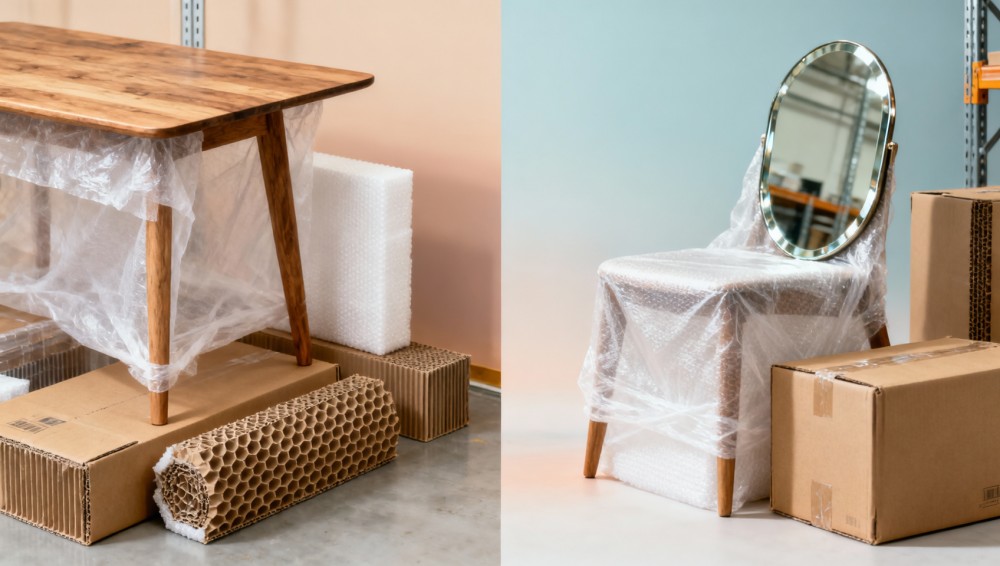
Furniture and decor products face a packaging challenge that many other categories do not. A chair leg can puncture a carton, a lacquered tabletop can scratch under vibration, and glass, metal, wood, foam, and textile surfaces often travel in the same shipment. For procurement teams, the goal is not simply more packaging. The goal is better Packaging Materials that control compression, abrasion, impact, and moisture without adding avoidable dimensional weight.
In practical terms, the damage risk appears across 3 key logistics stages: in-plant handling, container loading, and last-mile delivery. Each stage introduces a different failure mode. Forklift contact demands edge protection. Long-haul ocean movement requires vibration control over 2–6 weeks. Final delivery often creates drop and drag risk, especially for flat-pack furniture, mirrors, lighting-integrated decor, and mixed-material cabinets.
Buyers also need to protect freight economics. Packaging that adds too much bulk can increase carton cube, reduce container utilization, and raise landed cost even if unit packaging cost looks low. This is why lightweight non woven fabrics, paper honeycomb structures, corrugated edge guards, molded pulp inserts, and selective foam placement are increasingly preferred over excessive all-over foam wrapping.
For distributors, agents, and commercial evaluators, the issue goes beyond breakage. Damaged furniture creates replacement costs, inspection delays, warehouse rework, customer claims, and channel friction. In many B2B programs, reducing avoidable claims within a 30–90 day receiving window has more financial value than shaving a small amount from ex-factory packaging price. That is why packaging decisions should be evaluated as a sourcing strategy, not a finishing detail.
- Protect visible surfaces first: corners, edges, legs, glossy panels, and hardware contact points cause a large share of complaint-driven damage.
- Measure packaging by total shipment effect: unit cost, carton cube, loading density, rework time, and claim exposure should all be included.
- Match materials to route length and handling intensity: domestic palletized moves and export container shipments rarely need the same packaging build.
Which Packaging Materials reduce damage without adding unnecessary weight?
The best packaging system for furniture and decor is usually layered rather than single-material. Surface protection, structural cushioning, void control, and outer-pack reinforcement each perform different jobs. A buyer who asks only for “stronger packaging” often receives heavier packaging, not smarter packaging. The better question is which material controls which risk, and at what thickness or density range.
For painted wood, veneered panels, powder-coated metal, and polished stone accents, non woven fabrics are useful as a first-contact layer because they reduce rubbing marks and dust transfer with minimal weight. They are especially relevant for custom furniture, nested parts, and export SKUs where two finished surfaces may touch during vibration. In many sourcing programs, this layer is combined with paper wrap or PE bagging only where moisture or dirt exposure is a concern.
For structure and impact absorption, buyers usually compare EPS, EPE, molded pulp, corrugated inserts, and paper honeycomb. EPS can deliver strong shape retention but may add handling complexity and disposal concerns. EPE is lightweight and versatile, often used in 5 mm–25 mm thickness ranges depending on product fragility. Molded pulp and honeycomb are increasingly attractive where buyers want lower plastic use and flatter inbound storage profiles.
Outer packaging remains critical. Double-wall corrugated cartons, corner boards, strapping, and pallet stabilizing films must work together. For flat-pack goods, outer box crush resistance matters more than cosmetic appearance. For assembled furniture, selective reinforcement around feet, armrests, and exposed corners typically delivers better freight efficiency than full heavy carton upgrades across the entire SKU range.
Material selection by function, not habit
The table below helps sourcing teams compare common Packaging Materials used in furniture and decor. It focuses on damage-control function, weight impact, and common fit-for-use scenarios rather than generic marketing claims.
A consistent pattern appears in successful furniture packaging programs: use low-mass materials for surface separation, then apply structural protection only where failure points are known. This approach often protects freight efficiency better than broad, heavy overpacking, especially when container fill and handling speed are under pressure.
Typical packaging build for common furniture categories
Buyers should also segment by product type. Dining chairs, KD cabinets, mirrors, upholstered benches, and decor shelving fail in different ways. Using one packaging recipe across the entire catalog usually increases either cost or claims. A more disciplined approach is to define 4 packaging profiles by product form and fragility.
- Flat-pack panels: favor paper honeycomb, corner guards, and double-wall corrugated to manage panel compression and edge crush.
- Assembled wood or metal frames: use non woven surface wrap plus targeted foam on feet, arms, and contact points.
- Glass or mirror components: require separation layers, rigid edge protection, and clear orientation handling marks.
- Decor bundles with hardware: include accessory segregation so screws, brackets, and fittings do not mark finished surfaces during transit.
How should procurement teams compare protection, cube, and total landed cost?
A packaging review should not stop at material price per set. In furniture and decor, small increases in carton dimensions can affect pallet pattern, container loading, and per-unit freight allocation. That means the cheapest packaging quote can become the most expensive delivered option. Procurement teams should evaluate at least 5 dimensions: damage prevention, package weight, package cube, packing labor, and replacement handling cost.
This is especially relevant when working with multiple suppliers such as a furniture factory, upholstery source, and hardware suppliers for bundled kits. If each supplier optimizes packaging independently, the importer often inherits inconsistent carton strength, poor stackability, and receiving complexity. Coordinated packaging specifications can reduce those hidden costs across 1 product line or an entire mixed container program.
In many sourcing reviews, the break-even decision is not driven by packaging weight alone but by claim frequency and re-ship burden. A replacement for a damaged table or cabinet may involve 2–4 extra touchpoints: claim review, inventory adjustment, reverse logistics or disposal, and customer service follow-up. These downstream costs justify a more analytical comparison model.
The comparison table below can be used during supplier reviews, RFQ evaluation, or packaging redesign projects. It gives business evaluators and channel partners a practical framework to balance protection and freight exposure.
A disciplined comparison often reveals that moderate packaging redesign can outperform blanket material upgrades. For example, reducing carton void, stabilizing hardware packs, and adding corner protection may deliver better results than moving the whole SKU to a heavier foam-intensive system. The right answer depends on product geometry, route length, and channel expectations.
A 4-step review process buyers can apply
- Map the top 3 complaint types by SKU or product family over the last 1–2 shipping cycles.
- Separate damage caused by packaging failure from damage caused by poor handling, stacking, or moisture exposure.
- Test targeted changes first, such as corner pads, non woven wraps, accessory segregation, or carton reinforcement.
- Review unit cost together with cube and replacement burden before approving the final packaging specification.
This process is valuable for sourcing managers because it creates comparable supplier feedback. It also supports more transparent discussion with distributors and agents who need stable quality, predictable carton dimensions, and fewer field complaints.
What should buyers check before approving a packaging specification?
Before issuing a PO or approving a revised packaging standard, buyers should confirm that the packaging design reflects the actual shipping environment. A product moving by parcel network, palletized LTL, and export container may need different protections even when the core product is identical. Approval should therefore cover route, handling profile, storage duration, and receiving method, not just material description.
A useful procurement checklist includes 6 practical points: first-contact surface material, corner or edge reinforcement, accessory containment, outer carton grade, moisture barrier need, and labeling accuracy. If one of these is overlooked, claims often reappear even when packaging spend increases. This is a common problem in mixed furniture programs where hardware packs damage decorative panels from inside the carton.
Lead time also matters. Standard materials may be sourced in 7–15 days, while custom inserts, molded pulp tooling, or revised print cartons may require 2–4 weeks or longer depending on artwork approval and sampling. Commercial teams should factor this into launch schedules, especially for seasonal decor, promotional programs, and new distributor onboarding.
Where sustainability or market-access requirements apply, buyers may also request documentation on fiber-based content, restricted substance compliance for inks or adhesives, or transport labeling consistency. The goal is not to overcomplicate sourcing, but to avoid surprises after booking, customs review, or retailer compliance checks.
Key approval questions for sourcing and QA teams
Does the package protect the known weak points?
Weak points should be identified by product design. For furniture, these are often corners, legs, glass zones, drawer fronts, decorative trims, and assembled joints. A passing package on paper can still fail in the field if these localized risks are untreated. Ask suppliers to show exactly where each protective layer works.
Is the packaging compatible with warehouse and channel operations?
A good export package should also support receiving efficiency. Cartons should be scannable, stackable, and practical for manual or mechanical handling. If unpacking takes too long or parts are hard to identify, damage may shift from transit to warehouse handling. That still becomes your cost.
Can the supplier repeat the packaging consistently?
Complex multi-piece packaging can look excellent in a sample review but fail in production. Procurement teams should ask whether the factory has packing instructions, material controls, and in-line checks. A simpler, repeatable packaging build is often more valuable than a theoretically stronger design that depends on perfect labor execution.
Common mistakes, FAQ, and how GSR supports better packaging decisions
Many furniture importers and distributors make the same mistake: they react to one damage event by adding more material everywhere. This increases cost and carton size but may not solve the real issue. Another common error is allowing packaging decisions to sit only with the factory. Without importer-side review, the pack may optimize local labor convenience rather than freight efficiency or channel performance.
Global Supply Review helps procurement and business evaluation teams approach Packaging Materials more strategically. Because GSR tracks sourcing, packaging, and light manufacturing intersections across furniture and decor, buyers can compare materials, supplier logic, and implementation risks in a more structured way. This is particularly useful when decisions involve multiple vendor types, including furniture factory partners, hardware suppliers, and packaging converters.
The value of that approach is speed and clarity. Instead of reviewing packaging as an isolated technical detail, teams can connect material choice to sourcing resilience, commercial requirements, and ESG-related packaging preferences. For projects under timeline pressure, that reduces internal debate and improves supplier communication across the first 2–3 approval rounds.
Below are several frequently asked questions that often arise during furniture and decor sourcing reviews, especially when damage reduction must be achieved without lifting freight cost.
How do I know if non woven fabrics are worth adding?
Use non woven fabrics when the dominant issue is surface abrasion, dust transfer, or finish-to-finish contact. They are especially relevant for painted wood, laminated panels, powder-coated frames, and decorative components packed in pairs. They are less effective as a standalone solution for high-drop risk or severe corner impact, where structural cushioning is still required.
What is the first sign that packaging is increasing freight cost too much?
Look at carton dimension growth before looking at material spend. If protective thickness pushes the carton beyond an efficient nesting or stacking pattern, freight can rise faster than expected. A few centimeters added around every panel or frame can reduce load density across a container or pallet program. That is why cube review should be part of every packaging change request.
How long does a packaging adjustment project usually take?
For standard material substitutions, 1–2 weeks may be enough for sample preparation and internal review. For redesigned inserts, revised cartons, or multi-supplier pack harmonization, 2–4 weeks is a more realistic planning window. If tooling, printed artwork, or distributor-specific labeling is involved, timelines can extend further, so early alignment is important.
What should distributors and agents ask suppliers before committing?
Ask for the packaging bill of materials, carton dimensions, unit gross weight, accessory packing method, and confirmation of how vulnerable surfaces are separated. Also ask whether the supplier has used the same packaging build for domestic only or for export routes of 2–6 weeks. Those answers quickly reveal whether the pack is field-proven or only sample-room ready.
Why choose us for packaging-related sourcing insight?
GSR is built for B2B buyers who need more than generic packaging advice. We connect packaging and printing knowledge with furniture and decor sourcing realities, including mixed-material products, factory capability screening, supplier comparison, and cross-category coordination. That makes our insight useful for information researchers, procurement teams, commercial evaluators, and channel partners who need decisions they can defend internally.
If you are reviewing Packaging Materials for new product launches or existing damage issues, contact GSR for support on parameter confirmation, material selection, supplier evaluation, lead-time planning, sample review logic, compliance considerations, and quotation discussion. We can help you structure a packaging decision around product type, route risk, budget limits, and freight impact so the final solution is commercially workable, not just technically acceptable.
Recommended News
 Expert AnalysisIWA Launches Green Studio Certification for Chinese Photo Studio SuppliersGreen Studio Certification for Chinese photo studio suppliers — IWA's GGSC opens to LED lighting, eco-backdrops, biodegradable props & retouching software. Apply by May 31!Apr 17, 2026
 Fabrics & YarnsTurkey TSE New Standard for Linen-Blend Backdrop FabricsTurkey TSE new standard for linen-blend backdrop fabrics: mandatory antibacterial & stability tests by Aug 2026—secure compliance now to keep supplying Istanbul wedding studios.Textile Industry AnalystApr 17, 2026
 Supply Chain InsightsWedding Photography Prop Freight Rates Surge 23% on Red Sea DisruptionWedding photography prop freight rates surge 23% amid Red Sea disruption—impact on lead times, air costs & supply chain strategy revealed.Apr 17, 2026
 Garment MfgBrazil ANVISA Proposes Child Textile Rules for Bridesmaid AttireBrazil ANVISA’s new child textile rules for bridesmaid attire—lace veils, satin ribbons, silk bouquets—demand ISO flammability & safety testing. Act now!Textile Industry AnalystApr 17, 2026