Industry News
Curation by industry experts
Hot Articles
Popular Tags
How to tell if a furniture factory can scale without quality drop
When evaluating a furniture factory for long-term growth, buyers need more than attractive samples and low quotes. Whether sourcing custom furniture, memory foam mattresses, or related inputs from hardware suppliers, the real question is whether production can scale without compromising consistency, lead times, or compliance. This guide outlines the practical signals procurement teams and distributors should review before committing to larger-volume partnerships.
What does scalable furniture manufacturing actually look like?
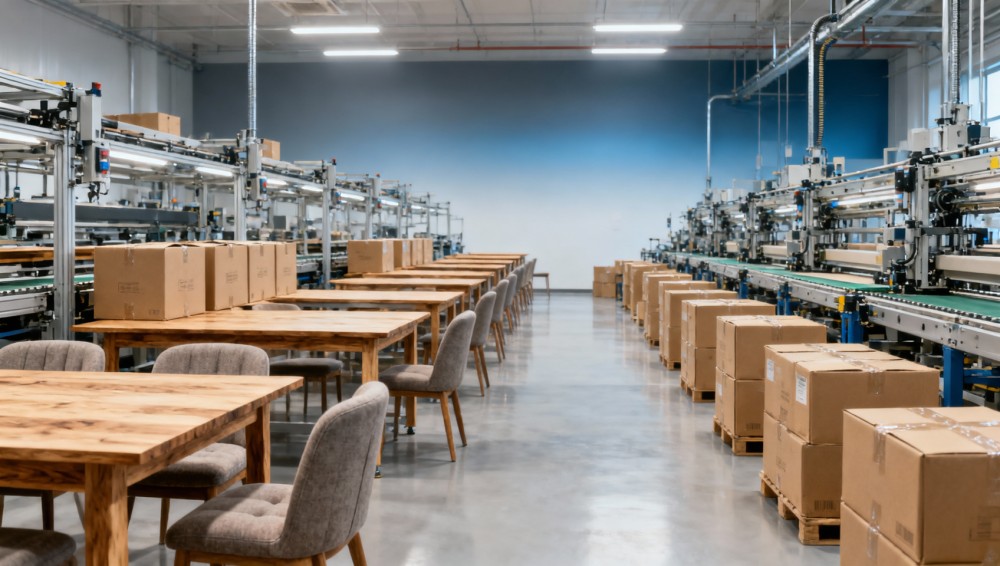
In furniture and decor sourcing, scale is not simply about adding more workers or running longer shifts. A factory can increase output for 2–4 weeks and still fail under sustained demand if process control, material planning, and quality checkpoints are weak. Real scalability means the supplier can move from small-batch orders to mid-volume and large-volume production while maintaining dimensional consistency, finish quality, packaging integrity, and agreed delivery windows.
For procurement teams, the key issue is repeatability. A factory that produces 50 excellent dining tables for a showroom sample order may struggle when the order rises to 500 units across mixed SKUs, multiple carton marks, and destination-specific labeling. The same risk applies to upholstered furniture and memory foam mattresses, where foam density variation, fabric cutting accuracy, and compression packing control directly affect after-sales claims.
Scalable furniture manufacturing usually rests on 3 operational layers: stable upstream supply, controlled in-factory processes, and disciplined outbound logistics. If one layer is weak, buyers often see familiar symptoms within 30–90 days: longer lead times, more rework, carton damage, uneven finishing, or rising defect rates in final inspection.
This is where a structured review matters. Instead of relying on sales promises, sourcing managers should ask how capacity is built, how output is balanced across lines, and how the factory manages quality when order complexity increases. Global Supply Review focuses on these decision points because buyers need sourcing intelligence that goes beyond catalogs and factory tours.
Three signs that output can grow without immediate risk
- The factory has documented process routing for each product family, such as panel furniture, upholstered frames, mattresses, or metal-leg assemblies, instead of depending on verbal instructions.
- Material planning is linked to realistic procurement cycles, often 7–21 days for common hardware and fabrics, while imported or custom components are clearly flagged as longer-lead items.
- Quality checkpoints are built into production stages, not limited to a final inspection before shipment.
If these elements are missing, “high capacity” claims may only reflect workshop size rather than reliable shipment capability. For dealers, distributors, and commercial buyers, that distinction is critical because scaling problems often become visible only after inventory reaches the destination market.
Which factory signals matter most during supplier evaluation?
Many buyers ask for monthly capacity figures first, but that number alone rarely reveals whether a furniture factory can scale without quality drop. A better approach is to review the factory across 5 key dimensions: line flexibility, labor stability, material control, in-process quality management, and packaging readiness. Together, these indicators provide a more realistic picture of large-order performance.
For example, a supplier may report capacity of 8,000 chairs per month, yet only one finishing line may be qualified for export-grade color consistency. Another factory may list 20 container loads per month, but achieve that only when producing a narrow range of standard designs. Once a buyer introduces custom dimensions, mixed upholstery, or retailer packaging, effective capacity can fall sharply.
The table below helps procurement teams compare operational signals rather than relying on headline claims. It is especially useful for business evaluation staff reviewing multiple furniture factories across different product categories.
A strong furniture factory should be able to explain each dimension with examples, records, and floor-level logic. If answers remain generic, buyers should assume the supplier has not yet institutionalized growth. That does not always mean the factory is unsuitable, but it does mean volume expansion should be phased rather than immediate.
Questions buyers should ask on-site or during audit
Ask how the factory handles a 30%–50% order increase within one production cycle. Does it add overtime, open another line, outsource sub-processes, or extend delivery? Each answer has different risk implications. Outsourced finishing or packing can work, but only if the supplier controls specifications and inspection standards tightly.
Also ask how many new SKUs can be introduced in a single month without affecting current orders. For furniture sourcing, complexity often matters more than volume. A plant that ships 10,000 simple stools may perform worse on 1,500 mixed-bedroom sets with custom hardware, multilingual manuals, and retailer compliance packaging.
Finally, request examples of recent process improvements: fixture upgrades, barcode traceability, in-line moisture checks for wood, or compression recovery checks for mattresses. Operational detail is often the clearest sign that a factory is preparing for sustainable scale rather than chasing short-term orders.
How to check quality stability before increasing order volume
The safest way to evaluate a furniture factory is to test quality stability in stages. Instead of moving directly from samples to a major annual contract, buyers can use a 3-step validation path: development sample, pilot order, then controlled scale-up. This reduces exposure while generating real production data on consistency, lead time discipline, and packaging execution.
For wood or panel furniture, buyers should compare dimensions, edge finishing, hole position accuracy, hardware fit, and carton protection across at least 2–3 production batches. For upholstered products, check seam alignment, foam feel consistency, fabric tension, frame stability, and carton compression resistance. For memory foam mattresses, the recovery profile after compression packing and the consistency of thickness after unpacking are especially important.
A practical review should cover not only product quality but also process discipline. Buyers should examine whether the same inspection standard is used from sample sign-off to bulk production. If the factory changes tolerances informally, uses substitute components, or skips test records under pressure, quality drop becomes likely as soon as monthly volume rises.
Recommended validation checkpoints
- Sample approval: lock materials, color reference, hardware specification, labeling format, and packing method before PO release.
- Pilot order review: use a manageable quantity, often one mixed container or one limited batch, to measure actual output and defect patterns.
- Scale-up release: increase volume only after corrective actions are documented and verified over the next 1–2 cycles.
The following table helps teams connect product type with quality control focus. This is useful when buyers source across several categories within furniture and decor, including home, hospitality, office, and sleep products.
For procurement and quality teams, this matrix makes one point clear: quality control must match the product family. A supplier that is excellent in metal-frame dining chairs may not yet be scalable in compressed sleep products or mixed-material storage units. Product-specific capability matters more than general factory size.
Common quality records worth requesting
Ask for incoming inspection records, in-line defect logs, rework summaries, packaging checklists, and shipment release documents from at least one recent month. Even if formats vary by factory, the existence of routine records shows whether management decisions are based on data or memory.
If the supplier exports to multiple regions, also review how they manage item coding, carton marks, assembly instructions, and compliance-related document control. Errors in these areas do not always show up in physical inspection, but they create costly delays at warehouse receiving and channel distribution.
What can undermine scale even when a factory looks capable?
Some furniture factories look impressive during a visit yet still struggle during rapid expansion. The reason is often hidden dependency. A supplier may rely on one skilled spray team, one foam source, one hardware vendor, or one packaging supervisor. As order volume doubles, these single points of failure quickly become quality and delivery problems.
Another common issue is uncontrolled subcontracting. In furniture and decor, subcontracting is not automatically negative. Metal parts, powder coating, foam cutting, printing, and carton supply are often external. The risk appears when the factory lacks written specifications, sample retention, or incoming verification for outsourced parts. Then consistency can drift from batch to batch.
Compliance can also break under growth pressure. Buyers increasingly need declarations for material safety, timber legality, flammability requirements in some markets, or packaging and labeling conformity. A supplier that can meet these requirements for one pilot order may fail when handling 20 SKUs at once if document control and traceability are weak.
High-risk warning signs during commercial review
- Lead time estimates are always “about 30 days” regardless of product complexity, raw material type, or packaging requirement.
- The factory cannot separate in-house capacity from outsourced capacity when discussing monthly output.
- Quality staff numbers remain flat even when planned production is projected to increase by 40% or more.
- Recent expansion relies mainly on overtime instead of line redesign, process standardization, or operator training.
For distributors and agents, these warning signs matter because quality instability often damages channel trust faster than delayed delivery alone. Retailers may tolerate one schedule shift, but they rarely tolerate recurring assembly complaints, carton failures, or visual inconsistency across the same collection.
How GSR supports lower-risk supplier assessment
Global Supply Review is built for buyers who need deeper sourcing context before making commercial commitments. In furniture and decor, that means connecting factory capability signals with upstream material realities, hardware dependency, packaging readiness, and market-specific buyer expectations. This broader view helps procurement teams avoid evaluating a supplier in isolation.
Because furniture production often depends on adjacent sectors such as textiles, packaging, and hardware, scale assessment should not stop at the workshop gate. A mattress factory can be limited by foam and fabric availability. A flat-pack supplier can be constrained by carton quality and fastener consistency. GSR’s cross-category intelligence is valuable precisely because these dependencies shape delivery reliability in real contracts.
FAQ for buyers planning larger furniture orders
How large should a pilot order be before scaling?
It should be large enough to test real workflow pressure, but small enough to limit exposure. In practice, many buyers use one trial container, one retailer launch batch, or one 2–4 week production window. The right size depends on SKU complexity, packaging variation, and whether the order includes custom materials or compliance documents.
Can a smaller furniture factory still be a good long-term partner?
Yes, if it has a disciplined niche process and clear expansion logic. Smaller factories sometimes outperform larger plants on custom furniture, hospitality items, or premium upholstered lines because management control is tighter. The real test is not current size but whether systems, suppliers, and quality control can support the next stage of growth.
What lead time changes should buyers expect when volume increases?
Lead time often extends by 7–15 days when a supplier moves from sample-based production to coordinated bulk manufacturing, especially if the order includes new packaging, color development, imported hardware, or retailer-specific labeling. Buyers should request a stage-by-stage schedule covering material readiness, line loading, inspection, and booking.
Which documents help verify export readiness?
Useful documents include product specifications, approved BOM versions, packaging instructions, inspection criteria, carton marking standards, and any market-relevant compliance declarations. The exact list varies by destination and product type, but document consistency is often a better predictor of scalable performance than showroom presentation.
Why work with us when evaluating furniture factory scale-up risk?
Global Supply Review helps buyers, sourcing managers, and commercial evaluators make stronger decisions before order values rise. Instead of focusing only on catalogs or broad capacity claims, we help frame the questions that reveal whether a furniture factory can support larger volumes without quality drop. That includes production logic, upstream dependencies, packaging execution, compliance readiness, and category-specific risk signals.
If you are comparing furniture manufacturers, mattress suppliers, or related hardware and packaging partners, we can support your review with structured sourcing insight tailored to B2B decisions. You can consult us on factory capability screening, supplier comparison logic, order scale-up planning, quality checkpoint design, packaging requirements, and typical lead-time risk areas across furniture and decor categories.
We also help buyers clarify practical pre-order issues: which parameters should be locked before quotation, which sample stages reduce sourcing risk, how to compare factories serving different channels, and how to assess whether a supplier is ready for distributor, retail, project, or private-label business. This is particularly useful when you need to align product selection, delivery planning, and compliance expectations across multiple stakeholders.
If you are preparing a new sourcing program, expanding an existing vendor base, or testing whether a current furniture factory can handle greater volume, contact GSR to discuss product selection, sample support, production lead times, custom solutions, compliance considerations, and quotation communication. Clear evaluation upfront usually costs far less than fixing quality and delivery problems after scale has already begun.
Recommended News
 Expert AnalysisIWA Launches Green Studio Certification for Chinese Photo Studio SuppliersGreen Studio Certification for Chinese photo studio suppliers — IWA's GGSC opens to LED lighting, eco-backdrops, biodegradable props & retouching software. Apply by May 31!Apr 17, 2026
 Fabrics & YarnsTurkey TSE New Standard for Linen-Blend Backdrop FabricsTurkey TSE new standard for linen-blend backdrop fabrics: mandatory antibacterial & stability tests by Aug 2026—secure compliance now to keep supplying Istanbul wedding studios.Textile Industry AnalystApr 17, 2026
 Supply Chain InsightsWedding Photography Prop Freight Rates Surge 23% on Red Sea DisruptionWedding photography prop freight rates surge 23% amid Red Sea disruption—impact on lead times, air costs & supply chain strategy revealed.Apr 17, 2026
 Garment MfgBrazil ANVISA Proposes Child Textile Rules for Bridesmaid AttireBrazil ANVISA’s new child textile rules for bridesmaid attire—lace veils, satin ribbons, silk bouquets—demand ISO flammability & safety testing. Act now!Textile Industry AnalystApr 17, 2026