Industry News
Curation by industry experts
Hot Articles
Popular Tags
What makes non woven fabrics feel inconsistent from batch to batch
Why do non woven fabrics feel different from one batch to another, even when sourced from the same supplier? For buyers in furniture factory, fabric wholesale, and custom furniture supply chains, these variations can affect product quality, customer satisfaction, and procurement decisions. This article explores the key production, material, and quality-control factors behind inconsistent non woven fabrics and what sourcing teams should evaluate before placing orders.
Why does non woven fabric consistency matter so much in furniture and decor?
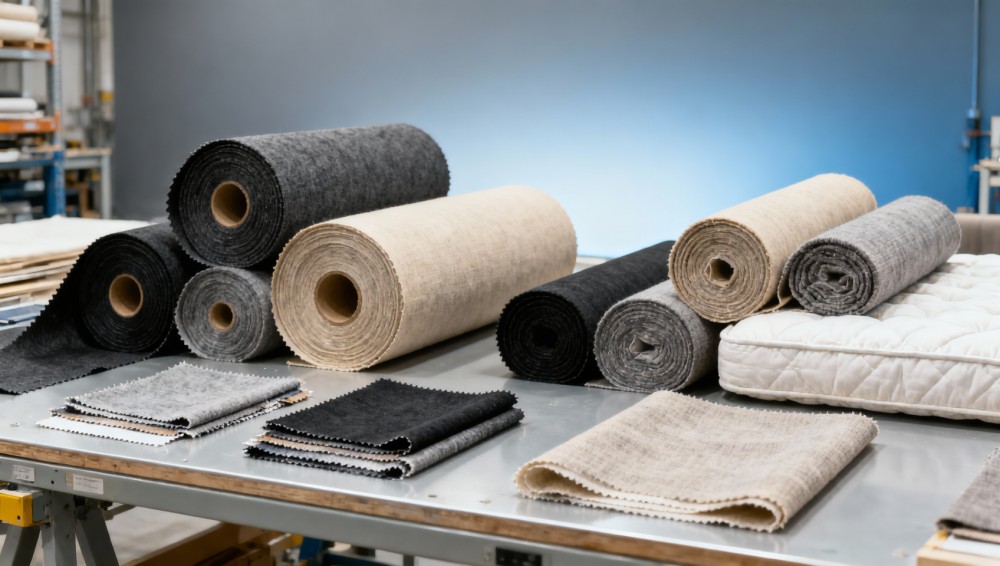
In furniture and decor, non woven fabrics are often used as dust covers, sofa bottom cloth, mattress lining, pocket spring wrapping, interlining, wall covering substrate, and packaging protection. Buyers may not sell the fabric itself, but they still depend on stable hand feel, thickness, color tone, and tensile behavior. A small variation across 2 or 3 production lots can lead to visible differences in finished goods.
For procurement teams, the issue is not only whether a batch passes a lab test. It is whether the fabric performs the same way during cutting, sewing, lamination, gluing, folding, and final assembly. In a furniture factory running daily production, even a slight change in stiffness or elongation can alter machine settings, increase scrap, or create uneven upholstery support.
This is why batch-to-batch inconsistency in non woven fabrics creates both quality and commercial risk. A distributor may face complaints from downstream converters. A sourcing manager may need to compare 3 suppliers instead of relying on one. A business evaluator may also question whether a supplier can support repeat orders over 6 to 12 months without drift in quality.
In practical terms, “feel” is a combined result of basis weight, fiber blend, bonding method, finishing chemistry, moisture content, winding tension, and storage condition. It is subjective at first touch, but it usually traces back to measurable production variables. That is the key point for buyers: inconsistent feel is rarely random, and it can be audited if the right checkpoints are defined.
What buyers usually mean by “inconsistent feel”
When furniture and decor buyers describe inconsistent non woven fabrics, they often refer to one or more of the following changes:
- Softer or harsher surface touch between lots, even at the same nominal GSM.
- Different body or drape, which affects wrapping, sewing, and stapling.
- Thickness fluctuation that changes coverage, opacity, or cushioning behavior.
- Unexpected odor, surface powder, or static build-up after unpacking.
- Color shade difference, especially in black, gray, beige, or white furniture components.
These issues matter most in repeat orders, private-label programs, and projects where visual and tactile uniformity must be maintained across several shipments over 4 to 8 weeks or longer.
Which production variables cause non woven fabrics to feel different from batch to batch?
The first source of variation is raw material input. Many non woven fabrics in furniture use polypropylene, polyester, viscose, recycled fibers, or blends. If the polymer grade, melt flow behavior, staple length, denier, crimp, or recycled content ratio changes, the final hand feel changes as well. Even when the fabric is sold under the same product code, suppliers may be balancing cost, availability, and lead time in the background.
The second source is bonding technology. Spunbond, needle-punched, thermal-bonded, chemical-bonded, and spunlace non woven fabrics do not feel the same, and even within one process, line conditions vary. For example, thermal bonding depends on temperature, pressure, and dwell time. A shift of only a few degrees in calender control can change softness, compactness, and surface smoothness.
The third source is basis weight and thickness distribution. In theory, a supplier may target 60 gsm, 80 gsm, or 100 gsm. In practice, local light and heavy areas can appear across the roll width if web formation is uneven. This is why two rolls may both be labeled 80 gsm, yet one feels fuller and another feels flatter. Buyers should evaluate not just average GSM but also uniformity across the full width and along roll length.
The fourth source is finishing and post-treatment. Anti-static treatment, flame-retardant chemistry, hydrophobic finish, embossing, lamination, and softening agents can all change touch and handle. If add-on levels are inconsistent, or if curing and drying are not tightly controlled, the same non woven fabric can feel noticeably different across shipments delivered 2 to 4 weeks apart.
Key process points that often create variation
Procurement teams do not need to audit every machine setting, but they should know where variation typically starts. The table below helps sourcing, QA, and commercial teams align their supplier questions with production reality.
For furniture factories, the most useful lesson is simple: do not treat “same GSM” as proof of sameness. A non woven fabric can match nominal weight yet still vary in hand feel because production control is multidimensional, not single-point.
Why the same supplier can still produce different results
Even stable suppliers face resin substitutions, fiber availability changes, machine maintenance cycles, operator shifts, and seasonal humidity variation. During peak sourcing periods, they may also run mixed orders on one line. If line clean-down, parameter reset, or lot segregation is weak, cross-lot variation becomes more likely.
This is particularly common in mid-volume orders where buyers request custom color, width, roll length, or light finishing changes. From a procurement perspective, the risk is highest when specifications are commercial only, such as “soft black non woven, 80 gsm,” without tolerances for thickness, MD/CD strength, elongation, and visual appearance.
How should procurement teams evaluate non woven fabric consistency before placing repeat orders?
A strong sourcing process starts with converting subjective language into measurable checkpoints. Instead of approving “soft feel” or “acceptable touch,” buyers should define 4 to 6 control items: basis weight tolerance, thickness range, tensile or tear behavior, shade reference, roll hardness, and any required finish such as anti-static or flame retardancy. This reduces disagreement after goods arrive.
For furniture and decor applications, sample approval should also reflect the actual converting process. A hand sample alone is not enough. Teams should test at least one pilot run covering cutting, sewing, stapling, gluing, or lamination. A 50 to 200 meter trial often reveals issues that a desktop review misses, especially when the fabric is used in hidden structural components that still affect assembly speed.
Repeat-order management matters just as much as first-order approval. Buyers should ask whether the supplier can lock a master sample, a retained control swatch, and a raw material source for at least one purchasing cycle. In many B2B furniture programs, one cycle may last 3 to 6 months. Without that discipline, every reorder becomes a new quality negotiation.
Commercial teams should also align claim handling in advance. If a shipment passes weight but fails feel consistency in production, what evidence is acceptable? Will the supplier compare retained swatches, lab reports, or machine records? Setting that framework before PO release helps avoid costly disputes later.
A practical supplier evaluation checklist
The following table is useful for sourcing managers, distributors, and business evaluators comparing non woven fabric suppliers for furniture projects, mattress components, and decorative applications.
A buyer does not always need a complex audit, but at minimum there should be a signed standard, a retained sample, and a repeatable review method. Those three controls already reduce many batch-to-batch surprises.
Five questions worth asking before PO release
- Has the raw material source or recycled content ratio changed since the approved sample?
- What are the agreed tolerances for GSM, thickness, width, and color shade?
- How many rolls per lot will be checked, and at how many width positions?
- Will retained swatches be sealed for both parties for at least one order cycle?
- If variation appears after converting, what claim evidence and resolution path apply?
These questions are especially useful when the delivery window is tight, such as 7 to 15 days, because they force technical clarity before goods move into production planning.
What quality standards, testing routines, and common misunderstandings should buyers watch?
Non woven fabric consistency is often discussed informally, but professional sourcing should tie it to test routines and application standards. Depending on end use, buyers may review basis weight, thickness, tensile strength, elongation, tear resistance, color fastness, odor, flammability-related requirements, and restricted substance compliance. The exact list depends on whether the material is structural, decorative, hidden, or consumer-facing.
In furniture and decor, the most common mistake is focusing only on price per square meter or GSM. That works for rough comparison, but it ignores processability and downstream defect cost. A lower-cost non woven fabric that creates sewing breaks, lamination issues, or visible surface mismatch may become more expensive after scrap, rework, and customer complaints are counted.
Another misunderstanding is assuming that all inconsistency comes from supplier negligence. In reality, storage and logistics matter too. Rolls stored in humid or hot conditions for several days may feel different on opening. Fabric should be conditioned in the production environment, often for around 12 to 24 hours, before final judgment on hand feel and flatness.
A third issue is overreliance on visual approval by one person. Touch is subjective. For repeat purchasing, it is better to combine human review with simple measurable controls and a cross-functional signoff involving sourcing, QA, and production. Even 3 reviewers using the same checklist can improve decision reliability.
Common myths that lead to poor buying decisions
“Same GSM means same feel.”
It does not. Two non woven fabrics can both be 80 gsm while differing in thickness, surface texture, stiffness, and elongation because of fiber type, bonding, and finish.
“If the first order passed, repeat orders are safe.”
Not necessarily. Repeat orders need lot control, retained standards, and change notification. Without them, a second or third batch may drift from the approved reference.
“Only visible fabrics need consistency.”
Hidden layers matter too. Mattress linings, sofa bottoms, and internal separators influence assembly efficiency, noise, shape retention, and even odor perception after unpacking.
“Cheaper material always improves sourcing efficiency.”
Short-term unit savings can be offset by line stoppage, claim handling, and inconsistent finished goods across dealer or distributor channels. Total procurement cost should be reviewed over the full order cycle.
FAQ for research and sourcing teams
How many batches should be reviewed before approving a supplier?
For stable repeat business, reviewing at least 2 to 3 batches is more informative than approving only one initial sample. This is especially important for custom color, custom width, or recycled-content materials.
What is a practical lead-time question to ask?
Ask for both sample lead time and bulk lead time, plus whether the supplier can hold the same raw material for the next 4 to 12 weeks. This often matters more than the nominal delivery promise alone.
Should buyers request lab reports for every shipment?
Not always for every parameter, but core shipment documents should reflect the agreed inspection routine. High-risk or new items may justify more frequent testing until process stability is proven.
Why work with a sourcing intelligence partner when evaluating non woven fabric suppliers?
For information researchers, procurement teams, commercial evaluators, and distributors, the challenge is rarely lack of supplier options. The challenge is turning scattered technical claims into a reliable sourcing decision. That is where a specialized B2B intelligence platform adds value: by connecting material knowledge, production logic, market comparison, and procurement risk control in one workflow.
Global Supply Review supports sourcing decisions across furniture and decor by translating technical fabric variation into practical buying criteria. Instead of treating inconsistent non woven fabrics as a vague quality complaint, the review process can focus on specification clarity, process capability, supply continuity, sample validation, and change-control discipline. This helps teams compare suppliers on more than price alone.
For exporters and manufacturers, this approach also improves communication with international buyers. When product capability is presented through clear parameters, application scenarios, and realistic quality-control checkpoints, discussions move faster from inquiry to qualification. That is especially useful in projects with custom furniture supply chains, distributor networks, and repeat seasonal orders.
If your team is reviewing non woven fabrics for furniture, mattress, upholstery support, or decorative applications, the next step should be specific. Confirm the target GSM and thickness range, define hand-feel reference samples, review the expected delivery cycle, and check whether any certification or restricted-substance requirement applies to your market. A structured review at this stage can prevent weeks of downstream disruption.
What you can discuss with us
- Parameter confirmation for non woven fabrics used in sofa, mattress, lining, and furniture packaging applications.
- Supplier comparison based on consistency control, repeat-order capability, and commercial fit.
- Sample planning, pilot-order evaluation, and realistic delivery cycle discussion for 7 to 15 day or 2 to 4 week programs.
- Custom requirement review covering width, color, finish, roll packing, and downstream converting needs.
- Compliance and documentation topics relevant to target export markets and buyer approval workflows.
If you need support on product selection, sample alignment, batch consistency review, certification questions, or quotation communication, contact Global Supply Review with your application details, expected order volume, and target delivery window. A clear brief makes it easier to identify the right non woven fabric solution before procurement risk becomes a production problem.
Recommended News
 Expert AnalysisIWA Launches Green Studio Certification for Chinese Photo Studio SuppliersGreen Studio Certification for Chinese photo studio suppliers — IWA's GGSC opens to LED lighting, eco-backdrops, biodegradable props & retouching software. Apply by May 31!Apr 17, 2026
 Fabrics & YarnsTurkey TSE New Standard for Linen-Blend Backdrop FabricsTurkey TSE new standard for linen-blend backdrop fabrics: mandatory antibacterial & stability tests by Aug 2026—secure compliance now to keep supplying Istanbul wedding studios.Textile Industry AnalystApr 17, 2026
 Supply Chain InsightsWedding Photography Prop Freight Rates Surge 23% on Red Sea DisruptionWedding photography prop freight rates surge 23% amid Red Sea disruption—impact on lead times, air costs & supply chain strategy revealed.Apr 17, 2026
 Garment MfgBrazil ANVISA Proposes Child Textile Rules for Bridesmaid AttireBrazil ANVISA’s new child textile rules for bridesmaid attire—lace veils, satin ribbons, silk bouquets—demand ISO flammability & safety testing. Act now!Textile Industry AnalystApr 17, 2026