Industry News
Curation by industry experts
Hot Articles
Popular Tags
India BIS Mandate: Aluminum Photo Backdrop Stands Must Pass Dual Testing by June 30, 2026
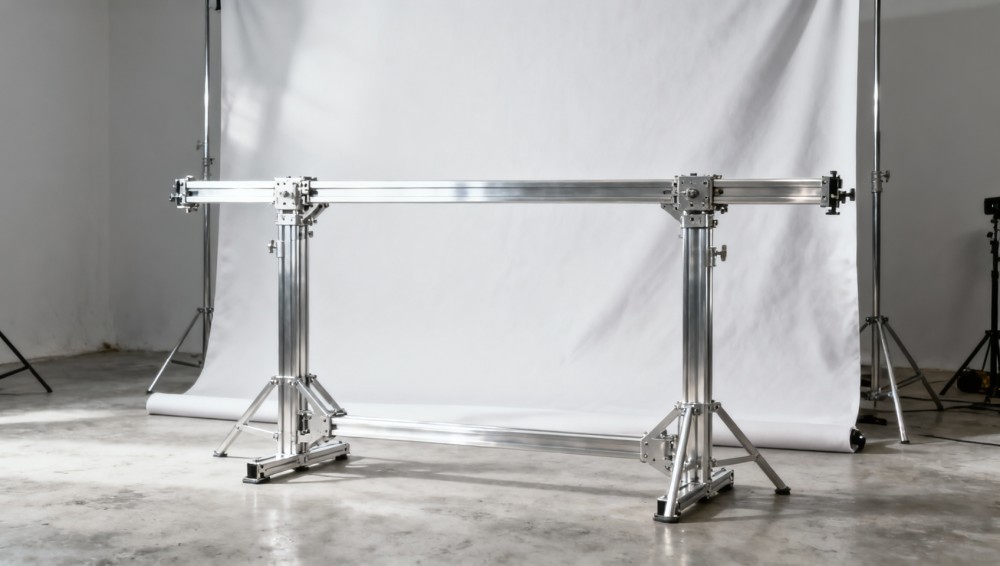
India’s Bureau of Indian Standards (BIS) has issued a compliance deadline requiring all aluminum photo backdrop stands for wedding photography exported to India to complete mandatory salt spray corrosion (IS 9862) and static load stability (IS 15737) testing—and affix the BIS mark—by June 30, 2026. This directive, announced on May 8, 2026, under revised standard IS 15879:2026, directly impacts manufacturers, exporters, and importers in the photography equipment supply chain serving the Indian market.
Event Overview
On May 8, 2026, the Bureau of Indian Standards (BIS) published a final notice stating that, per the updated IS 15879:2026 standard, all aluminum background support stands intended for bridal and studio photography must undergo two certified tests—salt spray corrosion resistance per IS 9862 and static load stability per IS 15737—before June 30, 2026. Products failing to obtain BIS certification and display the BIS Standard Mark by this date will be prohibited from import and sale in India.
Industries Affected
Direct Exporters (China-based)
Chinese manufacturers and trading companies exporting aluminum photo backdrop stands to India are directly subject to the mandate. Non-compliance risks shipment rejection at Indian ports and loss of market access. Certification requires both product testing and successful BIS factory audit—a process typically taking 8–12 weeks once initiated.
Aluminum Component Suppliers
Suppliers providing extruded aluminum profiles or surface-treated parts (e.g., anodized or powder-coated tubing) may face upstream demand shifts. Buyers may request updated material certifications aligned with IS 9862 corrosion requirements, particularly regarding coating thickness, adhesion, and base alloy composition.
Photography Equipment Assemblers & OEMs
Firms assembling finished stands—including those integrating third-party clamps, crossbars, or leveling mechanisms—must ensure full system-level compliance. Static load testing applies to the assembled unit, not individual components; thus, design validation and batch-level retesting may be required after any structural change.
Import Agents & Customs Facilitators
Indian importers and customs brokers handling such goods must verify BIS certification documentation prior to clearance. Post-June 30, 2026, submissions lacking valid BIS license numbers and test reports compliant with IS 15737 and IS 9862 will be rejected under BIS’s mandatory conformity assessment regime.
Key Focus Areas and Immediate Actions for Stakeholders
Confirm BIS License Scope and Factory Audit Readiness
Exporters should verify whether their existing BIS license (if any) covers IS 15879:2026 and includes the specific product category “aluminum photographic background support stands.” If not, initiate a new application—including submission of technical documentation, sample testing plans, and readiness for BIS-authorized factory inspection—without delay.
Prioritize Dual Test Scheduling with BIS-Accredited Labs
Salt spray (IS 9862) and static load (IS 15737) tests must be conducted at laboratories accredited by BIS (e.g., NABL-accredited labs with BIS recognition). Given lab backlogs and seasonal demand peaks, stakeholders should secure test slots no later than mid-April 2026 to meet the June 30 deadline.
Review Product Documentation Against IS 15879:2026 Requirements
The revised standard specifies minimum load-bearing capacities, dimensional tolerances, and corrosion resistance grades. Firms should cross-check current user manuals, packaging labels, and technical datasheets for alignment—especially statements related to maximum safe load, environmental suitability, and maintenance guidance.
Update Commercial Contracts and Incoterms
Export contracts signed before May 2026 may lack BIS compliance clauses. Sellers should revise terms to assign responsibility for certification costs, timeline adherence, and liability for non-compliant shipments—particularly under FOB or EXW arrangements where the buyer assumes post-shipment regulatory risk.
Editorial Perspective / Industry Observation
Observably, this mandate signals a broader tightening of BIS enforcement for consumer-facing metal products—not as an isolated update, but as part of a pattern of aligning safety and durability expectations with international studio equipment standards (e.g., ISO 105-B02, EN 1090-1). Analysis shows that the dual-test requirement reflects growing emphasis on real-world performance: salt spray testing addresses coastal/humid storage conditions common in Indian studios, while static load verification responds to documented incidents of stand collapse during multi-light setups. From an industry perspective, this is less a sudden policy shift and more a formalization of de facto quality expectations already emerging among premium Indian photo retailers. Current attention should focus less on whether the rule will be enforced—and more on how consistently BIS field officers apply the cutoff date across ports and customs zones.
This notice serves as a procedural checkpoint rather than a strategic inflection point. Its immediate impact lies in operational timing and documentation rigor—not in market expansion or contraction. For affected firms, it functions primarily as a compliance gatekeeper, not a product innovation catalyst.
Conclusion
The June 30, 2026 deadline for BIS certification of aluminum photo backdrop stands represents a defined, time-bound regulatory obligation—not an evolving policy trend or sector-wide transformation. It is best understood as a mandatory conformity step for continued market access in India, requiring focused coordination across testing, certification, and logistics functions. Stakeholders should treat it as a fixed operational milestone, not a signal for broader strategic recalibration.
Source Attribution
Main source: Bureau of Indian Standards (BIS), Official Notice dated May 8, 2026, referencing revised standard IS 15879:2026.
Areas under ongoing observation: BIS’s official list of accredited testing laboratories for IS 9862 and IS 15737; frequency and scope of post-June 30, 2026 port inspections; potential issuance of transitional allowances for pre-shipped consignments.
Recommended News
 Export UpdatesNingbo Port Launches 'Green Export Index' for Wedding Photography GoodsWedding photography goods exporters: Ningbo Port’s new Green Export Index reveals 98.2% customs pass rate for OEKO-TEX®/GOTS fabrics & IEC 62471 LED lights — boost your sustainability credibility now.May 09, 2026
 Carton & PlasticsECHA Adds D-Limonene to SVHC List: Impact on Bridal Photo Spray ExportsBridal photo spray exporters: ECHA’s D-Limonene SVHC listing (May 2026) triggers urgent SDS & label updates for EU-bound hair and fabric sprays.Packaging Supply ExpertMay 09, 2026
 Fabrics & YarnsVietnam Enforces QCVN 17:2026 for Wedding Photo BackdropsVietnam enforces QCVN 17:2026 for wedding photo backdrops—mandatory formaldehyde testing & B1 flame-retardant labeling. Ensure compliance now to avoid market access delays.Textile Industry AnalystMay 09, 2026
 Building HardwareIndia BIS Mandate: Aluminum Photo Backdrop Stands Must Pass Dual Testing by June 30, 2026Aluminum photo backdrop stands for wedding photography must pass BIS salt spray & load testing by June 30, 2026—secure certification now to avoid import bans in India.Tooling & Hardware LeadMay 09, 2026