Industry News
Curation by industry experts
Hot Articles
Popular Tags
Vietnam Enforces QCVN 17:2026 for Wedding Photo Backdrops
On May 8, 2026, Vietnam’s General Department of Standards, Metrology and Quality (STAMEQ) issued Circular No. 2 amending Technical Regulation QCVN 17:2026, mandating formaldehyde testing and flame-retardant labeling for fabric wedding photo backdrops sold in Vietnam — a development directly relevant to textile exporters, photo studio suppliers, and cross-border e-commerce operators serving the Vietnamese market.
Event Overview
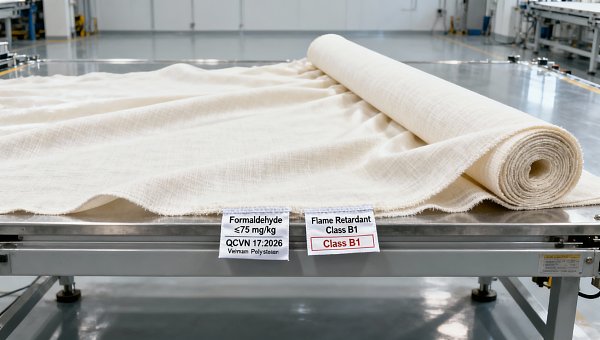
On May 8, 2026, STAMEQ published the second implementing circular for QCVN 17:2026. It specifies that all fabric-based wedding photography backdrops — including polyester and cotton-linen blends — marketed in Vietnam must carry dual-labeling on the smallest retail unit: (i) formaldehyde content ≤75 mg/kg, tested per TCVN 7452:2023; and (ii) flame-retardant classification B1, assessed per TCVN 5689:2023. Non-compliant products will be subject to mandatory removal from sale.
Industries Affected
Direct Exporters & Importers
Exporters shipping fabric backdrops to Vietnam must now ensure compliance before customs clearance. Labeling is required at the smallest sales unit — meaning bulk shipments may require repackaging or label application prior to distribution. Failure to meet either requirement risks rejection at port or post-import enforcement action.
Textile Fabric Manufacturers & Printers
Producers supplying base fabrics (e.g., dyed polyester or blended canvas) to backdrop assemblers face upstream compliance pressure. Since formaldehyde limits apply to finished products, manufacturers must verify pre-treatment processes (e.g., resin finishing, dye fixation) and retain test reports aligned with TCVN 7452:2023 — not just generic ISO or GB standards.
Photo Studio Equipment Distributors & E-commerce Sellers
Distributors and online sellers listing backdrops on Vietnamese platforms (e.g., Shopee VN, Lazada VN) are responsible for verifying label presence and validity. Platform takedowns may occur without prior notice if labels are missing, illegible, or inconsistent with test documentation.
Key Focus Areas & Recommended Actions
Monitor official implementation guidance
STAMEQ has not yet published transitional timelines, conformity assessment procedures, or accredited lab lists for TCVN 5689:2023 (B1 flame testing). Companies should track updates via STAMEQ’s official portal and registered Vietnamese import agents, as enforcement may begin without further public notice.
Verify labeling format and placement requirements
The regulation mandates labeling on the “smallest sales unit” — which may differ across channels (e.g., single roll vs. bundled set). Businesses should confirm label dimensions, bilingual (Vietnamese–English) text requirements, and durability (e.g., wash-resistant ink) with local regulatory consultants before production runs.
Secure certified test reports ahead of shipment
TCVN 7452:2023 and TCVN 5689:2023 are Vietnam-specific standards. Reports from non-accredited labs — even those compliant with ISO 14184-1 or EN 13501-1 — are not accepted. Firms should engage STAMEQ-recognized testing bodies early to avoid delays.
Review supply chain handover points
Since labeling responsibility falls on the entity placing the product on the Vietnamese market, companies must clarify contractual obligations with OEM partners or third-party logistics providers regarding label application, verification, and record retention — especially where final packaging occurs post-import.
Editorial Observation / Industry Perspective
Observably, QCVN 17:2026’s second circular signals Vietnam’s broader shift toward applying consumer safety standards to niche commercial textiles — not just apparel or children’s products. Analysis shows this is less an isolated product rule than part of a coordinated tightening across interior-facing soft goods (e.g., curtains, exhibition fabrics), where flammability and chemical emissions are increasingly scrutinized. From an industry perspective, it functions primarily as a market access signal: compliance is now a prerequisite for shelf presence, not a competitive differentiator. Continued attention is warranted, as STAMEQ may extend similar labeling mandates to other photo studio accessories (e.g., drapes, portable booths) in upcoming revisions.
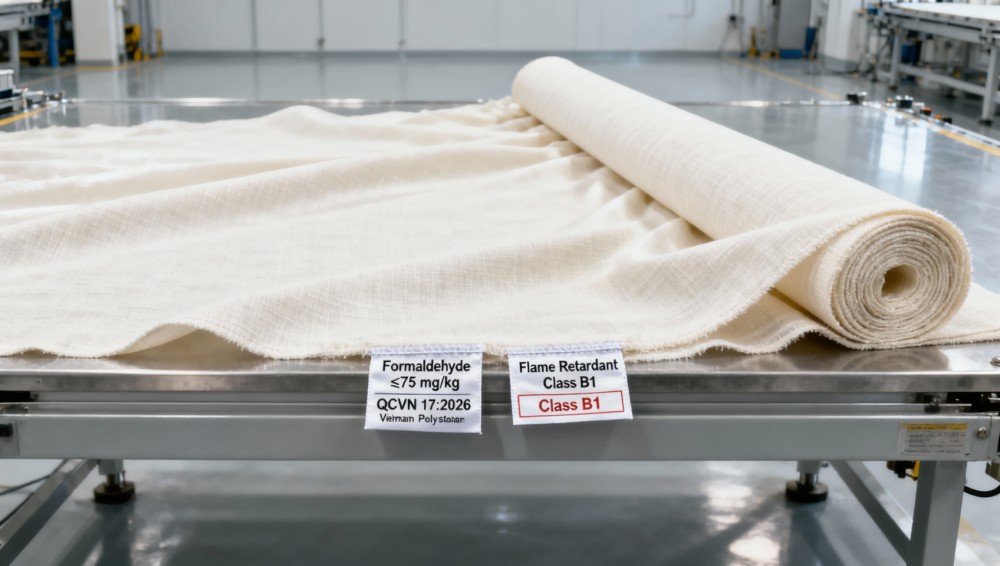
In summary, QCVN 17:2026’s updated enforcement reflects Vietnam’s maturing technical regulatory framework for imported consumer-facing textiles. It does not introduce new hazard thresholds but enforces existing standards through binding labeling and traceability requirements. Currently, it is best understood as an operational checkpoint — not a strategic pivot — requiring targeted adjustments in labeling, testing, and documentation practices rather than fundamental product redesign.
Source: General Department of Standards, Metrology and Quality (STAMEQ), Vietnam — Official Circular No. 2 amending QCVN 17:2026, issued May 8, 2026.
Note: Transitional provisions, enforcement start date, and list of accredited laboratories remain pending official announcement and are under ongoing observation.
Recommended News
 Export UpdatesNingbo Port Launches 'Green Export Index' for Wedding Photography GoodsWedding photography goods exporters: Ningbo Port’s new Green Export Index reveals 98.2% customs pass rate for OEKO-TEX®/GOTS fabrics & IEC 62471 LED lights — boost your sustainability credibility now.May 09, 2026
 Carton & PlasticsECHA Adds D-Limonene to SVHC List: Impact on Bridal Photo Spray ExportsBridal photo spray exporters: ECHA’s D-Limonene SVHC listing (May 2026) triggers urgent SDS & label updates for EU-bound hair and fabric sprays.Packaging Supply ExpertMay 09, 2026
 Fabrics & YarnsVietnam Enforces QCVN 17:2026 for Wedding Photo BackdropsVietnam enforces QCVN 17:2026 for wedding photo backdrops—mandatory formaldehyde testing & B1 flame-retardant labeling. Ensure compliance now to avoid market access delays.Textile Industry AnalystMay 09, 2026
 Building HardwareIndia BIS Mandate: Aluminum Photo Backdrop Stands Must Pass Dual Testing by June 30, 2026Aluminum photo backdrop stands for wedding photography must pass BIS salt spray & load testing by June 30, 2026—secure certification now to avoid import bans in India.Tooling & Hardware LeadMay 09, 2026