Industry News
Curation by industry experts
Hot Articles
Popular Tags
Commercial LED lighting solutions that cut running costs
Businesses seeking commercial LED lighting solutions need more than lower energy bills—they need reliable performance, smart lighting technology, and scalable design. From smart lighting for office upgrades to LED lights for outdoor use and decorative lighting solutions, the right strategy can cut running costs while improving visibility, control, and long-term value for buyers, specifiers, and distributors.
For procurement teams, commercial property operators, and distribution partners, the decision is no longer about replacing fluorescent or HID fixtures with any LED alternative. It is about selecting a lighting system that reduces operating costs over 3–7 years, supports easier maintenance, meets application-specific performance targets, and fits future control upgrades without forcing another full retrofit.
In the lighting and displays sector, buyers also face a wider sourcing challenge: balancing upfront cost, performance claims, product consistency, delivery schedules, and compliance expectations. A smart commercial LED lighting strategy helps solve these issues by combining fixture efficiency, control integration, driver quality, and layout planning into one decision framework.
This article outlines how commercial LED lighting solutions cut running costs in real operating environments, what technical and sourcing criteria matter most, and how B2B buyers can compare options across offices, retail, warehouses, hospitality, and outdoor applications without overbuying or under-specifying.
Why running costs depend on more than wattage
A lower wattage fixture does not automatically deliver the lowest total operating cost. In commercial environments, the real cost picture includes energy use, maintenance frequency, driver failure rates, cleaning access, lighting controls, replacement lead times, and downtime risk. A 30W LED panel may appear efficient on paper, but if it has poor thermal management or unstable driver performance, savings can be eroded within 12–24 months.
For example, many office retrofits reduce fixture power from 72W fluorescent troffers to 32W–40W LED panels, cutting connected load by roughly 40%–55%. However, the strongest savings often come when those fixtures are paired with occupancy sensors, daylight harvesting, or scheduling controls, which can reduce lighting runtime by another 15%–35% depending on occupancy patterns and daylight availability.
Commercial LED lighting solutions should therefore be evaluated as a system rather than a single product line. Luminous efficacy, often expressed in lumens per watt, matters, but so do fixture spacing, beam distribution, glare control, and control compatibility. In practical terms, a warehouse with high-bay luminaires at 160 lm/W may still underperform if beam angles create shadow zones that require extra fittings to compensate.
Buyers also need to measure maintenance impact. In facilities with ceilings above 6 meters, each replacement event may require lift equipment, labor scheduling, and safety procedures. Extending replacement intervals from 2 years to 5 years can materially reduce service cost, especially in logistics centers, retail chains, and outdoor perimeter lighting where access hours are restricted.
Core cost drivers in commercial lighting projects
The most cost-effective lighting projects usually balance five variables rather than chasing the lowest fixture price. Procurement and technical teams can use the following checklist when reviewing commercial LED lighting solutions:
- Connected load reduction, usually measured in watts per fixture or watts per square meter.
- Control savings from sensors, timers, dimming, and centralized management.
- Maintenance interval, including driver and LED module replacement expectations.
- Application fit, such as UGR control in offices or IP65 protection in outdoor areas.
- Supply continuity, including lead times of 2–8 weeks and spare component availability.
When these five factors are aligned, buyers often achieve better lifecycle value than they would from selecting a low-price fixture with limited control options or uncertain component quality.
Matching LED lighting solutions to commercial applications
Not every commercial space needs the same lighting design. Office environments prioritize visual comfort, meeting spaces need flexible scene control, warehouses need high vertical and horizontal illuminance, and outdoor areas demand weather resistance and optical precision. Commercial LED lighting solutions should be chosen by task, ceiling height, operating schedule, and maintenance access—not by one generic specification.
In offices, common priorities include 300–500 lux general illumination, low glare, and compatibility with dimming systems for meeting rooms or open-plan zones. In retail, decorative lighting solutions and accent lighting become more important because visual merchandising, color rendering, and beam control directly affect customer perception and product presentation.
For industrial and warehouse facilities, buyers typically focus on fixture output, beam angle, ingress protection, and mounting height. High-bay LED lights may range from 100W to 240W depending on height and target lux levels. A 12-meter warehouse with narrow aisles may need a different optical distribution than a broad manufacturing hall with lower racks and open floor space.
Outdoor applications introduce a different cost equation. LED lights for outdoor use must withstand temperature changes, moisture, and dust, often at IP65 or higher. Car parks, pathways, loading docks, and building facades also benefit from photocells, motion sensors, or centralized controls that keep lighting output aligned with use patterns rather than fixed full-power operation all night.
Application-based fixture selection guide
The table below summarizes common commercial applications, typical technical priorities, and where operating cost reductions usually come from.
The key takeaway is that savings do not come from one universal LED product category. They come from application fit. A buyer that specifies the correct fixture family, optical distribution, and control method can often reduce both energy and service costs without compromising light quality.
Where decorative lighting solutions still support cost control
Decorative lighting solutions are often viewed as aesthetic rather than operational. In hospitality, reception, mixed-use commercial lobbies, and premium retail, that distinction is too narrow. Well-designed decorative LED fixtures can deliver long service intervals, lower heat output, and improved dimming control, while also reducing the number of accent fixtures needed through better optical efficiency.
For distributors and project evaluators, this means decorative products should be assessed with the same discipline as technical luminaires: lumen output, driver replacement policy, color consistency, and maintenance access should all be reviewed before approval.
Technical specifications that influence lifecycle value
Commercial LED lighting solutions are frequently compared by price and wattage, but the most useful procurement questions are technical. What efficacy range is realistic for the target application? Is the color temperature suitable for task performance? Does the driver support 0–10V, DALI, or sensor integration? Can the luminaire maintain output and color stability over long operating periods?
For many commercial environments, efficacy above 120 lm/W is a practical baseline, while higher-performance warehouse or area lights may reach 140–170 lm/W. Offices often prefer 3000K–4000K depending on local preference and use type, while industrial and outdoor spaces commonly use 4000K–5700K for clearer visual recognition. Color rendering may also matter: CRI 80 is often acceptable for general commercial use, but retail and hospitality may require CRI 90 or above.
Electrical and environmental protection should not be overlooked. Power factor above 0.90 is commonly requested in commercial projects, while surge protection becomes more important in outdoor use and unstable grid environments. For damp or dusty installations, IP65-rated fixtures can substantially reduce failure risk compared with lower-rated alternatives installed in the same condition.
Another important value factor is modularity. Some buyers prefer integrated fixtures for lower first cost, but replaceable drivers and serviceable optical components often reduce disruption over a 5-year or 7-year period. This is especially relevant in multi-site estates where keeping standardized spares can reduce downtime and simplify maintenance planning.
Specification benchmarks buyers should request
The following benchmarks provide a practical review framework for offices, retail environments, industrial sites, and outdoor projects.
These ranges are not universal targets, but they help buyers structure supplier comparisons. A fixture that looks attractive on price may become less competitive if it lacks the control interface, protection rating, or output stability needed for the intended installation.
Common specification mistakes
- Selecting the highest lumen package without checking glare, beam spread, or spacing impact.
- Using indoor-rated luminaires in semi-exposed loading areas where dust or moisture is routine.
- Ignoring driver replacement accessibility in ceilings or canopies with difficult service access.
- Choosing smart lighting controls without confirming protocol compatibility across fixtures and sensors.
Avoiding these errors can save both direct replacement cost and project delay, particularly in larger procurement programs with dozens or hundreds of luminaires across multiple sites.
Procurement strategy, sourcing risk, and supplier evaluation
For sourcing managers and business evaluators, the commercial lighting decision does not end with product performance. Supply reliability, documentation quality, packaging robustness, and after-sales support can all affect landed cost and project continuity. A low-priced quote may appear competitive until lead times stretch from 3 weeks to 9 weeks, or replacement parts are unavailable for an installed fixture family.
This is where a B2B intelligence-led approach becomes valuable. Buyers reviewing commercial LED lighting solutions should evaluate not only fixture specifications, but also production consistency, exporter responsiveness, carton labeling, installation instructions, and spare support. For distributors and agents, these details influence warranty handling, local inventory planning, and repeat order confidence.
A structured sourcing review is especially important for multi-site office upgrades, chain retail programs, and distributor-led inventory planning. In these projects, a small mismatch in CCT, driver standard, cut-out size, or dimming interface can multiply into expensive rework. Standardization across 20, 50, or 100 locations often saves more than chasing minimal unit price differences.
Buyers should also assess whether the supplier can support phased delivery. Many retrofit projects are implemented in 2–4 stages to minimize disruption to tenants or operations. Suppliers that can maintain consistent production batches and documentation through each stage reduce site-level risk and simplify acceptance.
Commercial LED procurement evaluation matrix
The matrix below can help procurement teams compare suppliers and product families beyond headline pricing.
In practice, many commercial buyers now treat lighting procurement as a lifecycle sourcing decision rather than a one-time product purchase. That approach is particularly relevant for global buyers using strategic sourcing platforms and market intelligence to compare manufacturer readiness, category depth, and long-term commercial fit.
A practical 5-step sourcing process
- Define the use case by area type, operating hours, ceiling height, and target control level.
- Shortlist 2–3 fixture families that match application and maintenance requirements.
- Compare total project variables, including controls, accessories, replacement parts, and delivery schedule.
- Request technical confirmation for dimming, ingress protection, optical distribution, and installation method.
- Approve a phased rollout or pilot zone before large-volume purchasing if the project spans multiple sites.
This process helps reduce mismatch risk and provides clearer internal justification for procurement, engineering, and finance stakeholders.
Implementation, controls, and long-term maintenance planning
Even well-selected commercial LED lighting solutions can underperform if implementation is rushed. Lighting layouts, commissioning, control zoning, and maintenance planning should be aligned before installation begins. In office upgrades, for instance, open-plan workstations, meeting rooms, corridors, and breakout areas often require different scenes or occupancy logic rather than one uniform control strategy.
Smart lighting for office projects often delivers the strongest value when controls are simple enough for daily users and robust enough for facilities teams. Typical measures include occupancy sensors in meeting rooms, scheduling in common areas, and daylight dimming near windows. These settings can be adjusted in zones rather than individually, reducing commissioning time while still cutting unnecessary runtime by 10%–30%.
Maintenance planning should also begin at specification stage. Buyers should ask how drivers are replaced, whether emergency modules are separate, and how many spare units are reasonable for the installed base. For a project with 200 fixtures, keeping 1%–3% spare units or service components can reduce response time when failures occur, especially where international replenishment lead times are unpredictable.
Outdoor and industrial environments benefit from routine inspection schedules. A quarterly visual check, annual cleaning, and periodic driver review may be sufficient for many installations, while harsher environments may require more frequent maintenance. Dirt buildup on optics and diffusers can gradually reduce output, making a technically efficient luminaire perform below expectation.
FAQ for buyers, specifiers, and distributors
How do I know if smart controls are worth adding?
Controls are most valuable where occupancy varies throughout the day, such as offices, meeting rooms, car parks, corridors, and shared commercial spaces. If areas are lit at full output for 10–14 hours but actively used for only part of that period, controls often produce meaningful savings. The strongest return usually comes from simple occupancy and scheduling before more advanced platform features are introduced.
What should distributors focus on when selecting commercial LED lines?
Distributors should look at category completeness, documentation quality, spare availability, and consistency across repeat orders. A supplier with panels, downlights, outdoor wall packs, and linear systems built around compatible control options can be easier to sell and support than a fragmented mix of unrelated product families.
How long does a typical commercial retrofit take?
Project timing depends on scale, site access, and product availability. Small office upgrades may move from approval to installation within 2–6 weeks, while multi-site programs may require phased delivery over several months. Lead time should be reviewed alongside commissioning and access scheduling rather than as a fixture-only issue.
What is the biggest mistake in outdoor LED selection?
A common error is choosing by wattage alone while underestimating environmental stress, optical requirements, and control opportunity. LED lights for outdoor use should be checked for protection level, surge resilience, beam distribution, and maintenance access. Otherwise, early failure or poor coverage can offset expected savings.
Commercial LED lighting solutions deliver the best financial results when buyers evaluate the full operating picture: fixture efficiency, controls, application fit, maintenance burden, and sourcing reliability. Whether the project involves smart lighting for office upgrades, LED lights for outdoor use, or decorative lighting solutions for customer-facing spaces, the right combination of technical specification and procurement discipline can reduce energy use, lower service costs, and improve long-term asset value.
For information researchers, procurement teams, business evaluators, and distribution partners, the most effective path is a structured review of application needs, performance ranges, supplier readiness, and phased implementation requirements. If you are assessing commercial lighting categories or planning a sourcing program, connect with Global Supply Review to get tailored insight, compare market-ready solutions, and explore the right LED strategy for your next project.
- commercial led lighting
- commercial led lighting solutions
- smart commercial led lighting
- commercial lighting
- smart lighting
- LED lights
- lighting solutions
- lighting technology
- lighting design
- lighting controls
- decorative lighting
- LED lights for outdoor use
- smart lighting for office
- decorative lighting solutions
- smart lighting controls
- smart lighting technology
Recommended News
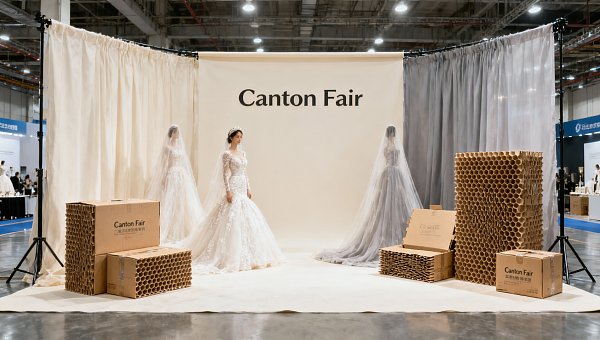
 Eco PackagingCanton Fair Wedding Photo Props Zone Sees 37% YoY GrowthWedding photo props at Canton Fair surge 37% YoY—biodegradable packaging & magnetic modular backdrops lead global demand. Discover key trends now!Packaging Supply ExpertApr 24, 2026
 Export UpdatesChina Customs Launches Beta 'Wedding Photo Props Export Compliance Self-Check Platform'Wedding photo props exporters: Use China Customs’ new beta Self-Check Platform for real-time export compliance guidance on HS codes like 9405.40, 4202.92 & 6307.90 — avoid delays in US, EU, ASEAN & Middle East markets.Apr 24, 2026
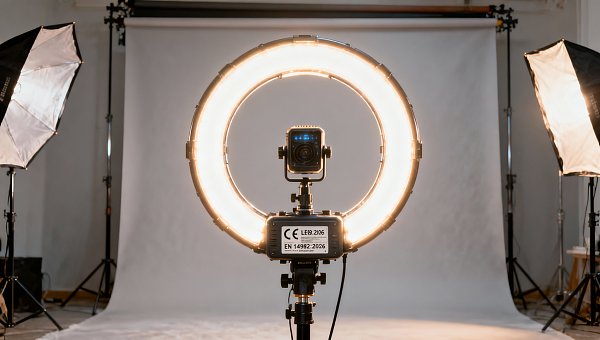
 Commercial LEDEN 14982:2026 Effective: LED Softlight Devices for Wedding Photography Must Pass Enhanced EMC Immunity TestsLED softlight devices for wedding photography must now pass enhanced EMC immunity tests per EN 14982:2026 — ensure CE compliance before EU market entry!Commercial Tech EditorApr 24, 2026
 Carton & PlasticsUS CPSC Recalls 7 Chinese Wedding Backdrop Makers for FormaldehydeUS CPSC recalls 7 Chinese wedding backdrop makers for formaldehyde—critical alert for婚纱摄影 exporters, MDF suppliers & US importers. Act now to avoid detention & liability.Packaging Supply ExpertApr 24, 2026