Industry News
Curation by industry experts
Hot Articles
Popular Tags
EN IEC 62471-2:2026 Effective Oct 2026 for LED Photo Lights
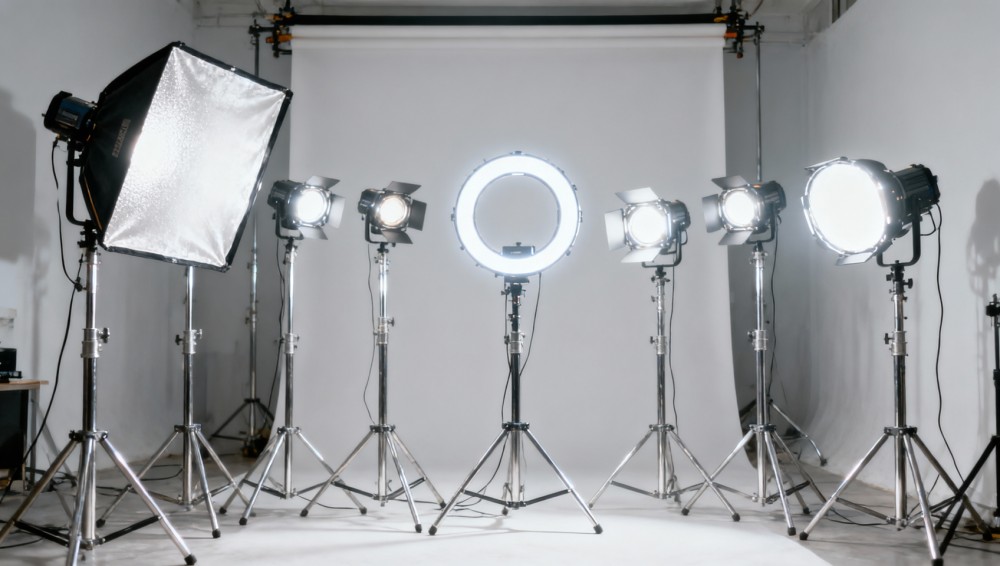
EU standard EN IEC 62471-2:2026 — governing photobiological safety of LED-based photographic lighting equipment — will become mandatory on 1 October 2026. This update directly impacts manufacturers and exporters of LED wedding photography lighting, including portable softboxes, ring lights, and background lamps. Its enforcement signals a tightening of CE marking requirements for light-emitting products sold in the EU market.
Event Overview
The European Committee for Standardization (CEN/CENELEC) confirmed on 28 April 2026 that EN IEC 62471-2:2026 will enter into force on 1 October 2026. The standard applies to all LED-powered photographic set lighting devices. As of that date, affected products must carry a verified photobiological safety classification — either Class 1 (no hazard) or Class 2 (low risk) — to be eligible for CE marking. Third-party testing laboratories in China are currently reporting lead times exceeding 45 days for required assessments.
Industries Affected by Segment
Direct Exporters (EU-bound)
Exporters shipping LED photo lights to the EU must now ensure compliance prior to shipment. Non-compliant units cannot legally bear the CE mark after 1 October 2026, risking customs rejection, market withdrawal, or post-market surveillance penalties.
LED Lighting Manufacturers (OEM/ODM)
Manufacturers producing LED-based softboxes, ring lights, or background fixtures face revised design and documentation obligations. Product schematics, optical layouts, and driver configurations may require re-evaluation to meet updated exposure limits under EN IEC 62471-2:2026.
Testing & Certification Service Providers
Laboratories accredited for IEC/EN 62471 testing are experiencing increased demand and extended scheduling windows. Capacity constraints — evidenced by current 45+ day wait times — suggest growing pressure on turnaround timelines for pre-market verification.
Supply Chain & Logistics Operators
Distributors and import agents handling consignments of LED photo lighting must verify compliance documentation (e.g., valid classification reports) before EU entry. Absence of compliant test reports may delay clearance or trigger conformity audits at EU borders.
What Enterprises and Practitioners Should Focus On Now
Monitor official CEN/CENELEC implementation guidance
While the effective date is confirmed, transitional arrangements — such as grace periods for existing stock or grandfathering clauses — remain subject to official notice. Stakeholders should track updates from national standards bodies (e.g., DIN, AFNOR, BSI) and the EU Commission’s NANDO database.
Prioritize high-volume and high-risk product categories
Products with high-luminance LEDs, narrow-beam optics, or close-proximity use (e.g., ring lights used within 20 cm of subjects) are more likely to fall outside Class 1. These should be prioritized for early assessment and potential redesign.
Distinguish between regulatory signal and operational readiness
The standard’s adoption is a formal regulatory milestone, but its real-world impact depends on enforcement rigor and market surveillance frequency. Companies should treat compliance as a prerequisite for continued access — not merely a documentation exercise.
Secure lab capacity and align internal timelines
Given current 45+ day lab wait times, firms should book testing slots well ahead of Q3 2026. Internal project plans should account for report review cycles, potential retesting, and technical file updates required for CE documentation.
Editorial Perspective / Industry Observation
Observably, EN IEC 62471-2:2026 represents a procedural escalation rather than a conceptual shift — it refines measurement protocols and clarifies application scope for LED-based photographic lighting, particularly in short-duration, high-intensity use cases. Analysis shows this is less a sudden policy shock and more a maturation of EU photobiological safety governance, reflecting increased attention to occupational and consumer exposure in creative-industry settings. From an industry perspective, the bottleneck in lab capacity signals that preparedness — not just awareness — is now the critical differentiator. Continued monitoring of enforcement patterns post-October 2026 will clarify whether this becomes a routine compliance checkpoint or a focal point for targeted market surveillance.
In summary, EN IEC 62471-2:2026 introduces a binding, time-bound requirement for photobiological safety classification of LED photo lighting destined for the EU. Its significance lies not in novelty, but in enforceability: it converts long-standing safety principles into a concrete, auditable condition for CE marking. Currently, this is best understood as a defined regulatory deadline requiring coordinated technical, logistical, and documentation readiness — not a speculative future risk.
Source: Confirmed announcement by CEN/CENELEC (28 April 2026); public laboratory scheduling data (as reported in industry channels). Ongoing verification of national transposition and enforcement guidance remains advised.
Recommended News
 Eco PackagingCanton Fair Wedding Photo Props Zone Sees 37% YoY GrowthWedding photo props at Canton Fair surge 37% YoY—biodegradable packaging & magnetic modular backdrops lead global demand. Discover key trends now!Packaging Supply ExpertApr 24, 2026
 Export UpdatesChina Customs Launches Beta 'Wedding Photo Props Export Compliance Self-Check Platform'Wedding photo props exporters: Use China Customs’ new beta Self-Check Platform for real-time export compliance guidance on HS codes like 9405.40, 4202.92 & 6307.90 — avoid delays in US, EU, ASEAN & Middle East markets.Apr 24, 2026
 Commercial LEDEN 14982:2026 Effective: LED Softlight Devices for Wedding Photography Must Pass Enhanced EMC Immunity TestsLED softlight devices for wedding photography must now pass enhanced EMC immunity tests per EN 14982:2026 — ensure CE compliance before EU market entry!Commercial Tech EditorApr 24, 2026
 Carton & PlasticsUS CPSC Recalls 7 Chinese Wedding Backdrop Makers for FormaldehydeUS CPSC recalls 7 Chinese wedding backdrop makers for formaldehyde—critical alert for婚纱摄影 exporters, MDF suppliers & US importers. Act now to avoid detention & liability.Packaging Supply ExpertApr 24, 2026