Industry News
Curation by industry experts
Hot Articles
Popular Tags
RCEP Green Mutual Recognition Expands to Bridal Lining Fabrics
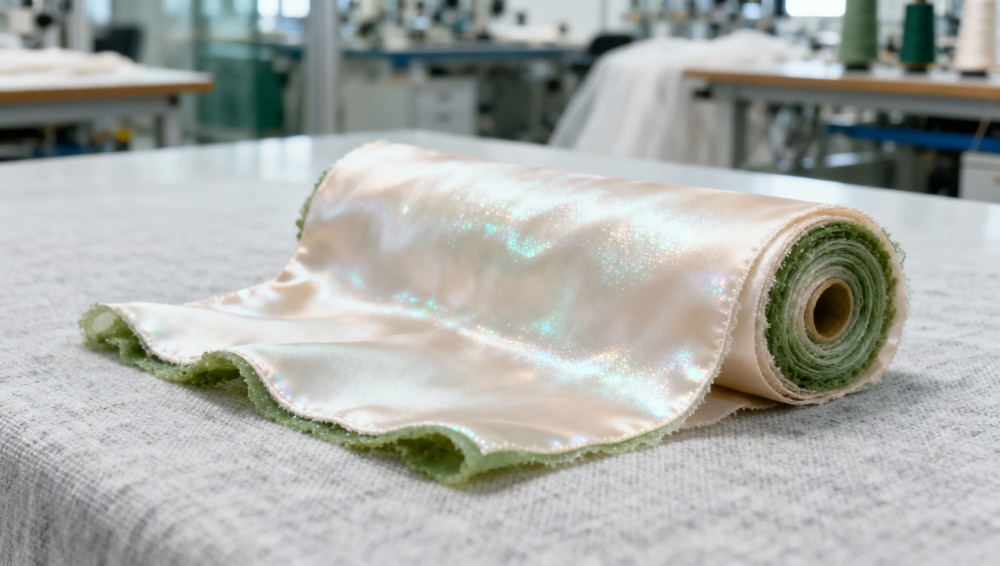
On April 28, 2026, the RCEP Secretariat and customs authorities of China, Japan, and South Korea jointly issued the Green Textiles Mutual Recognition List (2026 Edition), adding carbon footprint certification (PAS 2060:2023) for bridal gown lining fabric — a composite of polyester fiber and algae-based adhesive — to the list of mutually recognized green credentials. This development directly affects exporters in the bridal apparel, technical textile, and sustainable materials supply chains, as it introduces tangible trade facilitation benefits tied to verifiable environmental performance.
Event Overview
On April 28, 2026, the RCEP Secretariat, together with the General Administration of Customs of China, the Japan Customs, and the Korea Customs Service, published the Green Textiles Mutual Recognition List (2026 Edition). The list newly includes carbon footprint certification under PAS 2060:2023 for a specific bridal gown lining fabric composed of polyester fiber and algae-based adhesive. Exporters holding valid certification are eligible for a 92% import inspection exemption rate and an additional 0.8 percentage point tariff reduction across all three markets.
Industries Affected by This Update
Direct Exporters of Bridal Apparel & Accessories
These enterprises face immediate operational implications: certification status now directly determines customs clearance speed and duty cost in Japan and South Korea. Since the benefit applies only to certified shipments of the specified lining fabric — not entire garments — compliance must be product-level and documentation-specific.
Raw Material Suppliers (Polyester & Bio-Adhesive Producers)
Suppliers of the certified composite material may see increased demand from downstream garment manufacturers seeking traceable inputs. However, eligibility requires full chain-of-custody documentation aligned with PAS 2060:2023 — including verified upstream emissions data for both polyester resin production and algae cultivation/extraction processes.
Apparel Manufacturers & Cut-and-Sew Contractors
Manufacturers using this lining fabric in export-bound bridal gowns must ensure batch-level certification linkage between raw material invoices, production records, and final export declarations. The policy does not cover finished garments generically; impact is confined to certified lining components within those garments.
Supply Chain Verification & Certification Service Providers
Third-party verification bodies accredited for PAS 2060:2023 may experience rising demand for scope-3 emissions assessments covering algae-derived inputs — a niche requiring specialized methodology. No new accreditation framework was announced; existing PAS 2060-accredited providers remain eligible.
What Relevant Enterprises or Practitioners Should Focus On Now
Monitor official implementation guidance from national customs administrations
The List is effective as of April 28, 2026, but detailed procedural requirements — such as acceptable evidence formats, certificate validity periods, and digital submission protocols — are pending publication by each country’s customs authority. These will determine practical feasibility.
Verify whether your specific lining fabric formulation matches the certified specification
The mutual recognition applies only to the defined composite: polyester fiber + algae-based adhesive. Variants using different bio-adhesives (e.g., chitosan or starch-based), recycled polyester content above declared baseline, or alternative reinforcement fibers fall outside the scope — even if otherwise identical in function or sustainability claims.
Distinguish between policy signal and enforceable trade benefit
This expansion signals growing alignment on low-carbon textile criteria among RCEP members, but actual duty savings and inspection exemptions apply only upon presentation of valid, jurisdictionally accepted PAS 2060:2023 certificates at time of import. Pre-certification or self-declaration does not qualify.
Prepare documentation workflows for component-level traceability
Exporters must maintain auditable records linking certified lining fabric batches to specific consignments, including purchase orders, mill test reports, carbon accounting summaries, and customs declarations. Cross-border coordination between Chinese exporters and Japanese/South Korean importers will be essential for consistent classification and claim validation.
Editorial Observation / Industry Perspective
Observably, this update represents a targeted, product-specific calibration of RCEP’s green trade agenda — not a broad-based sustainability framework. It reflects increasing procurement pressure from international bridal brands for verifiable, upstream decarbonization, particularly in auxiliary materials often overlooked in lifecycle assessments. Analysis shows that the inclusion prioritizes functional specificity (lining fabric) over end-product category (gowns), suggesting future expansions may follow similar component-level logic — e.g., certified zippers, interlinings, or trims — rather than whole-garment certifications. From an industry perspective, this is best understood as an early-stage operational signal: regulatory infrastructure for green textile trade is being built incrementally, with tangible incentives now attached to narrow, well-defined scopes.
Concluding, this policy shift underscores a structural trend: environmental credentialing is increasingly embedded into trade facilitation mechanisms, not treated as separate ESG reporting. Yet its current scope remains tightly bounded — both technically (one material, one standard, three countries) and procedurally (dependent on nationally administered verification). It is more accurately interpreted as a pilot mechanism than a fully scaled regime.
Information Source: RCEP Secretariat, General Administration of Customs of China, Japan Customs, Korea Customs Service — Joint Announcement dated April 28, 2026. Note: Implementation guidelines, certificate acceptance procedures, and digital platform integration remain under development and require ongoing monitoring.
Recommended News
 Eco PackagingCanton Fair Wedding Photo Props Zone Sees 37% YoY GrowthWedding photo props at Canton Fair surge 37% YoY—biodegradable packaging & magnetic modular backdrops lead global demand. Discover key trends now!Packaging Supply ExpertApr 24, 2026
 Export UpdatesChina Customs Launches Beta 'Wedding Photo Props Export Compliance Self-Check Platform'Wedding photo props exporters: Use China Customs’ new beta Self-Check Platform for real-time export compliance guidance on HS codes like 9405.40, 4202.92 & 6307.90 — avoid delays in US, EU, ASEAN & Middle East markets.Apr 24, 2026
 Commercial LEDEN 14982:2026 Effective: LED Softlight Devices for Wedding Photography Must Pass Enhanced EMC Immunity TestsLED softlight devices for wedding photography must now pass enhanced EMC immunity tests per EN 14982:2026 — ensure CE compliance before EU market entry!Commercial Tech EditorApr 24, 2026
 Carton & PlasticsUS CPSC Recalls 7 Chinese Wedding Backdrop Makers for FormaldehydeUS CPSC recalls 7 Chinese wedding backdrop makers for formaldehyde—critical alert for婚纱摄影 exporters, MDF suppliers & US importers. Act now to avoid detention & liability.Packaging Supply ExpertApr 24, 2026