Industry News
Curation by industry experts
Hot Articles
Popular Tags
FDA Expands Oversight to LED Soft Lights for Wedding Photography
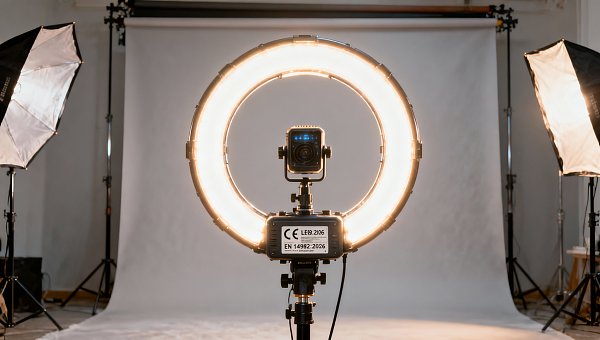
FDA expanded its electronic radiation product regulation on April 28, 2026, adding LED soft lights with near-infrared or blue-light dimming functions — commonly used in wedding photography — to the mandatory CDRH notification list. This update directly affects U.S.-bound exports from LED lighting manufacturers, especially those based in China, and warrants attention from lighting exporters, compliance officers, and supply chain stakeholders involved in photogenic equipment trade.
Event Overview
On April 28, 2026, the U.S. Food and Drug Administration (FDA) updated its Electronic Radiation Product Notification Requirements, formally including non-medical LED soft lights equipped with near-infrared or blue-light dimming capabilities. This marks the first time such lighting products — including models widely deployed in bridal portrait studios — are subject to mandatory pre-market notification under FDA’s Center for Devices and Radiological Health (CDRH). Exporters must submit a CDRH notification at least 30 days before the first unit enters U.S. territory and affix a valid FDA ID number on each device. Non-compliant shipments may be detained or refused entry by U.S. Customs and Border Protection (CBP).
Industries Affected
LED Lighting Manufacturers (Export-Oriented)
These companies produce LED soft lights for commercial photography, including models marketed for wedding and portrait use. They are now required to initiate CDRH notification as product owners — a new obligation previously unassociated with non-medical imaging accessories. Impact includes added regulatory lead time, documentation burden, and potential delays in customs clearance if notification is incomplete or late.
Export Trading Companies & Distributors
Firms acting as U.S. agents or importers of record for foreign-made LED soft lights must verify whether notified devices carry a valid FDA ID. Under current rules, the importer of record bears shared responsibility for compliance. Failure to confirm CDRH status may expose them to CBP enforcement actions, including shipment detention or re-export orders.
OEM/ODM Suppliers to Studio Equipment Brands
Contract manufacturers producing LED soft lights under private labels for global studio gear brands must ensure their clients’ products meet the new notification requirement. Since the FDA holds the listed “responsible party” (often the brand owner or U.S. agent) accountable, OEMs may face contractual pressure to provide technical documentation supporting CDRH submission — such as optical emission reports and circuit schematics.
Photography Equipment Importers & Retailers
U.S.-based importers and retailers stocking imported LED soft lights must now assess inventory and incoming shipments for CDRH compliance. Products without verified FDA ID numbers risk being flagged during CBP inspections, affecting shelf readiness and fulfillment timelines — particularly for seasonal demand spikes around wedding season.
What Enterprises and Practitioners Should Focus On Now
Confirm product scope against FDA’s updated definition
Not all LED soft lights are covered: only those incorporating controllable near-infrared or blue-light output (e.g., via dedicated dimming channels or spectral tuning firmware) fall under the new rule. Companies should review technical specifications — not marketing labels — to determine applicability. A lamp labeled “soft light” without NIR/blue modulation remains outside scope.
Initiate CDRH notification well ahead of first U.S. shipment
The 30-day pre-entry deadline applies to the first unit of each distinct model (defined by electrical/optical configuration). Filing cannot be backdated. Exporters should allocate internal or third-party resources to prepare required submissions — including device description, radiation emission data, and responsible party information — no later than six weeks prior to planned entry.
Update labeling, packaging, and commercial documentation
Approved devices must display the FDA ID number visibly on the product or its permanent label; it must also appear in user manuals and shipping documents. Companies should revise artwork templates, printing workflows, and e-commerce listings accordingly to avoid post-approval nonconformity.
Assign or verify U.S. Agent designation
Foreign manufacturers must appoint a U.S.-based agent to serve as FDA contact. This agent must be formally listed in the CDRH notification. Firms without an established U.S. entity should secure this arrangement before filing — and confirm the agent’s capacity to respond to FDA inquiries within stipulated timeframes.
Editorial Perspective / Industry Observation
Observably, this regulatory expansion reflects FDA’s broader effort to extend radiological safety oversight beyond traditional medical devices to consumer-facing electronics with intentional optical radiation features. Analysis shows the inclusion of wedding photography lights is less about acute health risk and more about establishing jurisdictional precedent for adaptive lighting technologies — especially as spectral control becomes standard in professional-grade LED fixtures. From an industry perspective, this is currently a signal rather than a fully scaled enforcement regime: CBP targeting appears focused on high-volume or newly launched models, and FDA has not yet published guidance on testing protocols or conformity assessment pathways. Still, early compliance positioning is advisable given the absence of grace periods or retroactive exemptions.
Conclusion
This update does not introduce new safety standards but shifts procedural accountability — turning a previously voluntary or overlooked step into a mandatory gate for market access. It signals increasing regulatory granularity for photonic consumer electronics and underscores that “non-medical” does not equate to “non-regulated” in FDA’s evolving framework. For affected stakeholders, the change is best understood as a compliance checkpoint requiring proactive technical and administrative preparation — not a fundamental redesign mandate or market barrier.
Information Sources
Main source: U.S. FDA Federal Register notice dated April 28, 2026, updating 21 CFR Part 1002 (Electronic Radiation Product Notification Requirements). Ongoing monitoring is recommended for FDA-issued guidance documents or CDRH Q&A updates, which have not yet been published as of the effective date.
Recommended News
 Eco PackagingCanton Fair Wedding Photo Props Zone Sees 37% YoY GrowthWedding photo props at Canton Fair surge 37% YoY—biodegradable packaging & magnetic modular backdrops lead global demand. Discover key trends now!Packaging Supply ExpertApr 24, 2026
 Export UpdatesChina Customs Launches Beta 'Wedding Photo Props Export Compliance Self-Check Platform'Wedding photo props exporters: Use China Customs’ new beta Self-Check Platform for real-time export compliance guidance on HS codes like 9405.40, 4202.92 & 6307.90 — avoid delays in US, EU, ASEAN & Middle East markets.Apr 24, 2026
 Commercial LEDEN 14982:2026 Effective: LED Softlight Devices for Wedding Photography Must Pass Enhanced EMC Immunity TestsLED softlight devices for wedding photography must now pass enhanced EMC immunity tests per EN 14982:2026 — ensure CE compliance before EU market entry!Commercial Tech EditorApr 24, 2026
 Carton & PlasticsUS CPSC Recalls 7 Chinese Wedding Backdrop Makers for FormaldehydeUS CPSC recalls 7 Chinese wedding backdrop makers for formaldehyde—critical alert for婚纱摄影 exporters, MDF suppliers & US importers. Act now to avoid detention & liability.Packaging Supply ExpertApr 24, 2026