Industry News
Curation by industry experts
Hot Articles
Popular Tags
India BIS Proposes IP65 + Drop Test for Wedding LED Lights
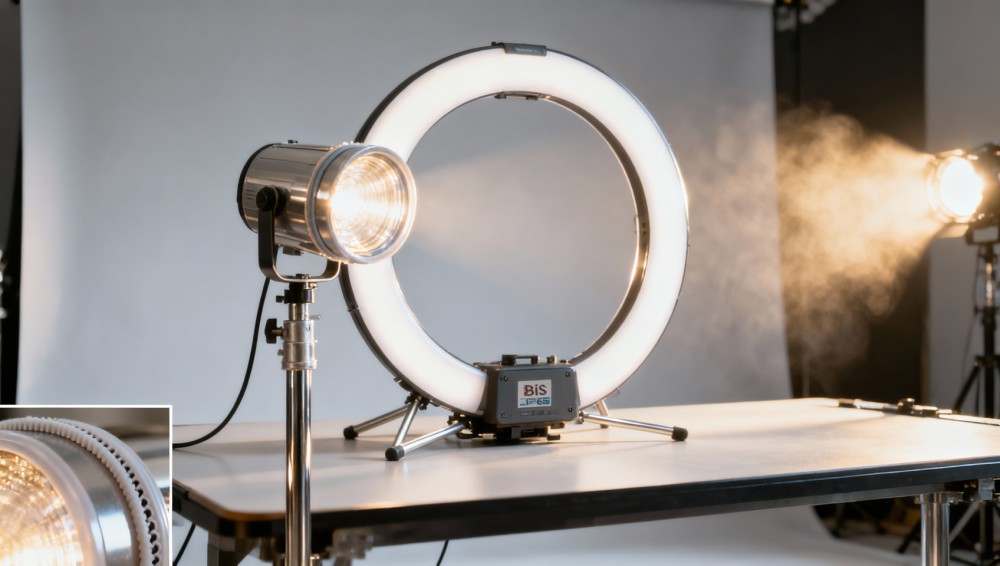
On April 27, 2026, the Bureau of Indian Standards (BIS) published the draft revision IS 15871:2026, proposing mandatory certification for LED softbox and ring lights used in wedding photography. This update introduces new physical durability and environmental protection requirements — specifically IP65 ingress protection and a 1.2-meter drop test onto concrete — and targets portable lighting equipment exported primarily by manufacturers and suppliers in China and other LED lighting-producing countries. Exporters, testing service providers, and supply chain stakeholders serving the Indian consumer photography equipment market should closely monitor this development.
Event Overview
The Bureau of Indian Standards (BIS) released the draft standard IS 15871:2026 on April 27, 2026. The draft proposes to bring LED-based portable lighting devices — including softbox lights and ring lights intended for bridal and portrait photography — under India’s mandatory BIS certification regime. Key technical additions include the IP65 dust- and water-resistance rating and a 1.2-meter drop test onto a concrete surface. Public comments on the draft are open until May 20, 2026. Implementation is projected for Q4 2026.
Which Subsectors Are Affected
Direct Exporters (especially China-based)
These companies supply finished LED photography lights to Indian importers or e-commerce platforms. They will face direct compliance obligations: products must be certified before import clearance. Impact includes extended time-to-market due to retesting, potential redesign costs (e.g., sealed housings, reinforced mounting brackets), and revised documentation workflows for BIS registration.
Contract Manufacturers & OEMs
OEMs producing lights for global brands targeting the Indian wedding photography segment must now align production with the new mechanical and environmental specs. Impact manifests in updated bill-of-materials (e.g., IP65-rated connectors, impact-resistant polycarbonate diffusers), revised quality control checkpoints, and tighter collaboration with third-party labs for pre-certification validation.
Testing & Certification Service Providers
Labs accredited by BIS — or those seeking accreditation — must verify capability for both IP65 testing (per IS/IEC 60529) and standardized drop testing (per IS 13252-1 or equivalent). Impact includes demand for calibrated drop-test rigs and trained personnel, as well as need to document traceable test reports meeting BIS submission requirements.
Distribution & E-commerce Platforms
Indian importers, distributors, and online sellers listing wedding LED lights must ensure incoming stock carries valid BIS certification marks post-implementation. Impact includes heightened product vetting during procurement, risk of customs rejection or post-import audits, and possible inventory write-downs if uncertified units remain unsold after enforcement begins.
What Relevant Enterprises or Practitioners Should Focus On Now
Track official BIS communications through the public consultation portal
The draft remains subject to revision based on stakeholder feedback submitted by May 20, 2026. Exporters and labs should monitor the BIS website for updates to the draft text, clarification notes, or extension notices — especially regarding test method equivalency (e.g., whether IEC 60529:2013 or later editions will be accepted).
Identify and prioritize high-volume SKUs for pre-compliance assessment
Not all LED ring or softbox models may fall under scope — only those marketed explicitly for wedding/portrait use and sold as portable units. Companies should cross-check current product labels, packaging, and online descriptions against the draft’s defined application and portability criteria to avoid over-engineering low-risk items.
Distinguish between policy signal and enforceable requirement
As of April 2026, the proposal is still a draft; no legal mandate exists yet. Businesses should avoid premature full-scale redesigns but initiate feasibility reviews for critical components (e.g., gasket integration, housing thickness, base stability) to inform timeline decisions ahead of finalization.
Engage accredited labs early for gap analysis — not just certification
Third-party labs can conduct preliminary assessments against IP65 and drop-test parameters before formal submission. This helps identify structural weaknesses (e.g., lens seal failure, hinge fracture) and reduces risk of failed first-time certification attempts, which incur additional fees and delays.
Editorial Perspective / Industry Observation
Observably, this draft reflects BIS’s broader shift toward applying robust physical safety and durability standards to consumer-facing electronics — even in non-industrial categories like event photography gear. Analysis shows it is not merely a technical update but a signal that India is tightening conformity assessment for mid-tier imported electronics where user handling conditions (e.g., frequent setup/takedown, outdoor venue use) increase exposure to mechanical and environmental stress. From an industry standpoint, the inclusion of a drop test — uncommon in many regional lighting standards — suggests growing emphasis on real-world usage patterns rather than lab-only performance. It is currently best understood as a regulatory signal requiring readiness, not yet an operational constraint.
This development underscores how niche application segments — such as wedding photography lighting — are increasingly subject to formalized safety governance in emerging markets. While the scope is narrow, its implications extend across design, testing, and trade logistics layers. For now, the most rational interpretation is that IS 15871:2026 represents an early-stage alignment effort by BIS to harmonize portable LED lighting requirements with field-use realities — not a sudden compliance cliff, but a structured transition point demanding measured, evidence-based preparation.
Source: Bureau of Indian Standards (BIS), Draft Standard IS 15871:2026, published April 27, 2026. Public comment period ends May 20, 2026. Final version and effective date remain pending confirmation.
Recommended News
 Eco PackagingCanton Fair Wedding Photo Props Zone Sees 37% YoY GrowthWedding photo props at Canton Fair surge 37% YoY—biodegradable packaging & magnetic modular backdrops lead global demand. Discover key trends now!Packaging Supply ExpertApr 24, 2026
 Export UpdatesChina Customs Launches Beta 'Wedding Photo Props Export Compliance Self-Check Platform'Wedding photo props exporters: Use China Customs’ new beta Self-Check Platform for real-time export compliance guidance on HS codes like 9405.40, 4202.92 & 6307.90 — avoid delays in US, EU, ASEAN & Middle East markets.Apr 24, 2026
 Commercial LEDEN 14982:2026 Effective: LED Softlight Devices for Wedding Photography Must Pass Enhanced EMC Immunity TestsLED softlight devices for wedding photography must now pass enhanced EMC immunity tests per EN 14982:2026 — ensure CE compliance before EU market entry!Commercial Tech EditorApr 24, 2026
 Carton & PlasticsUS CPSC Recalls 7 Chinese Wedding Backdrop Makers for FormaldehydeUS CPSC recalls 7 Chinese wedding backdrop makers for formaldehyde—critical alert for婚纱摄影 exporters, MDF suppliers & US importers. Act now to avoid detention & liability.Packaging Supply ExpertApr 24, 2026