Industry News
Curation by industry experts
Hot Articles
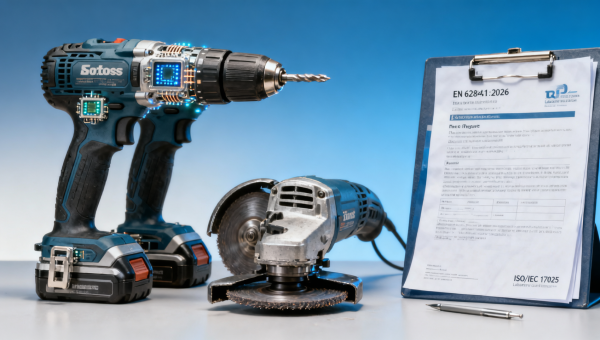
- Industry NewsEU EN 62841-1:2026 Electric Tool Safety Standard Takes Effect April 2026, China Exports Require Additional Vibration/EMC Testing
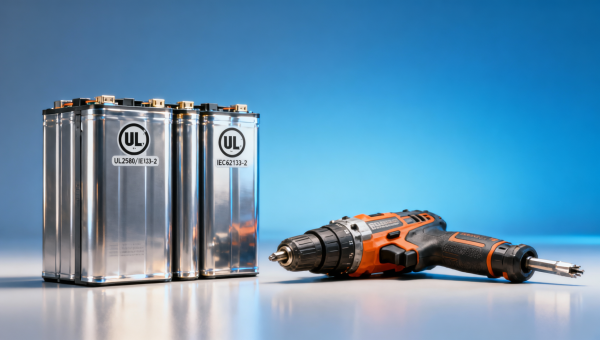
- Industry NewsCIHS 2026: Terminal-Free Battery Tech Emerges as New Focus for Global Buyers
- Fabrics & YarnsIndia BIS to Mandate Certification for Polyester Bridal Fabrics from Oct 2026
Popular Tags
JIS T 9001:2026 Enforces RG0 Blue Light Certification for LED Ring Lights in Japan
Japan’s JIS T 9001:2026 standard, effective 1 October 2026, mandates RG0 (no blue light hazard) certification for LED ring lights and panel softlights used in bridal photography — a new requirement impacting exporters, manufacturers, and distributors supplying to Japanese studios.
Event Overview
The Japanese Industrial Standards Committee (JISC) officially published JIS T 9001:2026, Safety Requirements for LED Light Sources for Medical and Photographic Use, on 16 April 2026. The standard explicitly includes LED ring lights and flat-panel softlights commonly used in wedding photography under mandatory RG0 classification. Enforcement begins 1 October 2026. Exporters of such LED lighting equipment from China must obtain both PSE marking and JIS T 9001:2026 compliance certification to remain eligible for inclusion in Japanese photo studio procurement lists.
Which Subsectors Are Affected
Direct Exporters (China-based LED Lighting Manufacturers)
These companies supply finished LED ring lights or softlight panels directly to Japanese importers or studios. They are affected because JIS T 9001:2026 introduces a new, non-negotiable technical barrier: RG0 classification is now required for market access — not optional. Impact manifests as delayed shipments, rejected orders, or exclusion from tender processes if certification is incomplete by 1 October 2026.
Contract Manufacturers & OEM/ODM Suppliers
Firms producing LED lighting units under private labels for Japanese or global brands face revised technical specifications from clients. Since the end-product must carry JIS-compliant RG0 validation, upstream manufacturing partners must adapt optical design, driver control logic, and photometric testing protocols — even if they do not hold the final certification themselves.
Distributors & Import Agents (Japan-based)
Japanese intermediaries responsible for clearing goods and listing products in studio procurement directories must verify dual certification (PSE + JIS T 9001:2026) before accepting inventory. Failure to confirm RG0 status may result in liability for non-compliant stock, loss of vendor standing with photo studio associations, and administrative penalties during customs inspection.
What Relevant Companies or Practitioners Should Monitor and Do Now
Track official JISC guidance on test methodology and accredited laboratories
JIS T 9001:2026 references IEC TR 62778 for RG0 assessment, but JISC has not yet published a list of Japan-accredited labs authorized for this specific application. Companies should monitor JISC and METI announcements for lab recognition updates — especially those offering pre-certification verification services for photographic lighting.
Prioritize RG0 validation for high-volume bridal lighting models
Not all LED softlights require RG0 re-evaluation; only those intended for close-proximity, prolonged use in portrait and bridal photography (e.g., ring lights ≤ 50 cm working distance). Exporters should identify which SKUs fall under scope — based on product labeling, marketing claims, and typical usage context — rather than applying blanket retesting.
Align documentation with PSE and JIS regulatory timelines
PSE certification remains mandatory for electrical safety, while JIS T 9001:2026 adds photobiological safety. Both certifications must be valid concurrently. Companies should ensure test reports, declarations of conformity, and technical files reflect synchronized validity periods — especially given staggered renewal cycles between the two schemes.
Initiate communication with Japanese buyers on transition timelines
Some Japanese photo studio procurement managers may not yet be aware of the enforcement date or its implications for existing contracts. Proactive clarification — including confirmation of pending certifications and provisional shipment plans — helps avoid order cancellations or inventory write-offs post-1 October 2026.
Editorial Perspective / Industry Observation
From industry perspective, JIS T 9001:2026 represents a targeted regulatory tightening — not a broad expansion of LED safety rules. It reflects growing attention to occupational and consumer exposure in non-medical but high-intensity visual applications. Analysis来看, this is less about immediate market disruption and more about long-term standard alignment: RG0 is already embedded in EU EN IEC 62471 and China’s GB/T 20145, so the shift signals convergence rather than divergence. Observation来看, the 2026 enforcement date provides a defined window — but the absence of transitional provisions means compliance must be fully operational by day one. Current interpretation suggests this is a hard deadline, not a phased rollout.
It is more accurate to understand JIS T 9001:2026 as a signal of increasing regulatory specificity for application-defined lighting — where use context (e.g., facial proximity in bridal shoots) triggers stricter photobiological requirements. Industry stakeholders should treat it as an early indicator of similar scopes potentially emerging in other mature markets with strong photo-industry clusters.
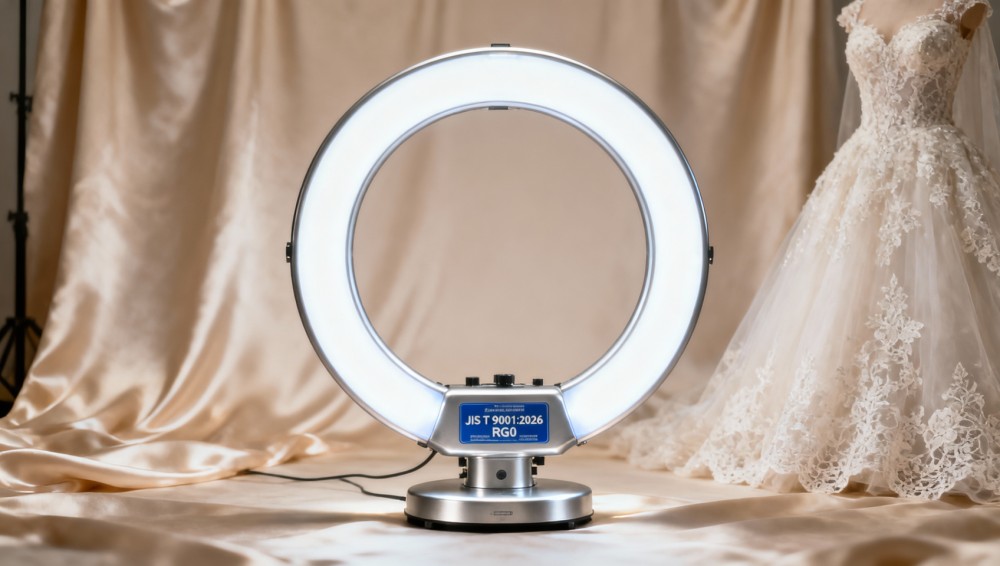
In summary, JIS T 9001:2026 does not redefine LED safety fundamentals, but it does redefine market access conditions for a clearly bounded segment: LED lighting designed for close-range, professional portrait and bridal photography in Japan. Its significance lies in enforceability — not novelty — and its practical implication is procedural readiness, not technological overhaul.
Source: Japanese Industrial Standards Committee (JISC), Official Publication Notice No. JISC/2026-04-16; JIS T 9001:2026 full text released 16 April 2026. Note: Lab accreditation status and official interpretation documents remain under observation as of publication date.
Recommended News
 Industry NewsEU EN 62841-1:2026 Electric Tool Safety Standard Takes Effect April 2026, China Exports Require Additional Vibration/EMC TestingEU EN 62841-1:2026 electric tool safety standard takes effect April 2026, requiring stricter vibration limits (2.5 m/s²) & EMC testing for China exports. Learn critical compliance steps to avoid EU market risks.Apr 16, 2026
 Industry NewsCIHS 2026: Terminal-Free Battery Tech Emerges as New Focus for Global BuyersCIHS 2026 highlights terminal-free battery tech as the new global standard for power tools, attracting 60,000+ buyers. Discover certification requirements and market shifts shaping procurement strategies.Apr 16, 2026
 Fabrics & YarnsIndia BIS to Mandate Certification for Polyester Bridal Fabrics from Oct 2026Polyester bridal fabrics must meet India BIS certification by Oct 2026—key for chiffon, georgette & formal wear exporters. Act now to avoid port delays!Textile Industry AnalystApr 16, 2026
 Home DecorChina Bridal Pop-up Hub Launches in Dubai Mall Amid Ramadan Demand SurgeChina Bridal Pop-up Hub in Dubai Mall meets surging Ramadan demand — discover premium silk gowns, smart veils & GCC-ready bridal exports now.Interior Sourcing LeadApr 16, 2026