Industry News
Curation by industry experts
Hot Articles
- Industrial Power SuppliesGSPEI Rises 2.1% in Early May: Rare-Earth Motor Costs Drive Up Wedding Photography Equipment Export Prices
- Printing EquipmentTurkey Customs AI Scans All Imported Wedding Backdrops for IP
- Commercial LEDIndia BIS Mandate for LED Soft Lights: 90-Day Deadline to IS 13252(Part 1):2023
Popular Tags
Turkey Customs AI Scans All Imported Wedding Backdrops for IP
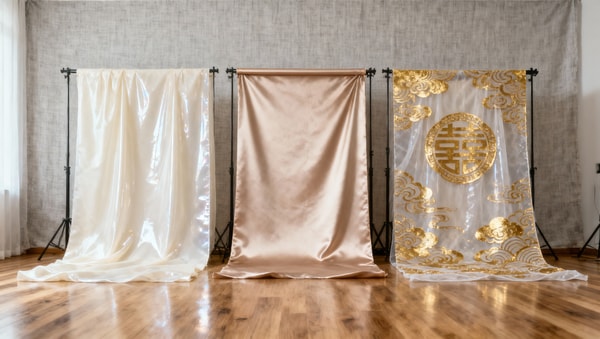
On May 4, 2026, Turkey’s General Directorate of Customs (GTI) fully deployed its TradeVision AI v3.1 system to conduct 100% automated pattern recognition on all imported wedding photography backdrops — marking a significant shift in customs enforcement for visual IP rights. Apparel, textile printing, and photo studio supply sectors should monitor this development closely, as it introduces new compliance requirements at the point of entry into the Turkish market.
Event Overview
On May 4, 2026, the General Directorate of Customs of Turkey (GTI) announced the nationwide rollout of TradeVision AI v3.1. The system now performs real-time image comparison against licensed visual content databases — including Disney, Getty Images, and Shutterstock — for every shipment of imported wedding photography background cloths. Within three days of activation, 17 inbound consignments were intercepted for suspected copyright infringement; sources indicate most originated from Yiwu and Guangzhou in China. Importers are required to submit original design declarations and verifiable copyright licensing documentation for each batch.
Industries Affected
Direct Importers & Trading Companies
These entities face immediate operational impact: shipments without pre-validated IP documentation risk detention or rejection at Turkish ports. The requirement applies to all import batches — no exemptions or sampling thresholds — meaning due diligence must now be embedded into every purchase order and customs declaration.
Textile Printing & Background Fabric Manufacturers
Manufacturers supplying export-oriented backdrop products — especially those producing generic floral, fantasy, or character-themed prints — may see increased scrutiny from downstream importers. Turkish buyers are likely to demand formal IP warranties and traceable design provenance, shifting liability upstream.
Photo Studio Equipment Distributors & Resellers
Distributors sourcing backdrops for resale in Turkey must now verify not only product quality but also copyright chain integrity before warehousing or listing. Inventory held without verified IP clearance could become non-dutiable or subject to post-clearance audit.
Supply Chain & Compliance Service Providers
Third-party customs brokers, IP verification platforms, and documentation agents may see rising demand for copyright attestation services — particularly for high-volume, low-value-per-unit items like printed fabric rolls, where manual review is impractical.
What Stakeholders Should Monitor & Do Now
Track official GTI guidance on acceptable evidence formats
GTI has not yet published standardized templates for “original design declarations” or defined minimum criteria for “copyright authorization chain.” Importers and suppliers should monitor GTI’s public notices and customs advisory bulletins for clarifications — especially regarding acceptable third-party certifications or notarized statements.
Review current sourcing contracts with Chinese manufacturers
Contracts with suppliers in Yiwu and Guangzhou should be audited for IP indemnity clauses, design ownership language, and warranty terms. Where missing, renegotiation or supplemental agreements may be needed to align with Turkish import requirements.
Distinguish between policy signal and operational reality
While TradeVision AI v3.1 is live, its false positive rate, appeal process for flagged shipments, and enforcement consistency across regional customs offices remain unconfirmed. Observably, early interceptions (17 batches in 3 days) suggest initial targeting focuses on high-similarity, commercially recognizable patterns — not nuanced derivative works.
Prepare pre-clearance documentation workflows
Importers should implement internal checkpoints to collect and validate IP documentation *before* goods reach port — including supplier-signed declarations, copyright registration numbers (where applicable), and proof of license renewal dates. Batch-level traceability (e.g., linking SKU to specific design file hash) may soon become advisable.
Editorial Perspective / Industry Observation
This rollout is better understood as an enforcement signal than a fully mature regulatory regime. Analysis shows that GTI’s move reflects growing alignment with EU-style IP border measures — but unlike EU Regulation 608/2013, Turkey’s implementation lacks publicly available procedural safeguards for rightsholders or importers. From an industry perspective, it signals increasing pressure on visual-content-heavy commodity imports to meet digital-age IP accountability standards — even where physical goods carry no explicit branding. Current focus remains narrow (wedding backdrops only), but the underlying AI infrastructure is scalable. Observation suggests other visually distinct textile categories — such as event drapery, retail display fabrics, or school uniform prints — could be next in scope if detection accuracy and stakeholder feedback prove robust.

In summary, Turkey’s AI-powered customs screening for wedding backdrop patterns represents a targeted, technology-enabled escalation in IP enforcement — not a broad-based trade barrier. Its significance lies less in immediate volume impact and more in its precedent: it demonstrates how national customs agencies can leverage off-the-shelf image recognition to enforce intangible rights at physical borders. For affected businesses, the appropriate stance is neither alarm nor dismissal — but calibrated readiness.
Source: General Directorate of Customs of Turkey (GTI), official announcement dated May 4, 2026.
Note: GTI’s technical specifications for TradeVision AI v3.1, appeal mechanisms for flagged shipments, and potential expansion to other product categories remain under observation.
Recommended News
 Industrial Power SuppliesGSPEI Rises 2.1% in Early May: Rare-Earth Motor Costs Drive Up Wedding Photography Equipment Export PricesWedding photography equipment export prices rise 2.1% amid rare-earth motor cost surge—key insight for exporters, OEMs & procurement teams.Lighting & DisplaysMay 05, 2026
 Printing EquipmentTurkey Customs AI Scans All Imported Wedding Backdrops for IPTurkey Customs AI scans all imported wedding backdrops for IP — learn how this impacts婚纱摄影 importers, manufacturers & studios. Act now to avoid shipment delays.Packaging Supply ExpertMay 05, 2026
:2023") Commercial LEDIndia BIS Mandate for LED Soft Lights: 90-Day Deadline to IS 13252(Part 1):2023India BIS mandates IS 13252(Part 1):2023 for LED soft lights in bridal photography — act now! 90-day deadline ends 2 Aug 2026. Ensure compliance, avoid customs rejection.Commercial Tech EditorMay 05, 2026
Commercial LEDIndia BIS Mandate for LED Soft Lights: 90-Day Deadline to IS 13252(Part 1):2023India BIS mandates IS 13252(Part 1):2023 for LED soft lights in bridal photography — act now! 90-day deadline ends 2 Aug 2026. Ensure compliance, avoid customs rejection.Commercial Tech EditorMay 05, 2026 Fabrics & YarnsVietnam Imposes 28.1% Anti-Dumping Duty on Chinese Wedding BackdropsVietnam imposes 28.1% anti-dumping duty on Chinese wedding backdrops—key impact for photographers, studios & e-commerce sellers. Act now!Textile Industry AnalystMay 05, 2026