Industry News
Curation by industry experts
Hot Articles
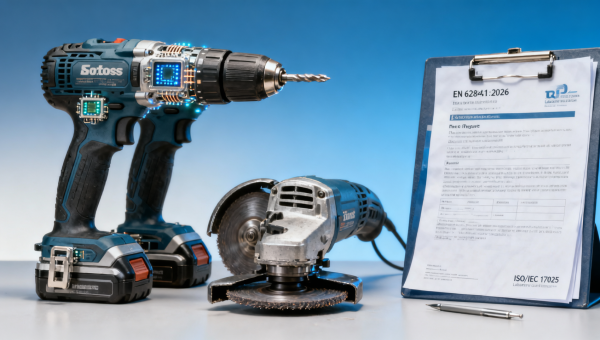
- Industry NewsEU EN 62841-1:2026 Electric Tool Safety Standard Takes Effect April 2026, China Exports Require Additional Vibration/EMC Testing
- Industry NewsCIHS 2026: Terminal-Free Battery Tech Emerges as New Focus for Global Buyers
- Fabrics & YarnsIndia BIS to Mandate Certification for Polyester Bridal Fabrics from Oct 2026
Popular Tags
EU Enforces EN ISO 14021 Labels on Bridal Fabrics from Apr 2026
Effective April 16, 2026, the European Commission has mandated EN ISO 14021 II-type environmental labeling for all imported bridal gowns and associated fabrics—including satin, organza, and lace—impacting exporters in Guangdong, Zhejiang, and Jiangsu provinces. This regulatory shift signals a tightening of sustainability compliance requirements for textile suppliers targeting the EU market.
Event Overview
The European Commission updated the implementing rules of the Textile Ecodesign Regulation on April 15, 2026. As of April 16, 2026, all bridal gowns and accompanying fabrics imported into the EU must carry EN ISO 14021 II-type environmental claims on product hangtags and packaging. These claims must explicitly state recycled fiber content, water consumption classification, and conformity with the EU’s restricted dye清单 (prohibited dye list). Non-compliant shipments face port detention and potential return.
Industries Affected
Direct Exporters (Bridal Fabric & Garment Traders)
Exporters handling final delivery to EU importers are directly responsible for label compliance. Failure to affix correct EN ISO 14021 identifiers before shipment triggers customs rejection at EU entry points—disrupting delivery schedules and increasing logistics costs.
Fabric Manufacturers (Weavers, Knitters, Lace Producers)
Manufacturers supplying raw or semi-finished fabrics (e.g., satin base cloth, embroidered lace panels) must verify and document environmental attributes—especially recycled polyester or nylon content and dyeing process compliance—before releasing goods to downstream exporters. Their technical data sheets now serve as foundational inputs for label generation.
Dyeing & Finishing Plants
These facilities are critical for meeting the ‘dye prohibition list’ requirement. They must maintain auditable records confirming absence of banned substances (e.g., certain azo dyes, heavy-metal mordants) and provide test reports aligned with EN ISO 14021 verification protocols—not just REACH or OEKO-TEX® Standard 100.
Supply Chain Service Providers (Testing Labs, Certification Bodies, Label Printers)
Service providers supporting EU-bound bridal fabric exports must adapt labeling workflows to EN ISO 14021’s specific claim format and substantiation rules. Generic eco-labels or self-declared ‘green’ statements no longer suffice; only claims verified per EN ISO 14021 Part 2 (II-type declarations) are accepted.
Key Focus Areas and Immediate Actions for Enterprises
Monitor official EU guidance on claim wording and verification thresholds
EN ISO 14021 permits limited, verifiable environmental claims—but does not define absolute thresholds for ‘low water use’ or ‘high recycled content’. Analysis来看, the European Commission may issue non-binding interpretative guidance post-April 2026 clarifying acceptable phrasing and evidence levels. Exporters should track updates via the EU’s Official Journal and national market surveillance authorities.
Prioritize labeling readiness for high-volume EU SKUs: satin, organza, and lace trims
From industry角度看, these three fabric categories dominate EU bridal imports from China. Current more suitable is to audit existing stock-keeping units (SKUs) used in EU-bound orders, confirm material composition data, and pre-test dye compliance—rather than applying blanket labeling across all products.
Distinguish between policy intent and operational implementation
The regulation mandates labeling *at point of import*, not at factory level. Observation来看, initial enforcement may focus on documentation completeness (e.g., presence of hangtag + matching lab report), not real-time chemical retesting. However, random verification remains possible—and non-conformity could trigger broader audits.
Align internal labeling systems with EN ISO 14021 formatting and traceability requirements
Enterprises should update digital asset management (DAM) systems and print templates to include mandatory elements: standardized claim language (e.g., ‘Contains X% recycled polyester, verified per EN ISO 14021:2023’), water use class (e.g., ‘Class B: ≤50 L/kg fabric’), and reference to the applicable dye restriction list version. All claims must be traceable to specific batch-level test reports.
Editorial Perspective / Industry Observation
This requirement is better understood as an enforcement milestone—not a new standard. EN ISO 14021 has existed since 2023; what changes in April 2026 is its *mandatory application* within a regulated product category under the Ecodesign framework. Observation来看, it reflects the EU’s shift from voluntary eco-labeling toward enforceable, supply-chain-specific environmental accountability. For Chinese textile exporters, it marks the first binding use of EN ISO 14021 in a high-value fashion segment—suggesting similar requirements may extend to other formalwear or luxury textile categories in future revisions.
Conclusion
This regulation does not introduce novel environmental science, but it does activate a compliance checkpoint with tangible operational consequences: delayed clearance, rejected consignments, and reputational exposure. It is best interpreted not as a one-off adjustment, but as a structural signal—indicating that environmental claim substantiation is becoming a non-negotiable component of EU textile market access, beginning with premium segments like bridal wear.
Information Sources
Main source: European Commission Implementing Regulation amending Annexes to Regulation (EU) 2023/XXX on Ecodesign for Textiles, published in the Official Journal of the European Union, April 15, 2026. Pending observation: National market surveillance authority guidance on enforcement interpretation and transitional arrangements for pending shipments.
Recommended News
 Industry NewsEU EN 62841-1:2026 Electric Tool Safety Standard Takes Effect April 2026, China Exports Require Additional Vibration/EMC TestingEU EN 62841-1:2026 electric tool safety standard takes effect April 2026, requiring stricter vibration limits (2.5 m/s²) & EMC testing for China exports. Learn critical compliance steps to avoid EU market risks.Apr 16, 2026
 Industry NewsCIHS 2026: Terminal-Free Battery Tech Emerges as New Focus for Global BuyersCIHS 2026 highlights terminal-free battery tech as the new global standard for power tools, attracting 60,000+ buyers. Discover certification requirements and market shifts shaping procurement strategies.Apr 16, 2026
 Fabrics & YarnsIndia BIS to Mandate Certification for Polyester Bridal Fabrics from Oct 2026Polyester bridal fabrics must meet India BIS certification by Oct 2026—key for chiffon, georgette & formal wear exporters. Act now to avoid port delays!Textile Industry AnalystApr 16, 2026
 Home DecorChina Bridal Pop-up Hub Launches in Dubai Mall Amid Ramadan Demand SurgeChina Bridal Pop-up Hub in Dubai Mall meets surging Ramadan demand — discover premium silk gowns, smart veils & GCC-ready bridal exports now.Interior Sourcing LeadApr 16, 2026