Industry News
Curation by industry experts
Hot Articles
Popular Tags
India BIS Enforces New 20 ppm Formaldehyde Limit for Wedding Attire from Apr 25, 2026
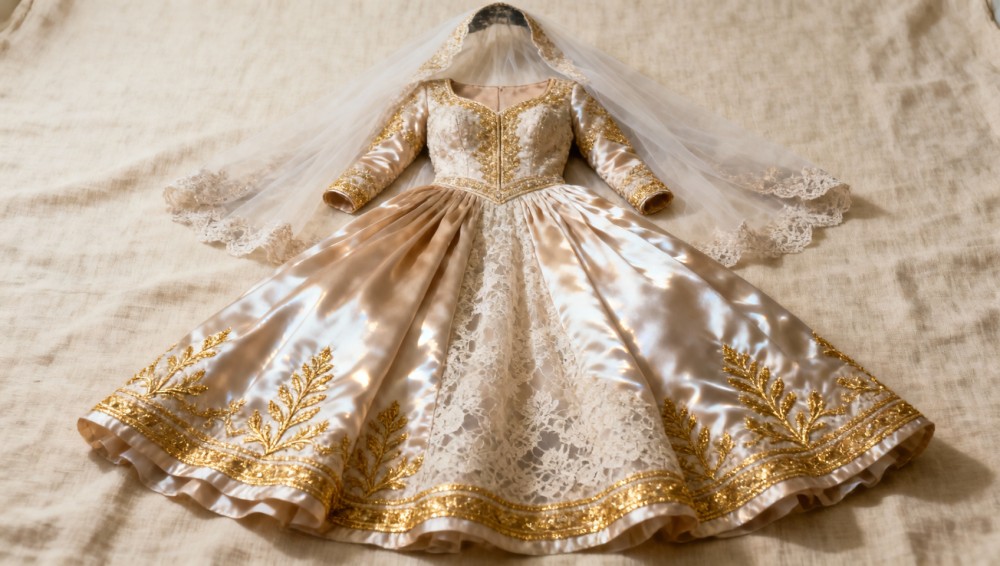
India’s Bureau of Indian Standards (BIS) has implemented IS 15620:2026 on April 25, 2026, tightening the formaldehyde release limit for wedding attire—including gowns, evening wear, veils, and fabric-based accessories—from 75 ppm to 20 ppm. This update directly affects apparel exporters, textile manufacturers, importers, and compliance service providers serving the Indian market.
Event Overview
On April 25, 2026, the Bureau of Indian Standards (BIS) formally enforced the revised standard IS 15620:2026. The revision reduces the maximum allowable free formaldehyde content in wedding attire to 20 ppm, down from the previous 75 ppm. The testing method has been updated to ISO 14184-1:2019. The regulation applies to all wedding-related garments and fabric accessories sold or imported into India. Non-compliant products are subject to detention at Bengaluru Customs and mandatory recall.
Industries Affected
Direct Exporters and Importers
Exporters shipping bridal wear or formal accessories to India must now ensure formaldehyde levels meet the 20 ppm threshold before shipment. Failure to comply triggers customs detention at Bengaluru — a key entry point for textile imports — leading to delays, storage costs, and potential recall liabilities.
Textile and Apparel Manufacturers
Manufacturers supplying fabrics or finished garments for the Indian bridal market face stricter raw material vetting and process controls. Resin-based finishing agents, commonly used for wrinkle resistance or stiffness in veils and structured gowns, may now require reformulation or substitution to meet the lower formaldehyde ceiling.
Supply Chain and Compliance Service Providers
Third-party testing labs, certification agencies, and logistics coordinators supporting BIS conformity must align their protocols with ISO 14184-1:2019. This includes updating test documentation, calibration records, and reporting formats to reflect the new methodology and pass/fail criteria.
What Stakeholders Should Monitor and Do Now
Confirm alignment with ISO 14184-1:2019 testing procedures
Verify that current testing partners use ISO 14184-1:2019—not older versions or alternate methods—as BIS now mandates this specific protocol for formaldehyde assessment in wedding attire.
Review high-risk product categories and finishing processes
Prioritize formaldehyde retesting for items with resin finishes, heat-set pleats, or bonded trims—especially veils, corseted bodices, and satin-backed organzas—where residual formaldehyde is historically elevated.
Update documentation and labeling for BIS submission
Ensure test reports include full traceability: batch numbers, fabric composition, finishing treatments applied, and clear statement of compliance with IS 15620:2026. BIS may require these for pre-clearance review or post-import verification.
Editorial Observation / Industry Perspective
From an industry perspective, this revision signals a broader regulatory shift toward harmonizing Indian textile safety standards with internationally recognized benchmarks—notably those reflected in ISO 14184-1:2019. Analysis来看, the 20 ppm cap places Indian requirements on par with stringent EU limits for skin-contact textiles (Class I), suggesting BIS is prioritizing consumer health over transitional flexibility. Observation来看, enforcement appears operational from day one, with no grace period announced; this implies immediate readiness is expected across supply chains. Current more appropriate understanding is that IS 15620:2026 functions less as a warning signal and more as an active compliance gate for market access.
Conclusion
This regulation marks a concrete step in India’s tightening of chemical safety governance for apparel. Its significance lies not in novelty—but in enforceability: it introduces a measurable, testable, and immediately applicable threshold with tangible consequences for non-compliance. For stakeholders, it is best understood not as a future risk but as a present operational requirement affecting sourcing, testing, and clearance workflows for bridal and formal wear entering India.
Information Source
Main source: Bureau of Indian Standards (BIS) official notification of IS 15620:2026 enforcement, effective April 25, 2026. Ongoing monitoring is advised for any BIS-issued clarifications on sampling frequency, exemption clauses, or enforcement updates beyond Bengaluru Customs.
Recommended News
 Eco PackagingCanton Fair Wedding Photo Props Zone Sees 37% YoY GrowthWedding photo props at Canton Fair surge 37% YoY—biodegradable packaging & magnetic modular backdrops lead global demand. Discover key trends now!Packaging Supply ExpertApr 24, 2026
 Export UpdatesChina Customs Launches Beta 'Wedding Photo Props Export Compliance Self-Check Platform'Wedding photo props exporters: Use China Customs’ new beta Self-Check Platform for real-time export compliance guidance on HS codes like 9405.40, 4202.92 & 6307.90 — avoid delays in US, EU, ASEAN & Middle East markets.Apr 24, 2026
 Commercial LEDEN 14982:2026 Effective: LED Softlight Devices for Wedding Photography Must Pass Enhanced EMC Immunity TestsLED softlight devices for wedding photography must now pass enhanced EMC immunity tests per EN 14982:2026 — ensure CE compliance before EU market entry!Commercial Tech EditorApr 24, 2026
 Carton & PlasticsUS CPSC Recalls 7 Chinese Wedding Backdrop Makers for FormaldehydeUS CPSC recalls 7 Chinese wedding backdrop makers for formaldehyde—critical alert for婚纱摄影 exporters, MDF suppliers & US importers. Act now to avoid detention & liability.Packaging Supply ExpertApr 24, 2026