Industry News
Curation by industry experts
Hot Articles
Popular Tags
Ningbo Port to Enforce 100% Physical Inspection for PVC Wedding Props from May 24, 2026
Ningbo Customs issued an urgent notice on May 24, 2026, mandating 100% physical container inspection for all export-bound PVC-based wedding photography props—including PVC photo frames and artificial flower wreaths—following multiple detections of超标邻苯二甲酸盐 (phthalate) levels. This measure directly affects exporters and logistics providers in the wedding prop supply chain, particularly those operating across South China and East China, where over 80% of such exports originate. The policy extends customs clearance time to up to 72 hours, introducing measurable delays and compliance pressure for time-sensitive seasonal shipments.
Event Overview
On May 24, 2026, Ningbo Customs announced immediate implementation of mandatory 100% manual container inspection for all exported PVC wedding photography props. The decision follows confirmed laboratory findings of phthalate exceedances in recent consignments of PVC photo frames and artificial flower wreaths. Clearance processing time is now extended to 72 hours. No further details regarding duration, scope expansion beyond wedding props, or exemption criteria have been published as of the notice’s release.
Industries Affected by Segment
Direct Export Trading Companies
These firms face direct operational impact due to mandatory physical examination and extended clearance windows. Delays disrupt shipment schedules—especially critical during peak pre-wedding season—and increase demurrage, storage, and labor costs associated with rehandling and documentation verification.
Manufacturers of PVC-Based Wedding Props
Producers supplying frames, floral accessories, backdrops, and mannequins made with PVC must now ensure full traceability of material composition. Non-compliant batches risk detention or rejection, requiring real-time coordination with customs and potential rework or destruction of affected inventory.
Raw Material Suppliers (PVC Compounders & Additive Providers)
Suppliers of PVC resins, plasticizers, or pre-compounded materials used in wedding prop production may experience heightened demand for certified phthalate test reports. Buyers are likely to request updated third-party lab certificates (e.g., ISO/IEC 17025-accredited) prior to order placement, shifting compliance responsibility upstream.
Logistics & Freight Forwarding Service Providers
Forwarders handling consolidation, documentation, and port coordination for wedding prop exporters must adjust standard operating procedures to accommodate longer dwell times, additional inspection documentation, and tighter scheduling buffers. Real-time visibility into container status becomes essential to manage client expectations and avoid cascading schedule failures.
Key Points for Enterprises and Practitioners to Monitor and Act Upon
Track official updates from Ningbo Customs and General Administration of Customs of China
Monitor for supplementary guidance—such as a formal announcement, list of covered HS codes, or clarification on whether inspection applies only to full containers or also LCL shipments. No official FAQ or implementation timeline beyond May 24 has been released.
Identify and isolate high-risk product categories immediately
Focus inspection readiness on items explicitly named: PVC photo frames and artificial flower wreaths. Assess whether other PVC-based wedding props (e.g., stands, signage, decorative panels) fall under de facto enforcement pending further notice. Maintain internal logs of material declarations per SKU.
Distinguish between regulatory signal and operational reality
This notice reflects a targeted response to specific safety findings—not a broad chemical restriction policy. It does not constitute a ban on PVC or phthalates, nor does it reference international standards (e.g., REACH Annex XVII). Treat it as a port-specific customs enforcement action, not a market access barrier.
Prepare documentation, communication, and contingency buffers now
Compile existing phthalate test reports for relevant SKUs; assign staff to verify labeling and packaging compliance; inform overseas buyers of potential 72-hour clearance extension; and build minimum 5-day buffer into shipping timelines for June–August 2026 bookings.
Editorial Perspective / Industry Observation
Observably, this measure signals heightened customs attention toward consumer-facing plastic goods with direct skin or environmental contact—particularly where prior non-compliance has been verified. Analysis shows it functions less as a long-term regulatory shift and more as an immediate risk-mitigation intervention at a single port. From an industry perspective, it highlights how localized enforcement actions can ripple across regional supply chains when tied to high-volume, time-bound export categories. Current monitoring should focus less on predicting nationwide replication and more on assessing whether similar scrutiny emerges at Shenzhen, Guangzhou, or Shanghai ports in coming months—especially for other phthalate-sensitive product groups like children’s party supplies or inflatable decor.
This notice underscores that compliance for export-oriented manufacturers is no longer solely about meeting destination-market requirements—it increasingly includes demonstrating material safety to origin-country customs authorities prior to departure. Its significance lies not in scale or novelty, but in its concrete, near-term effect on lead times and documentation rigor for a narrowly defined yet commercially sensitive segment.
Information Source: Official notice issued by Ningbo Customs on May 24, 2026. No further implementation details or supporting documents have been publicly released. Ongoing observation is recommended for updates on scope, duration, or procedural refinements.
Recommended News
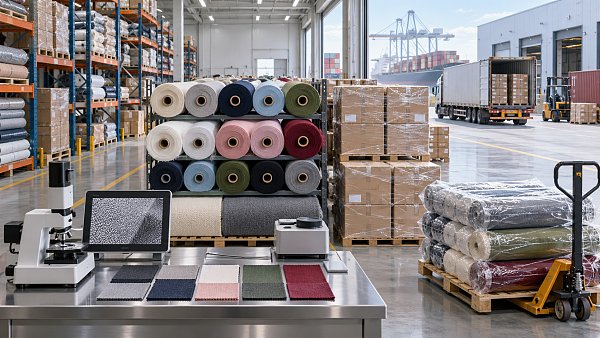
 Fabrics & YarnsWhat drives textile procurement cost beyond the quoted fabric price?Textile procurement cost goes far beyond the quoted fabric price. Discover how freight, quality, MOQ, compliance, payment terms, and supplier reliability shape total sourcing cost.Textile Industry AnalystOct 07, 2026
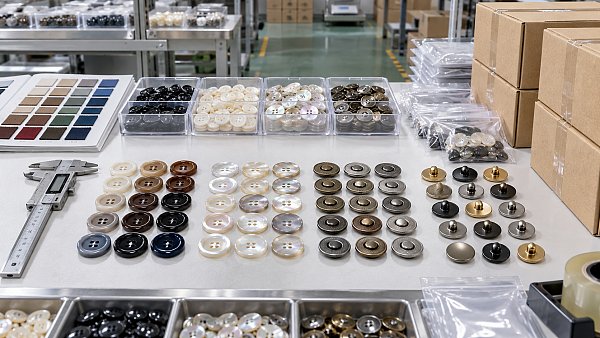
 Garment MfgWhat drives unit costs when buying garment buttons wholesale?Garment buttons wholesale costs depend on material, tooling, finish, MOQ, quality, packing, and freight. Learn how to compare true landed costs and source reliably.Textile Industry AnalystOct 06, 2026
 Building HardwareWhat load rating should you specify for wholesale ball bearing slides?Wholesale ball bearing slides: learn how to specify the right load rating for drawer weight, extension, mounting, and durability. Source smarter and reduce failures.Tooling & Hardware LeadOct 05, 2026
 Hand & Power ToolsHow to choose a hand saw for woodworking without tear-outHand saw for woodworking guide: choose the right tooth pattern, blade, and technique to achieve clean, precise cuts with less tear-out. Explore practical buying tips.Tooling & Hardware LeadOct 04, 2026