Industry News
Curation by industry experts
Hot Articles
Popular Tags
B2B Furniture Wholesale Pricing: What Shapes Margin Beyond Unit Cost
B2B Furniture Wholesale Pricing: What Shapes Margin Beyond Unit Cost
In B2B furniture wholesale, pricing power rarely comes from unit cost alone.
A low factory quote can still produce weak margin once freight, compliance, rework, and payment exposure are added.
That is why commercial evaluation needs a wider lens.
For teams assessing B2B furniture wholesale suppliers, the real question is simple.
Which offer protects margin after the order leaves the price sheet?
From recent sourcing shifts, the clearer signal is that margin now depends on total operating discipline.
Material swings, packaging efficiency, testing standards, and claim handling all influence the final economics.
In practical buying, this means B2B furniture wholesale decisions should compare landed value, not only factory price.
Why Unit Cost Is Only the Starting Point
Unit cost is visible, easy to compare, and often the first filter in B2B furniture wholesale.
But it is also the least complete signal.
Two suppliers may quote nearly identical prices for the same table, chair, or storage line.
Yet their actual margin outcome can differ sharply over one procurement cycle.
The gap usually comes from hidden cost drivers:
- material price volatility
- yield loss during production
- higher packaging cube and freight cost
- compliance testing and certification fees
- damage rates in transit
- late delivery penalties or stock-out impact
- after-sales replacement obligations
A sound B2B furniture wholesale review treats the quoted unit as only one layer of the deal.
The stronger approach is to map every cost that can erode resale margin or project profitability.
Material Volatility Changes the Margin Story Fast
Furniture pricing is highly exposed to material inputs.
Wood species, steel, aluminum, foam, laminate, fabric, and hardware can all move on different cycles.
In B2B furniture wholesale, this affects not only present quotes but also quote validity.
A supplier offering an aggressive price with a short validity window may be transferring volatility risk downstream.
This matters more on large tenders, scheduled rollouts, and multi-country supply agreements.
Useful evaluation questions include:
- Which raw materials drive the biggest price risk?
- How long is the quote protected?
- Are substitution rules documented?
- Can the supplier hedge or buffer core inputs?
In actual sourcing, stable material governance often protects margin better than the cheapest opening quote.
Compliance Costs Are Now Part of Commercial Value
Compliance used to be treated as a technical checkpoint.
Today, in B2B furniture wholesale, it directly affects margin and supplier selection.
Commercial furniture, hospitality projects, education contracts, and public procurement often require strict proof standards.
That can include fire performance, formaldehyde limits, durability testing, load ratings, and traceable material declarations.
If compliance is incomplete, the hidden costs show up later.
- retesting fees
- delayed shipment release
- project disqualification
- higher legal and claim exposure
- brand damage with end customers
A reliable B2B furniture wholesale partner should show repeatable compliance systems, not one-off documents.
That includes version control, accredited test reports, and clarity on which SKU variations remain covered.
This also means evaluators should price compliance readiness into the bid comparison.
Logistics Efficiency Often Creates the Biggest Margin Gap
Freight economics can reverse the ranking of B2B furniture wholesale offers very quickly.
Furniture is bulky, damage-sensitive, and often expensive to reposition once packed.
A supplier with better carton design may outperform a lower-cost factory with inefficient loading patterns.
The most important logistics variables usually include cube efficiency, knock-down design, pallet stability, and claim rates.
More buyers now compare offers through landed-cost modeling.
In B2B furniture wholesale, good logistics discipline is a margin tool, not just an operations detail.
Customization Can Improve Value or Quietly Destroy It
Customization is common in B2B furniture wholesale, especially for projects, chains, and branded environments.
But custom work changes margin math fast.
A color change may be simple.
A size change, finish change, or component change may trigger tooling, testing, slower throughput, or lower yield.
The margin issue is not customization itself.
The issue is whether the cost and complexity are understood early.
A disciplined review should separate:
- one-time development cost
- recurring production cost
- minimum order quantity effects
- approval cycle and sample cost
- future replacement compatibility
In many B2B furniture wholesale programs, standardization across components protects long-term margin better than deep customization.
Payment Terms and Working Capital Need Equal Attention
A supplier can look competitive on price while still weakening the economics of the deal.
This usually happens through payment structure.
In B2B furniture wholesale, deposits, balance timing, credit insurance, and currency exposure all affect net margin.
Long production cycles make this even more important.
A lower price paired with heavy upfront cash demands may be worse than a slightly higher quote with healthier terms.
Commercial review should cover:
- deposit percentage and trigger point
- inspection conditions before final payment
- currency adjustment clauses
- credit period versus inventory turnover
- financial stability of the supplier
In real procurement, payment terms often separate a workable B2B furniture wholesale relationship from a risky one.
After-Sales Risk Is Part of the Original Margin
After-sales issues are usually treated as future exceptions.
In B2B furniture wholesale, they should be priced into the original decision.
Common problem areas include finish inconsistency, fitting failures, missing hardware, wobble, fabric variation, and transit damage.
Each one creates cost beyond the replacement part.
There is labor, customer communication, reputation impact, and sometimes lost future business.
A stronger B2B furniture wholesale supplier usually has clear service rules.
- documented defect thresholds
- spare parts availability
- fast root-cause response
- traceability by batch or shipment
- agreed claim settlement timing
When those systems are missing, the initial price advantage often disappears within a few claims cycles.
A Practical Framework for Comparing B2B Furniture Wholesale Offers
A useful procurement model needs to balance price, risk, and execution quality.
For B2B furniture wholesale, a weighted review often works better than a simple quote ranking.
A practical checklist can include:
- Confirm unit price against material assumptions and quote validity.
- Model landed cost with freight, packaging, duties, and expected damage rate.
- Verify compliance scope by SKU, finish, and market destination.
- Separate standard and custom costs, including approval and tooling impact.
- Stress-test payment terms against cash flow and reorder timing.
- Review after-sales process using real claim scenarios.
- Score supplier responsiveness and data transparency during the bid stage.
This type of framework supports more accurate decisions, especially when several B2B furniture wholesale vendors look similar on paper.
Final Takeaway
The strongest margin in B2B furniture wholesale usually comes from control, not just low cost.
Suppliers that manage materials, compliance, logistics, customization, payment discipline, and after-sales support tend to create better total value.
That is the more reliable basis for commercial evaluation.
When comparing B2B furniture wholesale options, build the discussion around landed margin, execution reliability, and risk transfer.
That shift leads to better supplier selection and more resilient sourcing outcomes over time.
Recommended News
 Carton & PlasticsHow to compare packaging automation suppliers for line integrationPackaging automation supplier comparison guide: evaluate line integration, controls, safety, testing, lifecycle costs, and support to select a proven partner.Packaging Supply ExpertOct 10, 2026
 Home DecorWhich decor exhibition in the USA best fits a home decor sourcing trip?Decor exhibition USA guide: compare High Point Market, Las Vegas Market, NY NOW, and HD Expo to choose the best event for your home decor sourcing trip.Interior Sourcing LeadOct 08, 2026
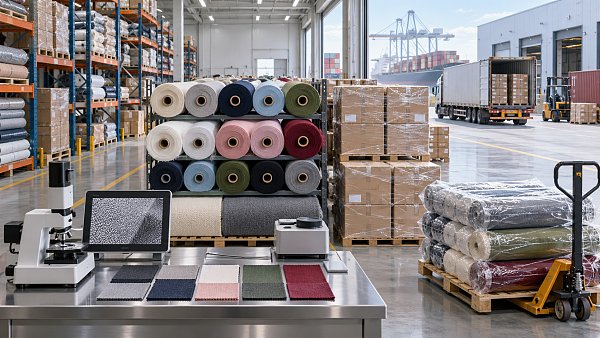
 Fabrics & YarnsWhat drives textile procurement cost beyond the quoted fabric price?Textile procurement cost goes far beyond the quoted fabric price. Discover how freight, quality, MOQ, compliance, payment terms, and supplier reliability shape total sourcing cost.Textile Industry AnalystOct 07, 2026
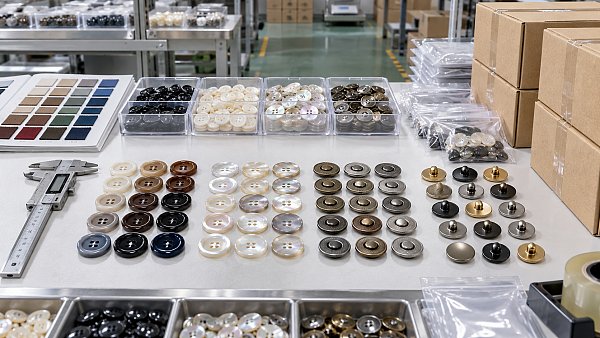
 Garment MfgWhat drives unit costs when buying garment buttons wholesale?Garment buttons wholesale costs depend on material, tooling, finish, MOQ, quality, packing, and freight. Learn how to compare true landed costs and source reliably.Textile Industry AnalystOct 06, 2026