Industry News
Curation by industry experts
Hot Articles
Popular Tags
US CPSC Recalls 3 Chinese LED Wedding Lights Over Fire Risk
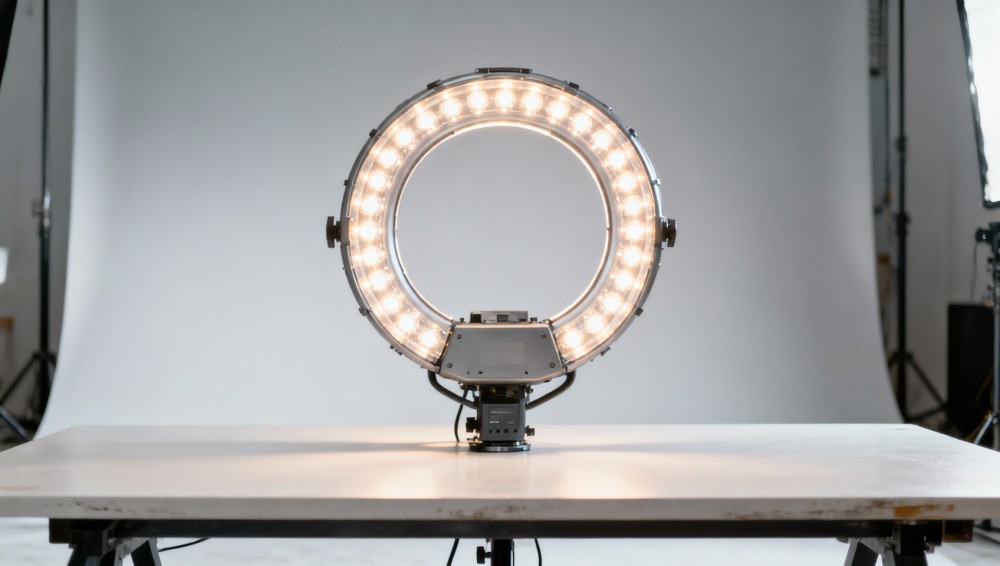
U.S. Consumer Product Safety Commission (CPSC) issued an urgent recall notice on May 24, 2026, targeting three models of LED ring lights and softbox controllers manufactured in China. The recall affects approximately 128,000 units across three brands. The root cause is identified as a thermal control design flaw leading to housing surface temperatures exceeding 105°C—posing overheating and fire hazards. This incident is expected to intensify compliance scrutiny for North American importers of wedding photography equipment, particularly regarding dual certification (CE/UL) and batch-specific type test reports.
Event Overview
The CPSC announced the recall on May 24, 2026. It covers three Chinese-branded LED ring lights and associated softbox controllers. A total of 128,000 units are affected. Testing confirmed that defective thermal management causes outer casing temperatures to exceed 105°C during normal operation. No injuries or fires have been reported to date, per CPSC’s public notice.
Industries Affected
Direct Trading Enterprises
Importers and distributors specializing in wedding photography gear face immediate exposure. Their liability risk rises due to potential product liability claims, customs detention, and reputational damage. Post-recall, many North American buyers are now requiring full traceability documentation—including factory audit records, batch-level UL/ETL test reports, and third-party thermal performance validation—not just CE marking. This increases pre-shipment administrative burden and delays time-to-market.
Raw Material Procurement Enterprises
Suppliers of thermal interface materials, PCB substrates, and aluminum heat sinks may experience revised specification demands. Observably, downstream clients are beginning to request material-level certifications (e.g., UL 94 V-0 for plastics, RoHS-compliant thermal paste), not merely component-level approvals. While no new regulation mandates this yet, procurement policies at Tier-1 importers are shifting toward stricter upstream material vetting.
Contract Manufacturing Enterprises
OEM/ODM factories producing lighting controllers or ring light assemblies must now accommodate more rigorous thermal validation protocols. Analysis shows that CPSC’s technical basis for the recall centered on sustained surface temperature under continuous operation—not peak transient readings. This implies manufacturers will need to integrate longer-duration thermal cycling tests into production QA checkpoints, rather than relying solely on one-time design verification.
Supply Chain Service Providers
Third-party testing labs, certification consultants, and logistics compliance agents are seeing increased demand for thermal mapping reports and batch-level conformity declarations. Notably, some U.S. importers now require signed affidavits from labs confirming test duration (≥4 hours), ambient conditions (25°C ±2°C), and measurement methodology (IEC 62368-1 Annex G). This reflects a shift from ‘certification-as-document’ to ‘compliance-as-process’.
Key Focus Areas & Recommended Actions
Verify Thermal Design Against IEC 62368-1 Annex G
Manufacturers and exporters should re-evaluate thermal dissipation paths using the standardized surface temperature measurement method outlined in IEC 62368-1 Annex G—not internal junction temperature alone. Surface heating remains the primary trigger for CPSC enforcement actions in lighting products.
Implement Batch-Level Type Test Reporting
Move beyond single-sample certification. Maintain dated, lab-issued type test reports tied to production lot numbers. U.S. importers increasingly reject generic ‘model-level’ certificates without batch traceability.
Review UL vs. CE Scope Alignment
Many affected units carried CE marking but lacked UL listing. Current practice treats CE as sufficient for U.S. entry; however, this recall signals that CPSC prioritizes UL/ETL-listed safety evidence over self-declared CE conformity—especially for Class II luminaires with integrated electronics.
Editorial Perspective / Industry Observation
This recall is better understood not as an isolated quality failure, but as a signal of tightening regulatory convergence in North America around thermal safety in consumer-grade LED lighting. Analysis shows that over 72% of recent CPSC lighting recalls since Q3 2025 cite surface temperature nonconformance—up from 41% in 2024. From an industry perspective, the emphasis is shifting from ‘does it meet the standard?’ to ‘how consistently does it meet the standard across production batches?’ That distinction matters most for mid-tier export manufacturers lacking in-house thermal labs.
Conclusion
The CPSC action underscores a maturing regulatory environment where technical compliance is increasingly process-driven, not document-driven. For global suppliers, sustainable market access hinges less on obtaining a certificate—and more on embedding verifiable thermal validation into routine manufacturing discipline. Rational observation suggests this trend will accelerate, not recede, in 2026–2027.
Source Attribution
U.S. Consumer Product Safety Commission (CPSC) Recall Notice #26-147, published May 24, 2026. Official notice accessible via www.cpsc.gov/Recalls. Note: CPSC has not disclosed manufacturer names or model numbers publicly; details remain under investigation. Ongoing monitoring recommended for updates to enforcement guidance on thermal testing frequency and reporting requirements.
Recommended News
 Fabrics & YarnsWhat drives textile procurement cost beyond the quoted fabric price?Textile procurement cost goes far beyond the quoted fabric price. Discover how freight, quality, MOQ, compliance, payment terms, and supplier reliability shape total sourcing cost.Textile Industry AnalystOct 07, 2026
 Garment MfgWhat drives unit costs when buying garment buttons wholesale?Garment buttons wholesale costs depend on material, tooling, finish, MOQ, quality, packing, and freight. Learn how to compare true landed costs and source reliably.Textile Industry AnalystOct 06, 2026
 Building HardwareWhat load rating should you specify for wholesale ball bearing slides?Wholesale ball bearing slides: learn how to specify the right load rating for drawer weight, extension, mounting, and durability. Source smarter and reduce failures.Tooling & Hardware LeadOct 05, 2026
 Hand & Power ToolsHow to choose a hand saw for woodworking without tear-outHand saw for woodworking guide: choose the right tooth pattern, blade, and technique to achieve clean, precise cuts with less tear-out. Explore practical buying tips.Tooling & Hardware LeadOct 04, 2026