Industry News
Curation by industry experts
Hot Articles
Popular Tags
Vietnam Tightens Import Rules for Wedding Photo LED Lights
Starting on October 1, 2026, Vietnam will require imported LED soft lights used in wedding photography to clear two compliance gates before entry: QCVN 112:2026 energy efficiency Grade II and IEC 62471 photobiological safety Class 1. The change matters because it shifts import access from a product-specification issue to a documentation and certification issue, directly affecting exporters, importers, procurement teams, testing and certification workflows, and delivery planning in the Commercial LED segment.
What the New Requirement Formally Covers
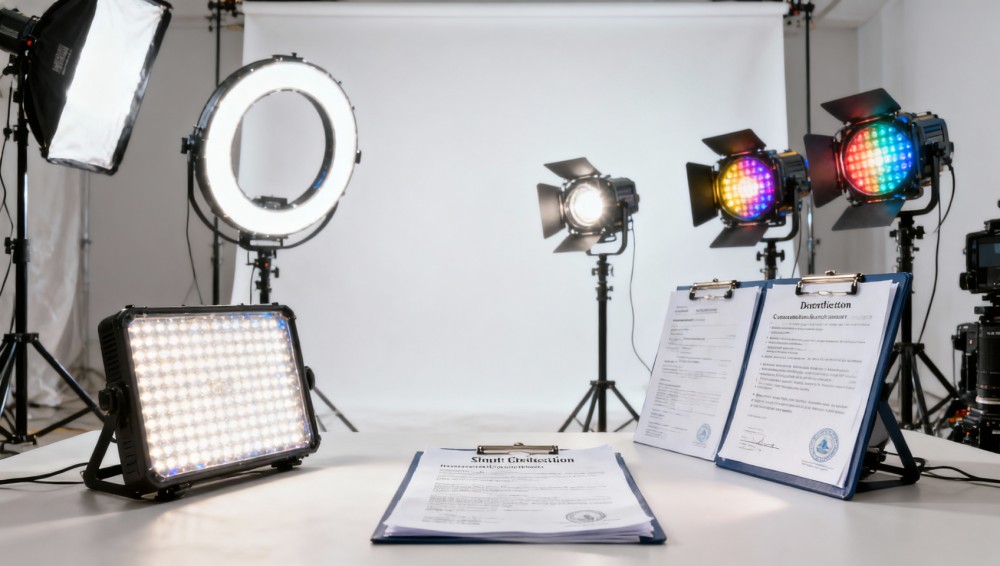
According to the provided event summary, STAMEQ announced on July 9, 2026 that from October 1, 2026, all imported LED soft lighting products for wedding photography must obtain dual certification before import. The scope expressly includes ring lights, panel lights, and RGB dimming devices used for this application. The required certifications are QCVN 112:2026 energy efficiency Grade II and IEC 62471 photobiological safety Class 1.
The same summary states that products without the required certificates will be refused by Ho Chi Minh City Customs. The stated consequence is a risk to delivery stability for the Commercial LED category.
Where the Pressure Will Show Up in the Supply Chain
Export transactions now depend more heavily on pre-shipment compliance readiness
From an industry perspective, exporters shipping wedding photography LED soft lights into Vietnam may be affected first because the rule ties market access to dual certification rather than only to product availability. The business impact is likely to appear in shipment release, customs clearance preparation, and delivery commitments. What deserves closer attention is whether product files, certification records, and shipment documents are aligned before dispatch.
Procurement teams face a narrower acceptable supplier pool
For buyers and sourcing teams, the requirement may change how suppliers are screened. Analysis shows that purchase decisions for ring lights, panel lights, and RGB dimming equipment intended for the Vietnam market may need to place greater weight on certification status and document completeness. The practical issue is not only price or lead time, but whether the supplier can support the two required compliance conditions for import.
Manufacturers and integrators may need tighter model-level document control
Manufacturers, assemblers, and product integrators involved in this product category may feel the impact through technical file management and product classification. Observably, when customs rejection is explicitly tied to missing certificates, model matching, specification consistency, and document traceability become more sensitive points in export execution. This is especially relevant where multiple variants such as ring lights, panel lights, and RGB dimming products are sold under related commercial lines.
Testing and certification service workflows become part of delivery risk management
Certification-related service providers and compliance teams may also see increased pressure because the import rule links certification status to customs acceptance. Analysis shows that the timing of test reports, certification issuance, and document handoff could become a factor in shipment scheduling. Even where demand remains unchanged, the path to delivery becomes more dependent on compliance processing.
What Companies Should Check Now
Review whether the covered product range is correctly mapped
Companies dealing in wedding photography LED soft lights should first verify whether their exported or procured models fall within the stated scope, including ring lights, panel lights, and RGB dimming devices. This is a practical compliance screening step, not a conclusion about all LED lighting products more broadly.
Confirm dual-certification readiness before shipment decisions
Analysis shows that the key operational question is whether both QCVN 112:2026 Grade II and IEC 62471 Class 1 requirements can be demonstrated in a form acceptable for import. Where shipments are scheduled close to the October 1, 2026 implementation date, companies may need to pay closer attention to certification status, supporting records, and the consistency of commercial and technical documentation.
Watch execution language and customs-facing documentation closely
The provided information states the import requirement and the rejection risk for uncertified goods, but it does not provide fuller execution detail. For that reason, companies should continue to watch for later official wording, customs-facing document expectations, and any market-facing clarification that could affect filing practice, document review, or shipment release handling.
Adjust delivery and sourcing plans where Vietnam-bound orders are involved
Observably, this is also a supply planning issue. Businesses serving Vietnam-bound orders in the Commercial LED segment may need to reassess delivery promises, procurement timing, and supplier qualification checks where wedding photography lighting products are involved. This should be understood as a risk-control measure rather than evidence of a confirmed market-wide outcome.
Why This Looks Like an Execution Signal, Not Just a Policy Headline
Analysis shows that this development is more than a general standards update because the provided summary connects the dual-certification requirement directly with customs refusal in Ho Chi Minh City. That makes the change closer to an execution signal than a distant policy discussion. At the same time, it is still appropriate to distinguish confirmed facts from broader market assumptions: the rule change and refusal risk are stated, while the pace of wider market adjustment, supplier adaptation, and downstream commercial effects still require observation.
What deserves closer attention is how consistently the requirement is reflected in compliance workflows, procurement specifications, and trade documentation over time. Industry participants should treat this as an implemented access condition for the covered products, while continuing to monitor how practice develops around certification presentation and shipment handling.
How This Update Is Best Understood at This Stage
At this stage, the reported change is best understood as a concrete import compliance requirement for wedding photography LED soft lights entering Vietnam from October 1, 2026, with direct implications for certification readiness and delivery reliability. The most reasonable reading is not that every market consequence is already settled, but that the threshold for compliant entry has clearly been raised for the covered product group. For companies active in related exports and procurement, the immediate issue is operational preparedness rather than broad strategic speculation.
Basis of This Article and What Still Needs Verification
This article is based on the user-provided news title, event date, and event summary. For developments of this type, commonly relevant source categories may include official notices, publications from regulatory authorities, customs or trade administration information, industry association releases, standard-setting documents, and reporting by established trade media.
No specific official source link was provided in the input, so the underlying notice and any later implementing materials still need ongoing verification. Further observation should focus on any detailed implementation language, certification enforcement approach, customs documentation expectations, tender or procurement specification changes, market feedback, and how affected companies execute compliance in practice.
Recommended News
 Home DecorWhich decor exhibition in the USA best fits a home decor sourcing trip?Decor exhibition USA guide: compare High Point Market, Las Vegas Market, NY NOW, and HD Expo to choose the best event for your home decor sourcing trip.Interior Sourcing LeadOct 08, 2026
 Fabrics & YarnsWhat drives textile procurement cost beyond the quoted fabric price?Textile procurement cost goes far beyond the quoted fabric price. Discover how freight, quality, MOQ, compliance, payment terms, and supplier reliability shape total sourcing cost.Textile Industry AnalystOct 07, 2026
 Garment MfgWhat drives unit costs when buying garment buttons wholesale?Garment buttons wholesale costs depend on material, tooling, finish, MOQ, quality, packing, and freight. Learn how to compare true landed costs and source reliably.Textile Industry AnalystOct 06, 2026
 Building HardwareWhat load rating should you specify for wholesale ball bearing slides?Wholesale ball bearing slides: learn how to specify the right load rating for drawer weight, extension, mounting, and durability. Source smarter and reduce failures.Tooling & Hardware LeadOct 05, 2026