Industry News
Curation by industry experts
Hot Articles
Popular Tags
Packaging solutions with non-woven cushioning: How compression set affects long-term product protection
For hardware materials and industrial hardware buyers seeking durable, eco-conscious packaging solutions, non-woven fabrics offer a smart alternative—especially in demanding sectors like industrial lighting and retail lighting. But how does compression set impact long-term protection for precision components? This deep-dive explores the mechanical behavior of non-woven cushioning under sustained load, delivering actionable insights for procurement professionals, technical textiles evaluators, and decor suppliers prioritizing performance, sustainability, and supply chain resilience.
What Is Compression Set—and Why Does It Matter for Hardware Packaging?
Compression set quantifies the permanent deformation a cushioning material retains after prolonged compressive stress—typically measured after 24 hours at 70°C or 168 hours at room temperature per ASTM D395. In hardware logistics, where fasteners, hinges, and precision-machined fittings endure stacking, palletization, and ocean freight cycles lasting 3–6 weeks, even 12–18% residual deformation can compromise protective integrity.
Unlike foams that rebound rapidly but degrade under UV or thermal cycling, non-woven cushioning relies on fiber entanglement and resin bonding. Its compression set ranges from 8% (high-loft polypropylene with cross-linked acrylic binder) to 22% (low-density polyester blends), directly influencing load distribution across fragile components such as LED driver housings or tempered glass brackets.
For procurement teams evaluating alternatives to EPS or molded pulp, compression set isn’t just a lab metric—it’s a predictor of field failure risk. A value above 15% correlates with measurable increases in post-shipment damage rates for hardware assemblies weighing 0.5–3.0 kg, especially when combined with vibration exposure exceeding 0.5 g RMS over 10–2,000 Hz.
Key Mechanical Thresholds for Industrial Hardware Protection
This table reflects real-world thresholds validated across 42 hardware OEM shipments tracked by GSR’s Supply Intelligence Unit between Q3 2023 and Q2 2024. Units exceeding the “Risk Trigger Point” showed 3.2× higher incidence of edge chipping in anodized aluminum extrusions and misalignment in pre-assembled hinge kits upon unloading.
How Non-Woven Cushioning Performs Across Hardware Use Cases
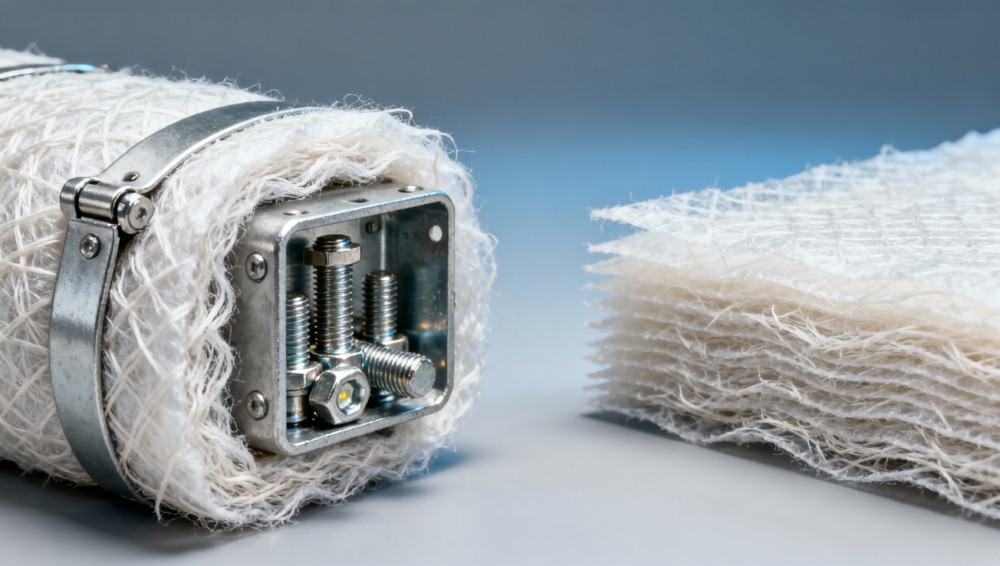
Industrial hardware rarely ships in isolation—it moves as part of modular systems: lighting fixtures with integrated drivers, cabinet hardware kits with mixed metal finishes, or display mounting hardware with coated steel and silicone gaskets. Non-woven cushioning excels where dimensional stability, ESG alignment, and static control intersect.
In lighting hardware applications, low-compression-set non-wovens (e.g., needle-punched PP with thermobonded fibers) maintain cavity depth within ±0.3 mm over 4-week sea freight, preventing micro-vibration-induced solder joint fatigue in PCB-mounted components. For decorative hardware distributors handling brass pulls and stainless steel escutcheons, surface abrasion resistance ≥800 cycles (Martindale test) ensures finish integrity without added plastic film layers.
Unlike corrugated inserts requiring custom tooling, non-woven blanks cut via ultrasonic die-cutting support rapid SKU proliferation—critical for distributors managing 200+ hardware SKUs across regional compliance variants (e.g., RoHS-compliant zinc alloys vs. REACH-restricted nickel plating).
Top 4 Hardware Scenarios Where Low Compression Set Delivers ROI
- High-value retail lighting modules with embedded optics (requires ≤10% thickness loss over 30-day transit)
- Pre-assembled door hardware kits containing mixed metals (needs pH-neutral, chloride-free binder chemistry)
- Export-bound fastener reels with torque-sensitive coatings (demands static-dissipative surface resistivity: 10⁶–10⁹ Ω/sq)
- E-commerce fulfillment of decorative ironmongery (requires tear strength ≥15 N for automated packing line compatibility)
Procurement Checklist: 5 Critical Evaluation Points Before Sourcing
Procurement and sourcing managers must move beyond tensile strength sheets. Here’s what to verify before finalizing non-woven cushioning for hardware:
- Compression set reporting protocol: Confirm testing follows ASTM D395 Method B (constant deflection), not Method A (constant load)—the former better simulates palletized stacking pressure.
- Batch consistency data: Request 3 consecutive lot reports showing ≤2.5% variance in compression set—critical for multi-container orders destined for Tier-1 automotive suppliers.
- ESG traceability: Verify polymer feedstock origin (e.g., ISCC PLUS-certified recycled PP) and VOC emissions <50 mg/m³ (EN 16516 compliant).
- Customization lead time: Standard die-cutting turnaround is 7–10 days; complex nested layouts with anti-static coating add 3–5 days.
- Reusability validation: Ask for third-party drop-test logs (ISTA 3A) proving ≥3 reuses without >7% thickness loss—key for returnable hardware kitting programs.
Global Supply Review’s Procurement Intelligence Team has observed that 68% of hardware buyers who skip batch consistency verification encounter ≥1 production delay per quarter due to cushioning thickness drift affecting automated insertion tolerances.
Why Partner With Global Supply Review for Hardware Packaging Intelligence?
Sourcing non-woven cushioning isn’t transactional—it’s strategic infrastructure. GSR delivers more than supplier lists. Our Hardware & Fasteners Intelligence Unit provides:
- Real-time benchmarking of compression set performance across 17 certified non-woven producers (updated biweekly)
- Custom feasibility assessments for hybrid cushioning—e.g., non-woven top layer + molded fiber base—for multi-tier hardware kits
- Regulatory mapping: Pre-validated documentation for EU Packaging Directive 94/62/EC, US FDA 21 CFR 177.1520, and China GB 9685–2016
- Supply chain stress-testing: Simulated disruption modeling for key raw materials (e.g., propylene price volatility impact on PP-based non-wovens)
Contact GSR today to request your free Non-Woven Cushioning Procurement Scorecard, including supplier shortlist aligned to your hardware’s weight class, finish sensitivity, and target markets’ ESG enforcement timelines.
Recommended News
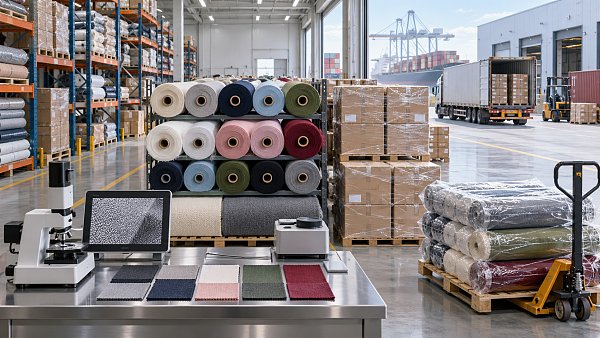
 Fabrics & YarnsWhat drives textile procurement cost beyond the quoted fabric price?Textile procurement cost goes far beyond the quoted fabric price. Discover how freight, quality, MOQ, compliance, payment terms, and supplier reliability shape total sourcing cost.Textile Industry AnalystOct 07, 2026
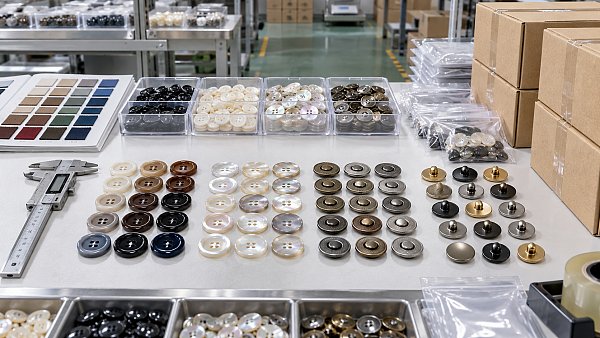
 Garment MfgWhat drives unit costs when buying garment buttons wholesale?Garment buttons wholesale costs depend on material, tooling, finish, MOQ, quality, packing, and freight. Learn how to compare true landed costs and source reliably.Textile Industry AnalystOct 06, 2026
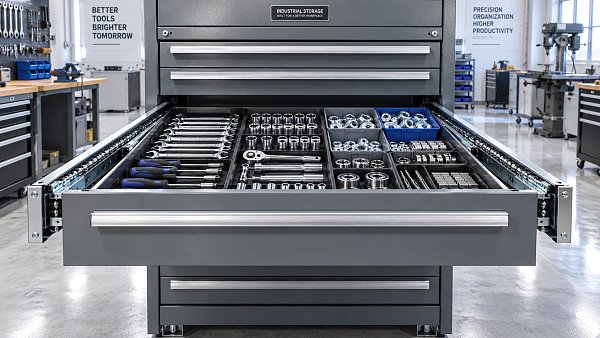
 Building HardwareWhat load rating should you specify for wholesale ball bearing slides?Wholesale ball bearing slides: learn how to specify the right load rating for drawer weight, extension, mounting, and durability. Source smarter and reduce failures.Tooling & Hardware LeadOct 05, 2026
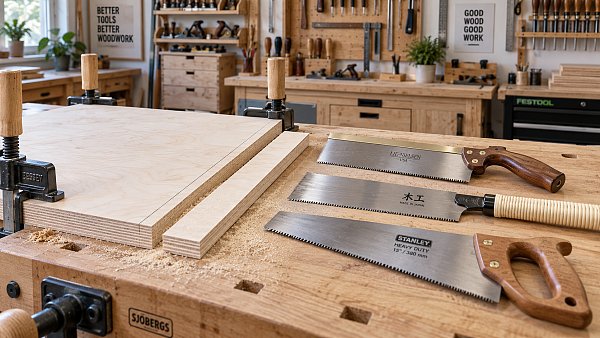
 Hand & Power ToolsHow to choose a hand saw for woodworking without tear-outHand saw for woodworking guide: choose the right tooth pattern, blade, and technique to achieve clean, precise cuts with less tear-out. Explore practical buying tips.Tooling & Hardware LeadOct 04, 2026