Industry News
Curation by industry experts
Hot Articles
Popular Tags
Offset Printing Machines for Books: Speed vs Print Quality
Choosing the right offset printing machines for books means balancing production speed with the print quality that publishers, printers, and procurement teams cannot afford to compromise. For technical evaluators, the real challenge lies in comparing throughput, registration accuracy, ink consistency, and substrate compatibility to identify equipment that delivers both operational efficiency and reliable long-run performance.
In commercial book production, that balance is rarely theoretical. A machine that runs 12,000 to 18,000 sheets per hour may look attractive on a cost-per-unit basis, yet poor register control, unstable density, or limited paper handling can erase those gains across a 50,000-copy run.
For technical assessment teams, the best buying decision usually comes from a structured comparison of print engine stability, makeready time, maintenance frequency, workflow integration, and total lifetime output. When offset printing machines for books are evaluated through that wider lens, speed and quality become linked variables rather than opposing goals.
Why Speed and Print Quality Must Be Evaluated Together
Book printing is a high-volume, margin-sensitive segment where small technical differences can create major operational effects. A press that saves 8 minutes per job changeover and reduces waste by 1.5% may outperform a nominally faster machine over a 3-shift production week.
This matters even more for printers serving multiple book categories. Educational books, monochrome text blocks, illustrated trade books, and art-oriented short runs all place different demands on plate change speed, color stability, and paper range, from lightweight text stock around 60 gsm to coated sheets above 150 gsm.
The Cost of Prioritizing Speed Alone
A high-speed configuration can look efficient during factory demonstrations, but technical buyers should test what happens after the first 2,000 or 5,000 sheets. If ink-water balance drifts, ghosting appears, or side-lay accuracy weakens, the machine may generate rework, spoilage, and downstream binding issues.
In book manufacturing, defects are cumulative. A register shift of even ±0.1 mm to ±0.2 mm across signatures can affect folding precision, page alignment, and image sharpness. At scale, that translates into higher inspection loads and slower finishing throughput.
The Risk of Overvaluing Quality Without Throughput Analysis
The reverse mistake is also common. Some presses deliver excellent image consistency but require longer makeready cycles, more manual adjustment, or slower stable production speeds. For plants with recurring runs above 10,000 copies, those inefficiencies can raise unit cost significantly.
Technical evaluators therefore need a realistic operating window. The useful question is not the top advertised speed, but the sustainable speed at acceptable density variation, acceptable waste, and acceptable operator intervention over 6 to 10 production hours.
The comparison below highlights how offset printing machines for books should be reviewed across linked production variables rather than isolated specifications.
The key takeaway is straightforward: the best offset printing machines for books are not simply the fastest units on paper. They are the machines that maintain acceptable print quality at commercially meaningful speeds while keeping waste, downtime, and finishing problems within predictable limits.
Core Technical Criteria for Evaluating Offset Printing Machines for Books
A technical review should move through a fixed checklist. In most procurement exercises, 5 to 7 criteria are enough to separate marketing claims from real production value. For book applications, four areas usually deserve the closest attention: registration, paper handling, ink control, and workflow integration.
Registration Stability and Signature Consistency
Books depend on repeatable signature accuracy. Even when content is mostly text, front-to-back register and lateral consistency affect readability, trimming, and binding quality. Technical evaluators should ask how the press performs over 10,000 to 30,000 impressions on the same stock, not only during the first setup stage.
What to Verify During Testing
- Register deviation tolerance during steady-state running
- Sheet transfer stability at different press speeds
- Performance on lightweight paper, common in book blocks
- Repeatability between Job 1 and Job 2 using the same settings after 24 to 72 hours
Paper Range and Substrate Compatibility
Many book printers handle more than one format in the same month. A machine must process uncoated text stock, coated inserts, and in some cases heavier cover materials without excessive adjustment. Paper range is therefore not a secondary feature; it directly affects press utilization and scheduling flexibility.
For example, a plant running 70 gsm text paper, 90 gsm offset stock, and 128 gsm coated inserts will benefit from feeder and delivery systems that maintain sheet control across changing thickness levels. If the press struggles with curl, static, or feed variation, print quality will deteriorate before speed targets are reached.
Ink Control, Water Balance, and Image Uniformity
For monochrome titles, consistency may matter more than color complexity. For illustrated books, both are essential. Technical teams should examine density drift across 30-minute, 2-hour, and full-shift intervals, and check whether the operator needs repeated manual correction to keep results within tolerance.
Offset printing machines for books should deliver even solids, stable halftones, and clean text edges. In practical terms, that means low tendency toward emulsification problems, limited scumming risk, and controlled variation on mixed coverage pages.
Automation and Workflow Integration
Automation does not only reduce labor. It can also stabilize output by limiting operator-dependent variation. Semi-automatic or fully automated plate change, preset ink keys, CIP3/CIP4 connectivity, and centralized control consoles can cut changeover time from 20 to 30 minutes down to 8 to 15 minutes in many routine jobs.
For procurement teams comparing vendors across regions, this area often reveals hidden value. Two presses with similar print specs may differ materially in setup repeatability, data transfer accuracy, and the amount of operator intervention needed per shift.
The table below can be used as a practical scoring framework during supplier comparison and on-site technical review.
Using a scoring approach helps technical evaluators avoid overemphasizing any single feature. In practice, a machine with slightly lower peak speed but better waste control and faster repeat setup often generates a stronger total return.
How to Match Machine Configuration to Book Production Scenarios
Not all book plants require the same press strategy. A procurement decision should reflect job mix, average run length, format variation, finishing layout, and labor capability. Technical evaluation becomes more accurate when the machine is matched to the plant’s dominant production pattern rather than a generic “best press” concept.
Scenario 1: High-Volume Textbook and Educational Printing
These environments usually prioritize throughput, long-run stability, and low spoilage. Orders may range from 20,000 to 100,000 copies, with repeated formats and predictable stocks. In this case, offset printing machines for books should offer durable feeder systems, efficient plate changes, and strong register stability over extended runs.
A useful benchmark is whether the machine can maintain stable output over 2 consecutive shifts with only planned maintenance stops. If not, nominal speed advantages may not hold under real production loads.
Scenario 2: Mixed Commercial Book Printing
Plants handling novels, illustrated books, academic references, and inserts often need flexibility more than maximum speed. Here, fast job switching, reliable presetting, and broad substrate handling may be worth more than a 10% increase in top press speed.
Technical buyers should pay attention to how many adjustment steps are needed between jobs, how long wash-up cycles take, and whether the control system stores repeatable parameters. Even a 5-minute reduction per changeover becomes significant when a plant performs 6 to 10 job changes per day.
Scenario 3: Quality-Sensitive Illustrated and Premium Titles
Where image fidelity is critical, stable color performance, smooth tonal transitions, and sheet handling precision take priority. This does not remove the need for productivity, but it changes the threshold. Technical evaluators may accept a lower sustainable speed if the machine demonstrates better density control and fewer visible defects across photo-heavy pages.
A 4-Step Matching Process
- Map the top 3 job types by monthly volume and run length.
- Identify the most common paper weights and trim formats.
- Measure current bottlenecks in makeready, print stability, or finishing alignment.
- Test candidate presses against those exact conditions instead of showroom averages.
This process is especially valuable for global sourcing teams that compare equipment from multiple manufacturing regions. It keeps the assessment focused on plant reality, not sales presentation structure.
Procurement Risks, Service Factors, and Long-Term Decision Quality
A technically suitable press can still become a weak investment if support conditions are unclear. For B2B buyers, the evaluation should extend beyond machine output into spare parts lead times, service response, installation planning, and operator training requirements. These factors often determine how quickly production value is realized after purchase.
Common Procurement Risks
- Comparing quoted top speed instead of verified sustainable speed
- Skipping paper-specific print trials before final selection
- Underestimating training needs for automated control systems
- Not confirming spare parts delivery windows, such as 48 hours versus 2 to 4 weeks
Service and Lifecycle Considerations
For most technical evaluators, lifecycle reliability matters as much as day-one performance. Ask how often preventive maintenance is recommended, what the standard wear parts list includes, and whether remote diagnostics are available. A machine that needs fewer unplanned interventions per quarter may have greater value than one with higher nominal output.
Installation and ramp-up also deserve structured review. Depending on press format and plant readiness, delivery to commissioning may take 6 to 12 weeks or longer. Operator training can require an additional 3 to 7 days for baseline use, with more time needed for advanced automation features.
Supplier Evaluation Checklist
The final selection should combine technical fit with sourcing reliability. Global buyers often use a weighted matrix to reduce decision bias across procurement, engineering, and production teams.
For organizations managing cross-border sourcing, a structured support review can be as decisive as the press specification itself. This is where intelligence-led sourcing platforms such as Global Supply Review add value by helping procurement teams compare technical, operational, and supplier-side risk factors within a broader manufacturing context.
Practical Questions Technical Evaluators Should Ask Before Approval
What is the real operating speed for our book mix?
Ask for the speed range at which the machine can consistently hold acceptable quality on your actual paper set. A useful answer should distinguish between maximum rated speed and stable speed for 70 gsm, 90 gsm, or coated insert stock.
How much waste is typical at startup and changeover?
Waste figures affect cost directly. For recurring book work, compare how many sheets are needed to reach sellable quality after plate change, restart, and substrate switch. Lower waste often signals better presetting and process control.
Can the machine support future workflow requirements?
Even if current needs are basic, future growth may depend on tighter scheduling, data connectivity, and reduced labor intensity. Offset printing machines for books should be reviewed for how well they integrate with prepress data, quality tracking, and standardized repeat jobs over the next 3 to 5 years.
For technical evaluators, the most reliable purchase decision is rarely about choosing between speed or quality in isolation. It is about finding offset printing machines for books that sustain the right speed, on the right substrates, with the right level of register control, density stability, and service support for the plant’s actual production profile.
When procurement teams assess throughput, waste, automation, paper compatibility, and support readiness together, they gain a far clearer basis for capital approval and long-term operational planning. Global Supply Review supports that process with actionable B2B intelligence designed for sourcing managers, technical reviewers, and enterprise decision-makers navigating complex manufacturing choices.
If you are comparing suppliers, qualifying new equipment, or refining your sourcing strategy for packaging and printing operations, contact us to get a more tailored evaluation framework, consult product details, and explore broader solutions aligned with your production goals.
Recommended News
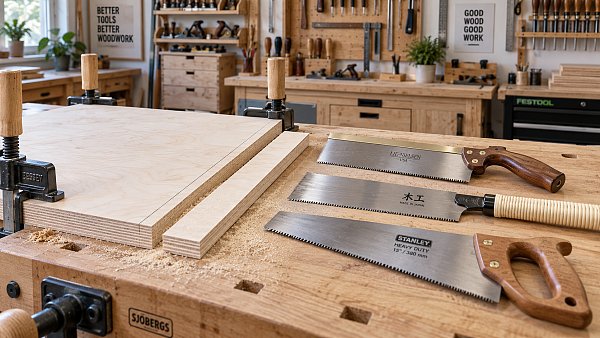
 Hand & Power ToolsHow to choose a hand saw for woodworking without tear-outHand saw for woodworking guide: choose the right tooth pattern, blade, and technique to achieve clean, precise cuts with less tear-out. Explore practical buying tips.Tooling & Hardware LeadOct 04, 2026
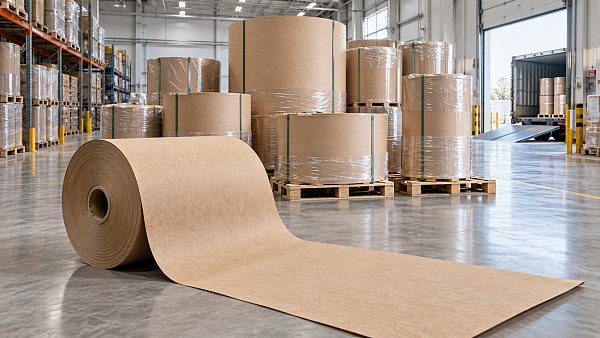
 Eco PackagingWhat affects the price of kraft paper rolls bought wholesale?Kraft paper rolls wholesale pricing depends on grade, basis weight, roll size, order volume, freight, and certifications. Learn how to compare landed costs and choose reliable value.Packaging Supply ExpertOct 03, 2026
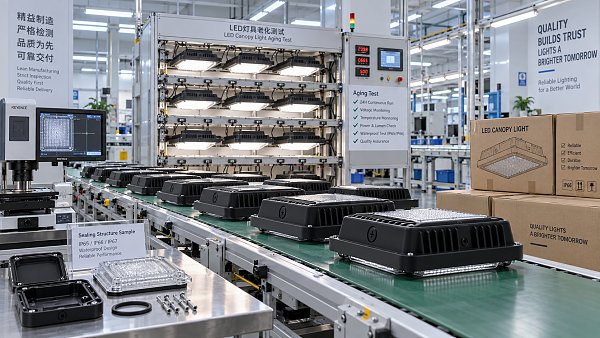
 Commercial LEDHow to evaluate a canopy lights factory before placing a bulk orderCanopy lights factory evaluation guide: verify specifications, compliance, quality control, capacity, and after-sales support before placing a bulk order.Commercial Tech EditorOct 02, 2026
 Commercial LEDHow to choose lighting systems that meet workplace safety needsLighting systems for workplace safety: learn how to control glare, improve visibility, meet environmental demands, and protect workers with reliable, compliant lighting choices.Commercial Tech EditorOct 01, 2026