Industry News
Curation by industry experts
Hot Articles
Popular Tags
Namshi Launches Phase 2 of Wedding Studio Pro for China Suppliers
Namshi, a leading e-commerce platform in the Middle East, launched Phase 2 of its ‘Wedding Studio Pro’ certification program on May 9, 2026. The update introduces stricter ESG due diligence requirements specifically for Chinese suppliers of wedding photography props, backdrops, and lighting equipment — notably shortening the ESG questionnaire response window from 72 to 48 hours and mandating concurrent upload of a valid BSCI or SEDEX audit report. This development is particularly relevant for cross-border B2B suppliers in the wedding production ecosystem and upstream manufacturing segments serving regional retail platforms.
Event Overview
On May 9, 2026, Namshi officially activated Phase 2 of its ‘Wedding Studio Pro’ certification initiative. Under this phase, all Chinese suppliers applying to list wedding photography props, staging backdrops, or professional lighting equipment must submit the ESG due diligence questionnaire within 48 hours of receipt (previously 72 hours) and simultaneously upload a current BSCI or SEDEX audit report. Applications failing to meet both conditions within the deadline will be automatically withdrawn from review.
Industries Affected
Direct Export Trading Enterprises
These firms act as registered sellers on Namshi and manage end-to-end listing, compliance, and fulfillment. They are directly subject to the new 48-hour ESG submission rule. The shortened timeline increases pressure on internal coordination between commercial, compliance, and operations teams — especially when third-party ESG reporting tools or external auditors are involved.
Manufacturing Suppliers (OEM/ODM)
While not always listed directly on Namshi, many Chinese manufacturers serve as primary sources for certified traders. Their capacity to provide timely ESG documentation — including factory-level audit reports and sustainability disclosures — now influences their eligibility as tier-1 suppliers. Delays or gaps in audit validity may trigger downstream listing rejections.
Supply Chain & Compliance Service Providers
Firms offering ESG questionnaire support, audit coordination, or BSCI/SEDEX preparation services face rising demand for rapid-response capacity. However, the 48-hour window leaves minimal room for iterative feedback or remediation — shifting service value toward pre-validated templates and standardized data packages rather than bespoke consulting.
Key Considerations and Recommended Actions
Monitor official communications for scope clarification
Confirm whether the 48-hour requirement applies only to initial applications or also to renewal submissions or post-listing audits. Namshi has not publicly specified whether exceptions apply for first-time applicants or for suppliers with prior audit history.
Verify audit report validity and format alignment
BSCI and SEDEX reports must be current (typically issued within the last 12 months) and uploaded in accepted file formats (e.g., PDF with full cover page and scope statement). Suppliers should pre-check report completeness — including facility name, address, and audit date — against Namshi’s seller portal requirements before submission.
Prepare standardized ESG response templates
Given the compressed timeline, companies should develop reusable internal templates for common ESG questionnaire modules (e.g., labor practices, environmental management, business ethics). These should be pre-reviewed by compliance staff and aligned with existing audit evidence to avoid last-minute validation delays.
Assign dedicated internal response coordinators
A single point of contact — with authority to approve responses and access audit documentation — should be designated per application cycle. This avoids bottlenecks across departments and ensures accountability for meeting the 48-hour deadline.
Editorial Observation / Industry Perspective
Observably, this change signals a tightening of operational due diligence at the platform level — not just a procedural adjustment. The 48-hour threshold appears calibrated to prioritize responsiveness as a proxy for organizational maturity, especially among non-native-market suppliers. Analysis shows that while the requirement targets ESG transparency, its enforcement mechanism (automatic termination) places greater weight on process discipline than on substantive ESG performance alone. From an industry standpoint, this shift is better understood as an early-stage signal of platform-led standardization — one that may inform similar timelines on other regional marketplaces in the Gulf Cooperation Council (GCC) over the next 12–18 months. It does not yet reflect broad regulatory mandate, but rather a commercial risk-mitigation protocol scaled for high-volume vendor onboarding.

In summary, Namshi’s updated ‘Wedding Studio Pro’ timeline reflects a growing emphasis on procedural rigor in cross-border supplier vetting — particularly for aesthetic and experiential product categories where supply chain visibility has historically been limited. Rather than indicating a sudden policy shift, it represents a measurable step toward platform-driven harmonization of ESG readiness expectations. Current stakeholders are advised to treat it as an operational benchmark — not a one-off compliance hurdle — and align internal workflows accordingly.
Source: Official Namshi seller portal announcement, dated May 9, 2026. Note: Ongoing observation is recommended for potential updates to acceptable audit types, language requirements for questionnaires, or phased rollout to additional product categories beyond wedding photography equipment.
Recommended News
 Office FurnitureWhen does a custom executive office desk justify its higher cost?Discover when a custom executive office desk is worth the investment—from tailored layouts and integrated technology to durable materials and long-term value.Interior Sourcing LeadSep 22, 2026
 Office FurnitureWhich high back ergonomic office chairs fit all-day desk work?High back ergonomic office chairs for all-day desk work: compare lumbar support, seat depth, armrests, recline, and materials to find a better fit.Interior Sourcing LeadSep 21, 2026
 Commercial LEDWhen does a 200W linear high bay provide enough light for a warehouse?Discover when a 200W linear high bay delivers sufficient warehouse lighting, with practical guidance on lumens, mounting height, aisle layout, and uniformity.Commercial Tech EditorSep 20, 2026
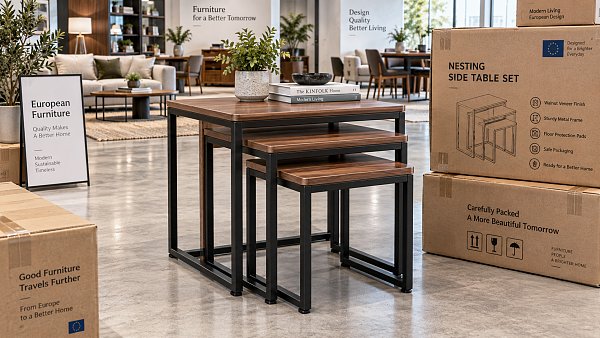
 Home DecorWhat to check before ordering wholesale nesting side tables in EuropeWholesale nesting side tables Europe: assess materials, stability, compliance, packaging, landed cost, and supplier reliability before ordering with confidence.Interior Sourcing LeadSep 19, 2026