Industry News
Curation by industry experts
Hot Articles
Popular Tags
Canton Fair Phase II 2026 Launches Green Compliance Zone for Wedding Photo Props
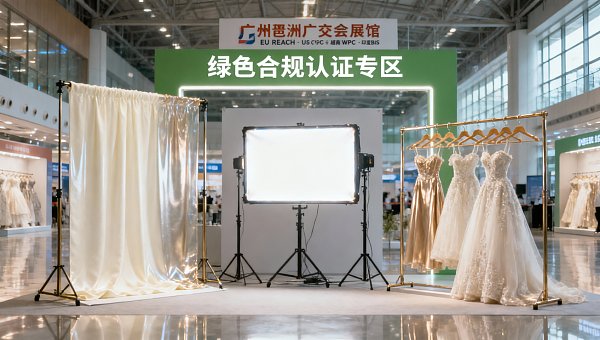
On April 22, 2026, Phase II of the 139th Canton Fair (Home & Consumer Goods Exhibition) opened at the Pazhou Complex in Guangzhou, introducing a first-time ‘Green Compliance Certification Corner’ dedicated to wedding photography props — signaling heightened regulatory expectations for export-oriented manufacturers serving global bridal and studio markets.
Event Overview
On April 22, 2026, the second phase of the 139th Canton Fair commenced in Guangzhou. For the first time, a designated ‘Green Compliance Certification Corner’ was established within the wedding photography props sector. It showcased Chinese-made backdrop boards, soft-lighting equipment, and eco-friendly garment storage systems certified under four regulatory frameworks: EU REACH, US CPSC, Vietnam WPC, and India BIS. As of opening day, procurement teams from 37 countries — including Germany, Poland, the UAE, and Mexico — conducted on-site factory audits and sample sealing, with order intent focused specifically on suppliers offering full, ready-to-submit compliance documentation (‘certification-ready’).
Industries Affected by This Development
Direct Export Trading Enterprises: These firms face intensified due diligence from international buyers who now treat certification readiness as a prerequisite for engagement — not just a differentiator. Impact includes tighter pre-shipment verification timelines and increased demand for traceable, auditable compliance records.
Manufacturers of Photography Backdrops & Studio Equipment: Producers of fabric-based backdrops, collapsible light modifiers, and display stands are directly affected, as their materials (e.g., PVC alternatives, flame-retardant coatings, adhesives) must meet multi-jurisdictional chemical and safety thresholds. Non-compliant inventory may face rejection or rework requests.
Suppliers of Bridal Apparel Storage & Handling Systems: Firms producing garment bags, hangers, and transport crates using recycled polymers or biodegradable laminates must now validate conformity across all four standards — especially regarding heavy metals, phthalates, and labeling requirements.
Third-Party Compliance & Certification Service Providers: Demand is rising for localized support in document preparation, test coordination, and audit readiness coaching tailored to this product category — particularly for small- and medium-sized enterprises lacking in-house regulatory expertise.
What Relevant Enterprises or Practitioners Should Focus On — And How to Respond Now
Monitor official updates on certification scope expansion
The current ‘Green Compliance Certification Corner’ covers only four jurisdictions and three product categories. From industry perspective, future phases may extend coverage to additional markets (e.g., Canada, South Korea) or new items (e.g., LED-powered props, battery-integrated lighting). Stakeholders should track subsequent announcements from the China Foreign Trade Center and provincial commerce departments.
Prioritize documentation readiness over standalone certifications
Analysis shows buyer behavior centers on ‘certification-ready’ status — meaning complete, verifiable, and consistently formatted documentation (test reports, declarations of conformity, material safety data sheets), not just certificate issuance. Suppliers should audit existing files for consistency, language accuracy, and alignment with latest versions of each standard.
Distinguish between regulatory signals and immediate operational requirements
This initiative reflects a growing expectation, not a mandatory entry barrier — yet. Observation suggests it functions as a de facto screening mechanism for high-intent buyers. Firms should avoid assuming compliance is optional, but also avoid premature investment in unconfirmed certification pathways before verifying target market priorities.
Prepare supplier-facing communication and internal cross-functional alignment
Manufacturers must align procurement (raw materials), production (process controls), QA (testing protocols), and sales (customer documentation handover). Current more suitable action is to draft a standardized ‘compliance dossier template’ for internal use and client sharing — covering test lab names, report IDs, validity dates, and applicable clauses per standard.
Editorial Perspective / Industry Observation
This development is better understood as an early-stage market signal — not yet a binding requirement, but one with clear operational weight. From industry angle, it reflects tightening convergence between trade fairs and regulatory gatekeeping functions, especially in visually driven, low-volume/high-margin segments like wedding photography. It also indicates that compliance is shifting from post-production verification to front-end commercial qualification. Continued observation is warranted on whether similar zones appear in other Canton Fair phases or at competing exhibitions (e.g., CIFF, HKTDC Hong Kong Houseware Fair), and whether buyer-led audits evolve into formalized third-party verification mandates.

Conclusion
This initiative underscores a structural shift: regulatory preparedness is becoming a baseline condition for market access in niche export categories — not merely a competitive advantage. Rather than interpreting it as an isolated fair feature, stakeholders should view it as part of a broader trend toward embedded compliance in B2B sourcing workflows. Current more appropriate understanding is that it marks the normalization of multi-market regulatory literacy among Chinese exporters — a capability now expected, not exceptional.
Information Sources
Main source: Official announcement and on-site reporting from the China Foreign Trade Center (CFTC), confirmed via Canton Fair Phase II 2026 press briefing (April 22, 2026).
Note: Expansion of certification scope beyond the four listed standards, or formal adoption of ‘certification-ready’ as a contractual term by major buyers, remains subject to ongoing observation and has not been confirmed.
Recommended News
 Export UpdatesThailand Launches RCEP Origin Verification for Chinese Wedding Photo PropsRCEP origin verification for Chinese wedding photo props is live in Thailand—unlock zero tariffs & faster clearance for HS 9405.40, 4202.92, 6307.90 exports now.Apr 23, 2026
 Fabrics & YarnsTurkey TSE Mandates AATCC 100-2024 for Antibacterial Wedding BackdropsAATCC 100-2024 is now mandatory for antibacterial wedding backdrops entering Turkey — ensure compliance, avoid customs delays, and secure market access before 1 June 2026.Textile Industry AnalystApr 23, 2026
 Export UpdatesCanton Fair Phase II 2026 Launches Green Compliance Zone for Wedding Photo PropsGreen Compliance Zone launched at Canton Fair 2026 for wedding photo props — EU REACH, US CPSC & more. Get certification-ready now!Apr 23, 2026
 Garment MfgIndia BIS Mandate for Wedding Apparel: IS 15620:2026 Effective July 2026India BIS mandates IS 15620:2026 for wedding apparel — bridal gowns, veils & formal wear must meet safety testing by July 2026. Act now to avoid port delays!Textile Industry AnalystApr 23, 2026