Industry News
Curation by industry experts
Hot Articles
Popular Tags
Aerosol Spray Cans: Key Compliance Issues to Check Before Importing
Before importing aerosol spray cans, quality and safety teams must verify more than labeling and packaging. From pressure resistance and valve integrity to dangerous goods classification and market-specific compliance, small oversights can trigger shipment delays, recalls, or regulatory penalties. This article highlights the key checkpoints that help importers reduce risk, protect end users, and maintain supply chain reliability.
For quality control managers and safety officers, aerosol spray cans sit at the intersection of packaging performance, chemical safety, transport compliance, and market access. A can that appears acceptable in a visual inspection may still fail in pressure retention, corrosion resistance, leak integrity, or documentation accuracy. In cross-border procurement, that gap often becomes expensive within 7–30 days of shipment, customs review, warehouse storage, or retail distribution.
Because aerosol spray cans are pressurized packages, import decisions should not rely on product appearance alone. Teams need a practical review framework covering container construction, valve and actuator compatibility, propellant classification, hazard communication, and destination-market documentation. When these checkpoints are built into supplier approval and pre-shipment inspection, importers can reduce rework, avoid detention, and improve supply chain predictability.
Why Aerosol Spray Cans Require a Higher Compliance Threshold
Unlike ordinary metal or plastic packaging, aerosol spray cans combine a pressure vessel, dispensing mechanism, and chemical formulation in one unit. That means compliance is not judged by one element but by the interaction of at least 4 layers: can body integrity, valve system performance, filling safety, and transport classification. If one layer fails, the entire shipment may be considered non-compliant.
For importers in consumer goods, industrial maintenance, automotive care, coatings, cleaners, or personal care, the risk profile changes by market. A product accepted in one country may require additional warning statements, language localization, or packaging test records in another. Safety teams should therefore separate “factory-ready” from “import-ready,” because the two are often not the same.
The Main Risk Categories Before Import
- Mechanical risk: deformation, burst pressure failure, seam weakness, dent sensitivity.
- Functional risk: valve leakage, poor spray pattern, blocked dip tube, actuator mismatch.
- Chemical risk: incompatibility between formula and lining, corrosion, propellant instability.
- Regulatory risk: incomplete labeling, dangerous goods errors, missing SDS, missing test evidence.
- Logistics risk: pallet segregation issues, temperature exposure above common storage limits such as 50°C.
Why Small Defects Create Large Import Costs
A minor leak rate across 1%–2% of a shipment can quickly become a warehouse incident if cartons are stored in enclosed areas. Similarly, incorrect UN classification or missing outer carton marks can stop a container at port even when the product itself is usable. In practical sourcing terms, compliance errors usually multiply across freight, storage, relabeling, disposal, and delayed replenishment cycles.
For B2B buyers managing repeated orders, the better approach is to set a pre-import review gate with pass/fail criteria. That gate should be applied before booking space, not after goods reach destination.
Core Product Checks: Can Body, Valve Integrity, and Pressure Performance
The first technical review should focus on whether aerosol spray cans can safely contain and dispense the intended formulation throughout filling, transport, storage, and use. In most sourcing programs, this means checking at least 6 product-level items: body dimensions, metal thickness consistency, seam quality, internal coating compatibility, valve crimp integrity, and pressure behavior under standard and elevated conditions.
Can Construction and Material Compatibility
Importers should confirm whether the container is tinplate, aluminum, or another approved material for the intended formula. Oil-based products, solvent-heavy cleaners, water-based formulations, and corrosive blends do not behave the same way inside aerosol spray cans. A lining suitable for one chemistry may fail in 30–90 days when exposed to another, causing rust, discoloration, pressure loss, or product contamination.
Minimum Questions for Supplier Technical Review
- What is the can material and nominal wall specification?
- Is there an internal lacquer or coating, and for which chemical families is it suitable?
- What are the tested filling volume and headspace limits?
- What burst or pressure resistance data can be shared?
- Has the valve been matched with the formula viscosity and spray requirement?
The table below gives a practical checklist that quality and safety teams can use during supplier qualification or first-order review of aerosol spray cans.
The key takeaway is that quality review should combine containment and dispensing performance. A can that holds pressure but sprays unevenly is still a commercial problem. Likewise, a good spray pattern cannot compensate for weak sealing or unstable internal compatibility.
Pressure, Leak, and Stability Testing Prior to Shipment
Quality teams should request documented test procedures rather than verbal confirmation. Depending on product category, common checks may include hot water bath testing, leak testing, pressure resistance testing, and visual inspection after conditioning. Even when local regulations differ, using a 3-stage verification process—empty can approval, filled sample validation, and pre-shipment batch inspection—can significantly reduce avoidable disputes.
For repeated imports, it is helpful to define acceptance thresholds in the quality agreement. This may include agreed sampling plans, zero tolerance for active leakage, limited tolerance for cosmetic denting on outer packaging, and batch traceability down to production date or filling line. Traceability becomes especially important if a defect is discovered 60–180 days after import.
Transport and Dangerous Goods Compliance Must Be Checked Early
Aerosol spray cans often move under dangerous goods rules because they are pressurized and may contain flammable or otherwise hazardous ingredients. Importers should verify transport classification before purchase order finalization, not after packing. By that stage, changing carton marks, documentation, or freight mode can affect lead time by 1–3 weeks.
Classification, Documentation, and Shipping Readiness
The basic compliance file should usually include a current Safety Data Sheet, transport classification details, product composition summary where required, and packaging or test evidence requested by carriers or local authorities. Safety managers should also check whether the shipment is moving by sea, air, or road, since each mode may impose different labeling, quantity, and packaging restrictions.
In practice, the most common breakdown is not the physical can itself but mismatched documentation. For example, the inner product label, outer carton marks, declaration paperwork, and master data in the ERP system must all describe the goods consistently. If one version states non-flammable while another references a flammable propellant, the shipment may be held for clarification.
Documents That Should Be Reviewed Before Booking
- Current SDS in the destination language if required.
- Transport classification and applicable UN-related details where relevant.
- Filled product specification and packaging configuration sheet.
- Outer carton marks, hazard symbols, and handling statements.
- Supplier declaration on storage temperature and shelf life, often 12–36 months depending on formulation.
The following table helps procurement and compliance teams align transport review with operational decision points.
What matters most is timing. If dangerous goods review begins only after finished goods are packed, buyers lose flexibility. Early classification saves time, avoids urgent relabeling, and supports more accurate landed cost planning.
Warehouse and Distribution Considerations
Import compliance does not end at the port. Safety teams should confirm whether destination storage conditions, ventilation controls, stacking limits, and local segregation rules are suitable for aerosol spray cans. A product that clears customs can still create a compliance gap if stored next to incompatible materials or exposed to excessive heat in last-mile distribution.
This is especially relevant for importers supplying multiple channels such as industrial distributors, retail chains, and e-commerce fulfillment centers. Each channel may have different carton handling expectations, shelf labeling needs, and incident reporting procedures.
Market-Specific Labeling and Regulatory Review
One of the most overlooked issues in aerosol spray cans imports is the assumption that a compliant factory label is globally acceptable. In reality, market-specific rules may require different hazard language, ingredient disclosure, bilingual text, consumer warnings, importer information, disposal statements, or recycling marks. A label redesign completed 5 days before shipment is often too late if approvals and print proofs are still pending.
What Quality and Safety Teams Should Validate
At minimum, teams should review whether the primary label, secondary packaging, and shipping carton communicate the same product identity and hazard profile. They should also confirm readability under actual pack size constraints. Small-volume aerosol spray cans may have limited panel space, which increases the risk of omitted warnings or unreadable text.
Practical Label Review Points
- Check language requirements for every destination market and channel.
- Verify batch code, manufacturing date, or expiry format if required.
- Confirm storage, use, and disposal instructions match the actual chemistry.
- Ensure importer or responsible entity information is complete and current.
- Cross-check artwork version control so old labels are not mixed into new production.
For first-time imports, artwork approval should be built into the sourcing timeline as a formal milestone. A realistic sequence may include 3–5 business days for technical review, 5–10 days for artwork revision, and another 3–7 days for final proof approval and print scheduling. Compressed timelines often increase error rates.
Common Labeling Mistakes That Trigger Delays
- Hazard icons on cartons do not match the retail can label.
- Storage warnings are translated inaccurately or omitted.
- Net content declaration differs between label file and shipping documents.
- Old importer address remains on one production batch.
- Promotional claims are added without regulatory review.
These errors are preventable, but only if compliance review happens before mass production. Once aerosol spray cans are filled and packed, relabeling can become labor-intensive and may introduce new traceability issues.
Supplier Qualification, Inspection Planning, and Ongoing Risk Control
Import success depends as much on supplier systems as on the aerosol spray cans themselves. A capable supplier should be able to explain process controls, lot traceability, component sourcing, test frequency, and change management. If they cannot show how valve batches, can bodies, and formulas are linked in production records, post-incident investigation becomes difficult.
A 5-Step Import Control Workflow
- Pre-qualification: collect specifications, SDS, sample data, and market requirements.
- Sample validation: test compatibility, spray function, leakage, and artwork accuracy.
- Production review: confirm approved components, fill parameters, and traceability setup.
- Pre-shipment inspection: inspect labels, cartons, lot coding, visual quality, and selected functional checks.
- Post-arrival monitoring: review warehouse handling, complaint trends, and corrective actions within the first 30–60 days.
This structured workflow gives procurement, QC, and EHS teams a common decision framework. It also helps avoid the recurring problem of fragmented accountability, where sourcing approves the supplier, logistics books the cargo, and safety reviews the goods only after dispatch.
Questions to Include in Your Supplier Audit
During an on-site or remote audit, ask how often production lines are calibrated, how non-conforming cans are segregated, and how component changes are approved. Even a small change in gasket material, propellant ratio, or actuator source can alter the performance of aerosol spray cans. Without a documented change control process, consistency between batches may weaken over time.
It is also wise to define escalation windows in writing. For example, suppliers should notify buyers within 24 hours of a major leak event, label mix-up, or test failure discovered after production. Fast notification can reduce field exposure and protect downstream distributors.
Procurement Advice for Repeat Orders
Repeat purchasing should not become automatic. Safety and quality teams should revalidate key documents every 6–12 months, especially when formulas, artwork, propellants, or destination markets change. A stable supplier can still create compliance gaps if customer claims, regulations, or logistics conditions evolve.
For high-volume importers, a scorecard approach often works well. Rate suppliers on 4 dimensions: defect rate, documentation accuracy, response time, and change control discipline. This turns aerosol spray cans sourcing into a measurable management process rather than a reactive issue-by-issue review.
Final Takeaway for Quality and Safety Decision-Makers
Importing aerosol spray cans safely requires more than checking appearance, count, and carton condition. Buyers need a disciplined process that verifies pressure resistance, valve integrity, material compatibility, transport classification, label accuracy, and supplier traceability. When these controls are built in early, companies can reduce delays, improve compliance confidence, and protect both users and distribution partners.
For procurement teams operating across packaging, industrial supplies, consumer goods, and related light manufacturing sectors, reliable intelligence matters as much as product cost. Global Supply Review supports decision-makers with practical sourcing insight, compliance-focused analysis, and market-ready guidance that helps turn technical requirements into workable import standards.
If you are reviewing new aerosol spray cans suppliers, entering a new market, or tightening your current import control system, now is the right time to benchmark your checklist and documentation flow. Contact us to discuss your sourcing priorities, request a tailored review framework, or learn more solutions for safer and more efficient cross-border procurement.
Recommended News
 Home DecorLuxury Watch Packaging: Details That Shape the Unboxing ExperienceLuxury watch packaging defines first impressions, perceived value, and brand prestige. Discover the key details that elevate unboxing, protection, and sustainable appeal.Interior Sourcing LeadMay 05, 2026
 Eco PackagingAluminum Beverage Cans: Cost Factors Behind Lightweight Can FormatsAluminum beverage cans cost more than unit price alone—explore how lightweight formats impact material spend, freight, efficiency, and ESG value to support smarter sourcing decisions.Packaging Supply ExpertMay 05, 2026
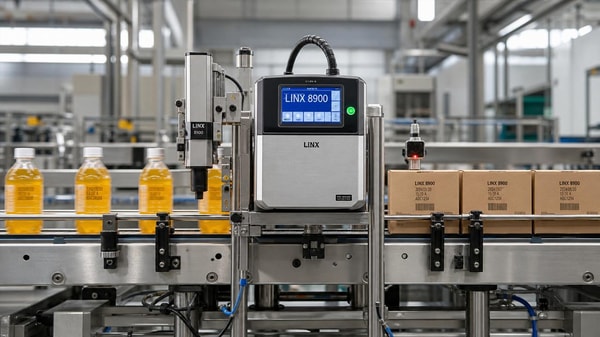
 Printing EquipmentContinuous Inkjet Printer Selection Tips for High-Speed Packaging LinesContinuous inkjet printer selection tips for high-speed packaging lines: compare uptime, ink adhesion, integration, maintenance, and total cost to choose the right coding solution.Packaging Supply ExpertMay 05, 2026
 Industrial FastenersStainless Steel Carriage Bolts: Where They Work Better Than Hex BoltsStainless steel carriage bolts work better than hex bolts in wood, outdoor, and public-facing projects. Learn when they improve safety, appearance, and corrosion resistance.Tooling & Hardware LeadMay 05, 2026