Industry News
Curation by industry experts
Hot Articles
Popular Tags
Blackout Curtain Manufacturer Comparison: Lead Times, Coating Quality, and Risk
Choosing the right blackout curtain manufacturer can determine whether your sourcing plan stays on schedule, meets quality standards, and avoids costly supply chain risks. For procurement teams, comparing lead times, coating consistency, compliance practices, and production reliability is essential before placing volume orders. This guide highlights the key factors buyers should assess to make smarter, lower-risk purchasing decisions.
Why blackout curtain sourcing has become more complex
In the past, many buyers evaluated a blackout curtain manufacturer mainly on quoted price, fabric weight, and basic sample appearance. That approach is no longer sufficient. Today, procurement teams face a market shaped by uneven freight conditions, tighter compliance expectations, more frequent order customization, and wider variation in coating technologies. As a result, manufacturer comparison has shifted from a simple vendor shortlist exercise to a broader risk assessment process.
The strongest market signal is that lead time stability now matters almost as much as unit cost. Hospitality, residential retail, commercial fit-out, and project buyers all expect more accurate delivery commitments, especially when blackout curtains are part of larger furnishing schedules. If curtain shipments slip, room installations, store launches, and contract handovers can be delayed. This raises the importance of comparing not only nominal lead times, but also the production systems behind them.
At the same time, coating quality has become a more visible point of differentiation. Buyers are paying closer attention to blackout performance, odor control, hand feel, durability after folding, and consistency across color lots. A blackout curtain manufacturer that performs well in sample development but struggles in bulk production can create hidden costs through claims, rework, and brand damage.
The key changes procurement teams are seeing now
Several practical changes explain why the market is under closer review. First, demand has moved toward shorter replenishment cycles and lower tolerance for production variance. Second, more customers are requesting flame retardant options, recycled content, lower-emission coatings, or specific testing documentation. Third, buyers are sourcing from a wider mix of regions, which increases the need to compare operational discipline rather than relying on country assumptions alone.
These changes affect how a blackout curtain manufacturer should be evaluated. Buyers now need to ask whether the factory controls weaving or knitting inputs, whether coating is done in-house or subcontracted, how many finishing lines are available, and how production planning works during peak seasons. The comparison is increasingly about supply chain visibility and process maturity, not just product specifications.
Trend snapshot for manufacturer comparison
Lead time is no longer just a number on a quotation
When comparing a blackout curtain manufacturer, the quoted lead time should be treated as a starting point rather than a final answer. Two suppliers may both offer 30 to 40 days, yet their risk profiles can be very different. One may have integrated greige fabric sourcing, coating, cutting, and packing under one management system. Another may rely on multiple outside processors, creating more scheduling uncertainty.
For procurement professionals, the more useful question is: what supports the lead time claim? Buyers should examine raw material inventory strategy, coating line capacity, order queue visibility, sample-to-bulk transition control, and peak-season overtime dependence. If a factory consistently needs schedule compression to meet standard delivery windows, the likelihood of errors and quality drift increases.
A reliable blackout curtain manufacturer will usually provide a more granular timeline, covering lab dips, sample approval, fabric preparation, coating, inspection, sewing, packing, and booking. This level of detail is often a signal of stronger planning discipline. It also helps buyers identify where delay risk is concentrated, especially for custom colors, special widths, or multi-layer constructions.
Coating quality has become the real separator between average and dependable suppliers
Blackout performance depends heavily on coating execution. In the current market, this is where many supplier differences become visible. Even when face fabric looks similar, the coating layer can vary significantly in opacity, smoothness, flexibility, smell, resistance to cracking, and wash or rub durability. Procurement teams should therefore avoid treating all blackout constructions as interchangeable.
A strong blackout curtain manufacturer typically has clearer process controls around coating thickness, curing temperature, line speed, and batch inspection. These controls matter because inconsistencies can show up later as pinholes, shade variation, edge stiffness, delamination, or customer complaints about chemical odor. Such problems are especially damaging in hospitality and residential channels, where end users interact directly with the product.
Another important change is that buyers increasingly balance blackout effectiveness with comfort and sustainability signals. Heavy chemical smell, excessive stiffness, and low perceived fabric quality can undermine the product even if light blocking performance is technically acceptable. This is why coating quality should be judged through both lab-based checks and practical handling evaluation.
What buyers should verify in coating assessment
- Blackout rate consistency across production lots
- Coating adhesion and resistance to cracking after folding
- Odor level after unpacking and during installation
- Hand feel and drape compared with approved samples
- Performance after heat exposure or routine cleaning conditions
- Restricted substance and emissions compliance documentation
The biggest risk is often hidden in subcontracting and process fragmentation
One of the most important trends in sourcing is that risk increasingly sits between processes, not only inside them. A blackout curtain manufacturer may present a capable showroom and responsive sales team, yet outsource coating, sewing, or final packing to separate partners. This does not automatically mean poor performance, but it does raise the need for deeper operational mapping.
Fragmented production structures create three common problems. First, lead times become more vulnerable to queue conflicts at outside processors. Second, quality accountability can become blurred when defects appear in bulk orders. Third, documentation and traceability may be incomplete, especially when testing reports are not tied clearly to the actual production batch. For buyers managing large programs, these risks are more costly than a small price difference.
This is why procurement teams should request a realistic process map. Knowing where weaving, dyeing, coating, cutting, sewing, and inspection occur helps buyers assess control depth. A mature blackout curtain manufacturer should be able to explain which processes are internal, which are external, how approvals flow, and what fallback capacity exists if a subcontractor faces disruption.
Compliance pressure is pushing manufacturer selection toward more transparent partners
Another clear market direction is the tightening connection between product sourcing and compliance review. Buyers in retail, hospitality, healthcare, education, and contract interiors are asking more frequently for flame retardant verification, colorfastness data, restricted substance declarations, and social or environmental audit support. This means the best blackout curtain manufacturer is often the one that can present clean, current, and consistent documentation without delay.
The trend is not only regulatory. It is also commercial. Many importers and brand owners now treat documentation speed as a measure of supplier readiness. If test reports, factory audit summaries, or material traceability records are hard to obtain, buyers may assume similar weakness exists in production discipline. In other words, transparency itself has become a competitive advantage.
How recent changes affect different procurement roles
What signals suggest a manufacturer is moving in the right direction
In a changing market, buyers should look for operational signals rather than marketing language. A dependable blackout curtain manufacturer usually demonstrates stable response times, clear technical communication, willingness to discuss process limits, and consistent sample-to-bulk alignment. These are signs that the supplier understands long-term partnership expectations rather than one-time order conversion.
Additional positive signals include documented inspection checkpoints, batch coding discipline, contingency planning for raw materials, and a balanced portfolio of standard and customized products. Factories that overpromise on every variable often create more risk than those that state constraints openly. In sourcing, predictability is often more valuable than aggressive quoting.
A practical decision framework for lower-risk sourcing
Because the market is changing, procurement teams benefit from using a weighted comparison model. Price should remain important, but it should not dominate the decision when the order is strategically significant. A stronger framework compares each blackout curtain manufacturer across delivery credibility, coating process control, compliance support, communication speed, corrective action discipline, and long-term capacity fit.
One useful approach is to separate risk into three layers. The first is product risk, which includes blackout performance and coating quality. The second is operational risk, which includes lead times, capacity, and subcontracting exposure. The third is business risk, which includes compliance, documentation, and dispute handling. Suppliers that score reasonably well across all three layers are often safer choices than those that excel in only one area.
Suggested buyer review priorities
How procurement teams should respond in the next buying cycle
The best response is not simply to reduce the supplier list. It is to improve comparison quality. Buyers should update vendor scorecards, add process-specific questions for coating and lead time validation, and test documentation responsiveness before confirming larger orders. For important programs, pilot orders remain a useful way to compare actual bulk execution across shortlisted suppliers.
It is also wise to segment sourcing decisions by business need. A blackout curtain manufacturer suitable for a fast-moving retail replenishment program may not be the best partner for a hospitality project requiring strict finish consistency and compliance records. Matching supplier capability to order profile is becoming more important than searching for a single universal source.
Final takeaway for buyers evaluating the market
The comparison of any blackout curtain manufacturer now sits at the intersection of speed, technical quality, and operational trust. The market is sending a clear signal: low-risk sourcing depends less on promises and more on visible process control. Lead time claims should be tested against actual capacity logic, coating quality should be judged through consistency rather than samples alone, and risk should be reviewed across subcontracting, compliance, and communication discipline.
If your team wants to judge how these trends affect your own sourcing strategy, focus on a few key questions: Which part of the manufacturer’s process is most vulnerable to delay? How repeatable is coating quality at scale? How quickly can the supplier support compliance checks? And if conditions change suddenly, what backup plan exists? These questions will help procurement teams compare suppliers more intelligently and choose a blackout curtain manufacturer that supports both near-term delivery and long-term supply resilience.
Recommended News
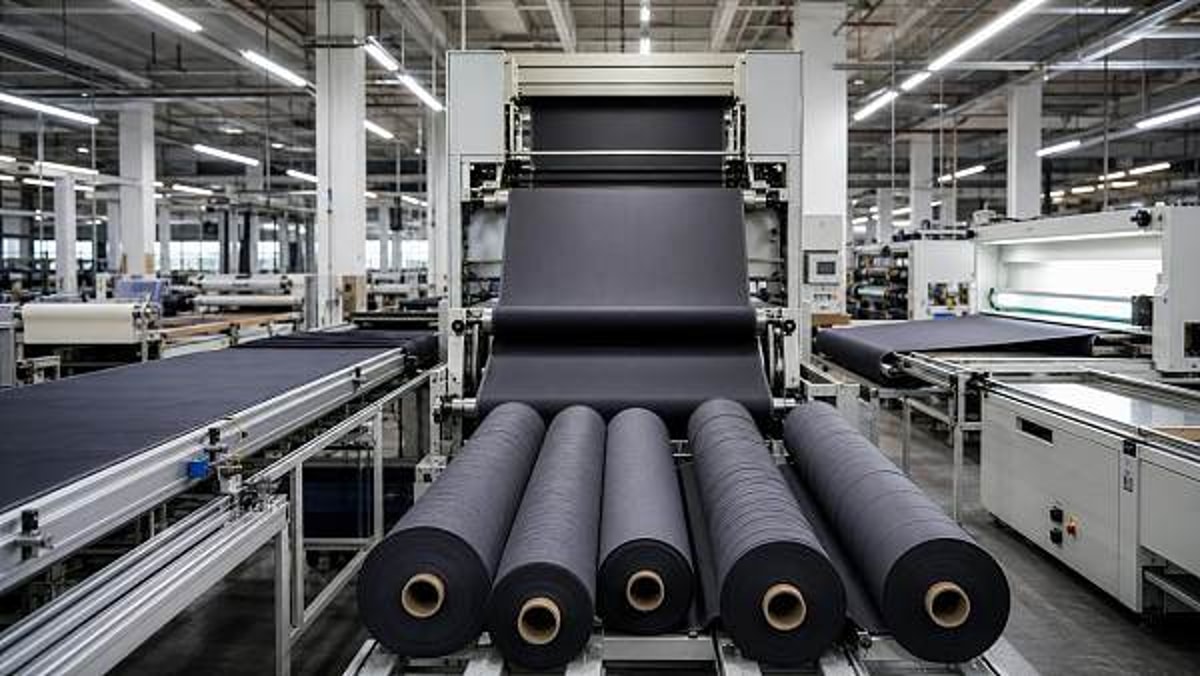
 Home DecorBlackout Curtain Manufacturer Comparison: Lead Times, Coating Quality, and RiskBlackout curtain manufacturer comparison guide: evaluate lead times, coating quality, compliance, and sourcing risk to choose reliable suppliers and avoid costly delays.Interior Sourcing LeadMay 02, 2026
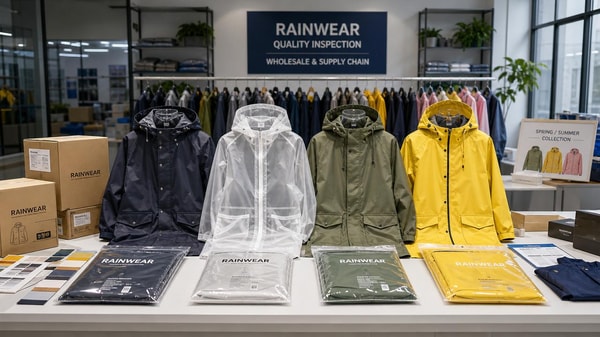
 Garment MfgWholesale Raincoats: What to Review Before Expanding a Seasonal Product LineWholesale raincoats buyers: review materials, sizing, compliance, supplier reliability, and margins before expanding your seasonal product line. Reduce risk and choose smarter.Textile Industry AnalystMay 02, 2026
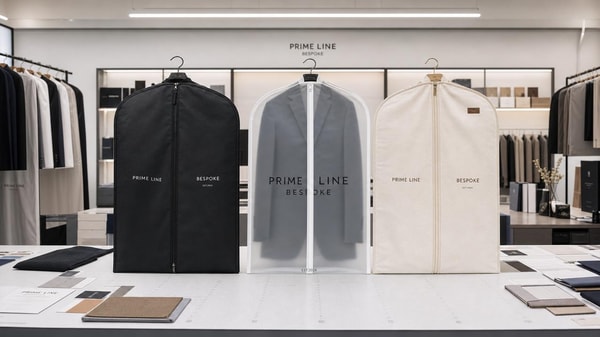
 Eco PackagingCustom Garment Bags: Materials and Print Choices That Shape Brand PerceptionCustom garment bags shape brand perception through material and print choices. Discover how to balance quality, sustainability, cost, and sourcing for stronger B2B packaging decisions.Packaging Supply ExpertMay 02, 2026
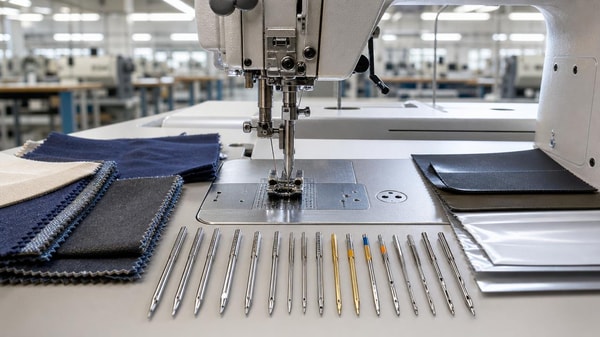
 Garment MfgIndustrial Sewing Needles: Small Specification Changes That Cause Big DowntimeIndustrial sewing needles can cause major downtime when point, size, coating, or length is mismatched. Learn how to spot hidden issues faster and reduce costly line stops.Textile Industry AnalystMay 02, 2026